
California Health and Safety Code 11361 HS: Selling or Giving Marijuana to a Minor
While Proposition 64 broadly legalized adult-use recreational cannabis in California, the state enforces a strict zero-tolerance policy against involving minors in any marijuana-related activities.
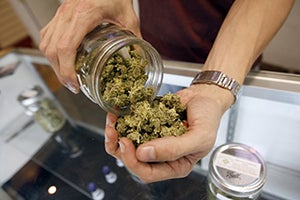
Under Health and Safety Code 11361 HS (HS 11361), it is a severe felony for an adult to sell, give, administer, or market cannabis to a minor, or to employ a minor to handle, transport, or sell it.
Unlike standard adult cannabis offenses—which post-Prop 64 are frequently scaled back to infractions or misdemeanors—violations of HS 11361 remain straight felonies.
Convictions carry mandatory state prison sentences, and judges rarely grant standard probation for these offenses.
Quick Reference Summary Chart: California HS 11361
|
Legal Element |
Details & Statutory Guidelines |
| Statute | California Health and Safety Code Section 11361 HS |
| Offense Classification | Straight Felony (Cannot be reduced to a misdemeanor) |
| Prohibited Conduct |
• Selling, giving, gifting, or administering cannabis to a minor • Inducing, encouraging, or forcing a minor to consume cannabis • Hiring, employing, or using a minor to prepare, transport, carry, or sell cannabis |
Penalties for Possession of Marijuana While Driving
While California's progressive cannabis laws have reclassified many offenses as minor infractions, the state maintains a zero-tolerance stance on the safety and exploitation of juveniles.
For this reason, a violation of Health and Safety Code 11361 HS is a straight felony that carries severe, mandatory state prison sentences rather than standard county jail time.
Felony Sentencing Guidelines
Judges rarely grant standard probation for an HS 11361 conviction. The length of the state prison sentence depends entirely on the minor's age at the time of the offense:
-
Minors Under 14 Years Old: If you sell, give, or administer cannabis to a child under the age of 14, or if you hire, employ, or use a child under 14 to transport, carry, or sell cannabis, the offense is punishable by 3, 5, or 7 years in California State Prison.
-
Minors Aged 14 to 17: If the offense involves a teenager between the ages of 14 and 17, the penalty is punishable by 3, 4, or 5 years in California State Prison.
Collateral and Financial Penalties
In addition to a mandatory term of incarceration, a felony conviction under this statute has devastating long-term consequences:
-
Substantial Fines: Courts can impose criminal fines of up to $10,000 per offense, along with extensive mandatory court construction fees and restitution assessments.
-
Loss of Constitutional Rights: A felony conviction triggers a lifetime prohibition on owning, purchasing, or possessing firearms or ammunition under both California and federal law.
-
Destruction of Professional Opportunities: An HS 11361 conviction results in a permanent felony record that cannot be expunged as a misdemeanor. This effectively bars individuals from obtaining state professional licenses (such as in healthcare, law, real estate, or education) and severely limits employment prospects.
-
Immigration Consequences: For non-citizens (including lawful permanent residents or green card holders), drug offenses involving minors are strictly classified as aggravated felonies under federal immigration law. This classification results in mandatory deportation, denial of citizenship, and a permanent lifetime ban on re-entering the United States.
Legal Defenses to Fight HS 11361 Charges
A felony charge is a serious allegation, but prosecutors must prove every element of the crime beyond a reasonable doubt. A skilled California criminal defense attorney can raise several legal challenges:
-
Lack of Knowledge or Intent: To secure a conviction, the state must prove you knew the package or item contained marijuana. If you were acting as an unwitting courier or were deceived about the contents of a package, you lack criminal intent.
-
Mistake of Age via Sophisticated Fraud: Simply claiming "they looked like an adult" is not a valid legal defense. However, if the minor presented a highly sophisticated, high-quality counterfeit government ID that would deceive a reasonably prudent person, a defense based on a good-faith mistake of fact may be viable.
-
The Substance Was Not Cannabis: If lab analysis shows the material does not meet the legal definition of marijuana under California law (e.g., it is legal industrial hemp or lacks psychoactive THC levels), the statutory elements of HS 11361 are not met.
-
Constitutional Violations (Illegal Search & Seizure): If the police discovered the cannabis through an unlawful vehicle stop, a warrantless home entry, or by exceeding the scope of a search warrant, your attorney can file a Motion to Suppress Evidence (Penal Code 1538.5). If granted, the court must suppress the evidence, often collapsing the prosecution's entire case.
Real-World Example of an HS 11361 Offense
The Illicit Delivery Driver
David, a 23-year-old licensed adult consumer, runs an unregulated underground cannabis delivery service. To expand his operations without personally making deliveries, he pays his 16-year-old neighbor, Leo, $100 a day to ride an electric scooter and deliver small bags of marijuana to local customers.
During a routine stop by school resource officers, Leo is caught with three ounces of packaged cannabis flower. Once investigators link the supply chain back to David, he is arrested. Because he employed a minor aged 14–17 to transport and distribute cannabis, David faces straight felony charges under HS 11361, exposing him to a mandatory sentence of 3, 4, or 5 years in California State Prison, regardless of the fact that cannabis is legal for adults.
Related California Laws
-
Penal Code 272 PC – Contributing to the Delinquency of a Minor: A misdemeanor charge often filed alongside HS 11361 if an adult's actions cause, or tend to cause, a minor to engage in illegal drug use or delinquency. Punishable by up to 1 year in county jail and a $2,500 fine.
-
Health and Safety Code 11359 HS – Possession of Cannabis for Sale: Filed if law enforcement uncovers large product stockpiles, scales, packaging bags, and loose cash indicating an ongoing unlicensed commercial enterprise.
-
Health and Safety Code 11360 HS – Unlawful Transport or Sale of Cannabis: Covers general unlicensed commercial trafficking, sales, or distributions to other adults. While standard adult-to-adult distribution is a misdemeanor, adding a minor immediately triggers the felony protocols of HS 11361.
-
Health and Safety Code 11353 HS – Employing a Minor for Other Controlled Substances: If an adult utilizes a minor to transport or sell non-cannabis controlled substances (such as cocaine, heroin, methamphetamine, or illicit fentanyl pills), they face this severe non-cannabis felony, carrying 3, 6, or 9 years in state prison.
-
Health and Safety Code 11358 HS – Illegal Marijuana Cultivation: Governs the growing of cannabis plants. Exceeding personal home limits (6 plants) or running illicit commercial grows can add parallel charges.
-
Vehicle Code 23222(b) – Open Container of Cannabis While Driving: Applies if an adult is caught transporting unsealed, loose, or accessible cannabis within the passenger cabin of a motor vehicle.
Frequently Asked Questions
Does Proposition 64 protect adults who share cannabis with minors for free?
Absolutely not. Proposition 64 explicitly preserved the strict criminal classifications for transactions involving minors. Furthermore, HS 11361 applies whether money changed hands or not.
Giving, sharing, or administering cannabis to a minor as a free gift carries the same felony penalties as selling it commercially.
What is the difference between giving cannabis to a 19-year-old vs. a 17-year-old?
Giving cannabis to a 19-year-old violates California's adult-use age limit (21) and is generally prosecuted as a misdemeanor under separate statutes.
However, providing cannabis to a 17-year-old falls under juvenile protection laws, triggering the severe, straight-felony prison mandates of HS 11361.
Can I be charged under HS 11361 if a minor steals cannabis out of my home dispenser?
No, unless the prosecution can prove you acted with criminal negligence or intentional inducement.
To secure a conviction under HS 11361, the state must establish that you actively sold, gave, or administered the substance, or deliberately used the minor for commercial purposes.
If a minor steals it without your knowledge, you lack the affirmative action required by the statute.
Is a verbal confirmation of age from a minor enough to protect me in court?
No. Verbal assurances or text messages from a minor claiming to be 18 or older are not sufficient defenses.
Under California law, adults bear the strict legal burden of taking active, reasonable steps to verify age—specifically by inspecting a valid, government-issued photo identification card before transferring any age-restricted substance.
Can an HS 11361 charge be reduced through a drug diversion program?
Because HS 11361 is classified as a straight felony involving the exploitation or endangerment of minors, defendants are almost never eligible for standard pre-trial drug diversion programs like Penal Code 1000 (PC 1000) or Proposition 36 (Prop 36).
Avoiding prison time typically requires an aggressive defense that targets the validity of the evidence or negotiates a reduction to a lesser charge with the prosecution.
Facing Felony Charges? Contact Esfandi Law Group
If you or a loved one is under investigation or facing active arrest warrants for selling or giving cannabis to a minor under HS 11361, remaining silent and securing experienced counsel are paramount.
Early intervention by a dedicated defense firm enables pre-filing advocacy, a constitutional review of police conduct, and a strategic defense to protect your liberty.
Call Esfandi Law Group today at (310) 274-6529 to schedule a free, confidential case evaluation with an expert California criminal defense attorney.