
California DUI Guide: Driving While Addicted to Drugs - Vehicle Code 23152(c)
Most drivers understand that operating a motor vehicle while actively impaired by alcohol or narcotics is a serious crime.
However, California law includes a lesser-known statute that targets a driver's medical condition rather than active, physical impairment.
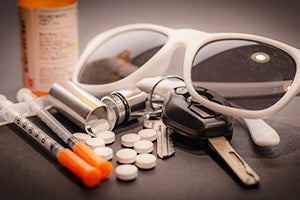
Under California Vehicle Code 23152(c) VC, it is a crime to drive a vehicle if you are addicted to any drug—regardless of whether you are under the influence at the exact moment you are behind the wheel. \T
The state treats this offense as a fully priorable form of California driving under the influence (DUI).
Quick Reference Summary Chart
|
Legal Metric |
Driving While Addicted (VC 23152(c)) |
Active Drug DUI (VC 23152(f)) |
| Prosecutorial Standard | Must prove status of legal addiction at the time of driving. | Must prove active physical/mental impairment while driving. |
| Proof of Current Sobriety | Not a defense. You can be completely sober at the time of the stop and still be convicted. | Driver must be actively under the influence of a drug at the time of the stop. |
| Statutory Exemption | Yes. Lawfully enrolled and compliant participants in approved state treatment programs are exempt. | None. Medical prescriptions do not grant immunity from driving while impaired. |
| First-Offense Jail Time | Up to 6 months in county jail (48-hour mandatory minimum if probation is not granted). | Up to 6 months in county jail. |
| Priorability Window | 10-year lookback period. Counts as a prior DUI conviction. | 10-year lookback period. Counts as a prior DUI conviction. |
Legal Definitions: What Constitutes an "Addiction" and a "Drug"?
Because VC 23152(c) does not rely on a biological test reading or a specific field sobriety test failure, California courts apply highly stringent criteria to define both the driver's medical status and the substance involved.
The 3-Part Legal Definition of "Addiction"
Under long-standing California case law, a prosecutor cannot convict you simply because you use a drug frequently or recreationally. To establish a prosecutable "addiction," the state must prove that you meet three distinct criteria simultaneously:
-
Physical Dependence: Your body has become accustomed to the chemical substance, leading to physical withdrawal symptoms if you suddenly stop using it.
-
Increased Tolerance: You need increasing doses or stronger potencies of the substance over time to attain the same physical or psychological effects.
-
Emotional and Compulsive Dependence: You have a strong psychological urge to use the substance, which results in compulsive consumption despite obvious negative effects on your life, safety, or legal standing.
What Subtitle Identifies a "Drug"?
According to California Vehicle Code Section 312 VC, a drug is defined as any substance or compound (other than alcohol) that can affect the central nervous system, brain, or muscles of a human being to an appreciable degree.
If a substance can impair a person's ability to drive with the standard caution of an ordinarily prudent, sober person, it fits the description. This covers:
-
Illicit narcotics (such as heroin, cocaine, or methamphetamine).
-
Legal recreational substances (such as medicinal or adult-use cannabis).
-
Legitimately prescribed pharmaceuticals (such as opioid painkillers like Vicodin, sedatives like Xanax, or prescription sleep aids).
-
Addictive over-the-counter medications that carry warning labels regarding drowsiness or cognitive changes.
Real-World Example Case
The Scenario: Anna has a severe, long-term dependency on heroin. She has tried to quit multiple times but experiences intense physical withdrawals every time she stops. One afternoon, Anna is pulled over for a minor mechanical violation (a broken taillight). It has been more than 12 hours since she last used any narcotics; she is entirely clear-headed and not under the influence, but she is highly anxious and beginning to sweat as mild withdrawal sets in.
The Investigation: The officer notes her physical state and suspects she might be hiding something. During questioning, Anna honestly admits to the officer that she is a heroin addict who hasn't been able to secure treatment. A drug recognition evaluation and subsequent blood test reveal no active intoxicating levels of heroin in her system, confirming she was driving sober.
The Outcome: Because she explicitly admitted to an unmanaged chemical dependency and displayed physical signs of active withdrawal, the District Attorney charges Anna with a misdemeanor under Vehicle Code 23152(c) VC for driving while addicted. Even though she was not driving while impaired, her legal status as an unrehabilitated addict makes her operation of the vehicle unlawful under this specific section.
Criminal Penalties for Driving While Addicted
A conviction under VC 23152(c) carries the exact same weight, sentencing guidelines, and financial burdens as a standard, impairment-based California DUI.
Misdemeanor Conviction (1st Offense)
-
Informal Probation: 3 to 5 years of summary probation.
-
Incarceration: Up to 6 months in county jail. If the judge denies probation, there is a mandatory minimum sentence of 48 hours.
-
Fines and Fees: A statutory base fine ranges from $390 to $1,000. Once state penalty assessments and court operations fees are added, the out-of-pocket total often falls between $1,500 and $2,000.
-
DUI School: Mandatory enrollment in and completion of a state-licensed 3-month drug education program.
-
Driver's License Restraints: A mandatory 6-month driver's license suspension imposed by the California DMV.
Felony Upgrades & Multipliers
California counts all forms of DUI interchangeably within a 10-year lookback window. If you are convicted under VC 23152(c) and have prior convictions under VC 23152(a), (b), or (f), the penalties increase significantly:
-
Multiple Misdemeanors: Second and third offenses carry mandatory minimum jail terms (up to 1 year), longer license revocations, and mandatory 18- to 30-month multi-offender treatment programs.
-
Felony DUI: Amassing 4 or more DUI-related offenses within a 10-year period allows prosecutors to file the charge as a felony, which carries a penalty of up to 3 years in California State Prison.
Top Defenses to Defeat a VC 23152(c) Charge
Because driving while addicted charges depend largely on proving a medical diagnosis rather than straightforward chemical calculations, they are especially susceptible to targeted legal defenses.
-
The Narcotic Treatment Program Exemption: The statute contains an absolute legal exemption. If you are actively enrolled in and compliant with an approved narcotic treatment or maintenance program (such as an authorized methadone clinic or state-approved rehabilitation protocol) under the California Health and Safety Code, you cannot be convicted under VC 23152(c), provided you were not actively impaired while driving.
-
Disputing the Addiction Standard: Recreational, heavy, or isolated substance use does not meet the legal threshold for addiction. If the defense demonstrates that you do not exhibit physical withdrawal, have not developed a clinically established high tolerance, or do not use compulsively, the state's case fails.
-
No Volitional Driving Occurred: The state must prove you actually put the vehicle in motion. If the police approached you while you were sleeping inside a parked car with the engine running solely to power the air conditioning or heater, and no active driving occurred, that would defeat a key element of the crime.
Frequently Asked Questions (FAQs)
Can I really get a DUI if I am completely sober when pulled over?
Yes. Vehicle Code 23152(c) is a status-based offense. The state need not show that you were driving erratically or that you had active intoxicating chemicals in your blood at that moment. If the state can legally establish that you are suffering from an unmanaged, untreated drug addiction, you are legally barred from driving in California.
What is the core difference between VC 23152(f) and VC 23152(c)?
VC 23152(f) is an impairment-based law requiring proof that a drug actively impaired your mental or physical abilities while driving. In contrast, VC 23152(c) centers solely on your medical addiction status, which means you can be convicted even during a temporary sobriety period between drug uses.
Does this law apply to legally prescribed medications?
Yes. The legal definition of a drug extends to validly prescribed pharmaceuticals. If you develop a severe physical and emotional dependence on an opioid painkiller (like Vicodin) or a benzodiazepine (like Valium) prescribed by a doctor, you can technically face prosecution under this section if you drive outside of an approved dependency treatment program.
Will a conviction under this law result in an automatic license suspension?
Yes. A conviction triggers an administrative or court-ordered suspension of your driving privileges for at least 6 months. To fully restore your license, you must complete an approved drug education course and provide an SR-22 proof-of-financial-responsibility certificate to the DMV.
How does the prosecution typically try to prove a person is "addicted"?
Prosecutors generally rely on explicit admissions made by the driver during the traffic stop, visible physical symptoms of acute narcotic withdrawal (such as tremors, chills, or sweating), past medical records, or professional assessments from a certified Drug Recognition Expert (DRE).
Does alcoholism count as an addiction under VC 23152(c)?
No. Alcohol dependency is explicitly excluded from this subsection. Alcohol-related driving violations—whether based on actual impairment or a blood alcohol level at or above 0.08%—are prosecuted exclusively under Vehicle Code sections 23152(a) and 23152(b).
Related California Laws & Vehicular Offenses
DUI investigations involving controlled substances often result in overlapping or stacked criminal counts:
-
Vehicle Code 23152(f): Driving under the active influence of a drug.
-
Vehicle Code 23152(g): Driving under the combined, simultaneous influence of both alcohol and drugs.
-
Vehicle Code 23153: DUI causing physical bodily injury to another individual (a serious "wobbler" offense that carries potential state prison exposure).
-
Health and Safety Code 11350 HS: Unlawful possession of a controlled substance without a valid medical prescription.
-
Health and Safety Code 11550 HS: Being under the immediate, active influence of a controlled substance in public, regardless of whether you were driving.
-
Vehicle Code 23222(b): Driving a motor vehicle while in personal possession of an open, unsealed container of cannabis or loose marijuana.
-
Watson Murder (Penal Code 187): Second-degree murder charges filed if an individual with a prior DUI conviction drives under the influence and causes a fatal traffic collision.
Secure Experienced Defense Representation Early
A conviction for driving while addicted to drugs carries the same long-term stigma, high insurance premiums, and potential jail sentences as any traditional DUI.
Because the legal elements required to prove an active "addiction" are exceptionally narrow and subjective, early representation by a qualified criminal defense attorney can make the difference between a dismissed charge and a permanent criminal record.
To review the unique facts of your traffic stop and build a strong defense strategy, contact the Esfandi Law Group at (310) 274-6529 for a free, confidential case evaluation. You can also connect with our legal team directly through our online contact portal.