
California Health and Safety Code 11379 HS: Sale or Transportation of Methamphetamine
Under California Health and Safety Code Section 11379 HS, selling, transporting for sale, furnishing, administering, or giving away methamphetamine is a straight felony.
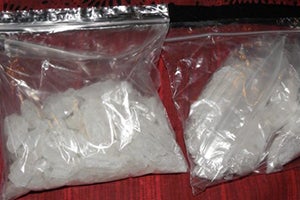
While simple possession for personal use (HS 11377) is typically a misdemeanor post-Proposition 47, commercial distribution and trafficking are prosecuted with zero tolerance.
A key point of clarity regarding HS 11379 is that money need not change hands to trigger a violation.
Exchanging methamphetamine for services, trading it for other property, or even giving it to an acquaintance for free counts as "furnishing" under the law and carries the same felony prison exposure as a commercial drug cartel transaction.
Quick Reference Summary Chart: California HS 11379
|
Legal Element |
Details & Statutory Guidelines |
| Statute | California Health and Safety Code Section 11379 HS |
| Offense Classification | Straight Felony (Ineligible for automatic reduction to a misdemeanor) |
| Prohibited Acts | Selling, transporting with intent to sell, gifting, furnishing, or administering meth; or offering to do so |
| Base Felony Sentencing | 2, 3, or 4 years served in California State Prison |
| Cross-County Enhancement | Moving meth across two or more contiguous county lines increases base terms to 3, 6, or 9 years |
| Weight Enhancements | Bulk weight over 1 kilogram adds 3 to 15 years consecutive (HS 11370.4) |
| Diversion Eligibility | Strictly Ineligible for PC 1000, Prop 36, or standard pre-trial diversion |
| Immigration Impact | Classified as an aggravated felony; carries mandatory deportation for non-citizens |
What Prosecutors Must Prove
To secure a conviction under California Health and Safety Code 11379, the prosecution carries the burden of proving specific legal criteria beyond a reasonable doubt.
Under California's standard criminal jury instructions (CALCRIM No. 2300), the state must establish the following elements, depending on the specific action alleged:
Elements of the Crime
To convict you of the sale or transportation of methamphetamine, the prosecutor must prove the following:
-
The Prohibited Act: You sold, furnished, administered, gave away, transported for sale, or imported methamphetamine into California.
-
Knowledge of Presence: You knew of the drug's presence or immediate control.
-
Knowledge of Substance: You knew of the substance's nature or character as a controlled substance (even if you did not know it was specifically methamphetamine).
-
Usable Amount: The methamphetamine was in a "usable amount"—meaning a quantity sufficient to be consumed as a drug, rather than useless chemical traces or debris.
Special Proving Requirements for "Transportation"
When a prosecutor specifically charges the transportation element of HS 11379, the jury instructions include a critical fourth element regarding intent. The prosecution need not prove you traveled a long distance, but it must prove:
Specific Intent to Sell: When you transported the methamphetamine, you had the specific intent to sell it yourself or intended for someone else to sell it.
Moving methamphetamine solely for personal use does not satisfy the requirements of HS 11379, though it can still be prosecuted as simple possession.
Penalties for Methamphetamine Sale or Transportation
Because HS 11379 targets distribution rather than personal use, convictions carry mandatory prison terms, heavy fines of up to $10,000, and permanent collateral consequences.
Base Felony Sentencing
Absent any enhancements, a conviction under HS 11379 is punishable by a base prison term of:
-
2, 3, or 4 years in California State Prison.
-
Formal, supervised felony probation.
Statutory Sentence Enhancements
The ultimate prison sentence can increase rapidly based on aggravating circumstances:
-
Cross-County Transport: If you transport methamphetamine across two or more contiguous county lines (e.g., driving a supply from Los Angeles County directly into Orange County) with the intent to sell, your base sentencing exposure spikes to 3, 6, or 9 years in state prison.
-
Drug Weight Enhancements (HS 11370.4 HS): If the overall net weight of the methamphetamine seized reaches commercial volumes, the court must append consecutive, mandatory prison blocks to your sentence:
-
Over 1 kilogram (2.2 lbs): 3 additional years in prison
-
Over 4 kilograms (8.8 lbs): 5 additional years in prison
-
Over 10 kilograms (22 lbs): 10 additional years in prison
-
Over 20 kilograms (44 lbs): 15 additional years in prison
-
-
Proximity to Vulnerable Areas: Operating a distribution point or being caught transporting meth for sale within 1,000 yards of an operational drug detox center, treatment facility, or homeless shelter triggers a mandatory 1-year enhancement.
-
Involving a Juvenile: Recruiting, employing, or using a minor under 18 years old to act as a drug mule, courier, preparation assistant, or lookout adds an independent 3, 6, or 9 years to your prison sentence.
How Prosecutors "Stack" Drug Charges
When law enforcement makes an arrest for methamphetamine distribution, district attorneys rarely file a single charge. Instead, they use a tactical filing strategy known as stacking charges to maximize their leverage during plea negotiations.
By taking a single arrest event and breaking it down into individual chronological actions, a prosecutor can charge you with multiple overlapping offenses.
-
The Stacking Chain: If police pull you over and find a bulk supply of methamphetamine, digital scales, and separate baggies, the prosecutor will argue that you possessed the drugs with intent to sell (HS 11378). Because you were actively driving the vehicle containing those drugs, they will simultaneously charge you with transporting them (HS 11379). If you are also under the influence at the time, they will add a misdemeanor count of HS 11550.
-
The Leverage Trap: Stacking these charges allows the prosecution to present a terrifying total exposure figure (e.g., combining the 3-year maximum for HS 11378 with the 4-year maximum for HS 11379). This massive figure is used to pressure defendants into quickly accepting a plea deal for a mid-level felony, effectively waiving their right to challenge the evidence in court.
Real-World Example of an HS 11379 Offense
The Inter-County Courier
Marcus is driving a vehicle from Riverside County into San Bernardino County. A California Highway Patrol officer stops Marcus for swerving. After a canine unit alerts on the trunk, officers discover a vacuum-sealed block weighing 1.2 kilograms of methamphetamine. A download of his phone records reveals text messages coordinating a drop-off at a house down the street.
Because Marcus moved the narcotics across county lines with clear intent to distribute, prosecutors stack his charges. He is hit with HS 11378 (Possession for Sale) and HS 11379 (Transportation for Sale). Furthermore, because the package exceeds 1 kilogram, he faces the HS 11370.4 weight enhancement (3 additional years) and a cross-county enhancement (moving his base exposure up to 3, 6, or 9 years). Marcus faces over a decade in state prison despite it being a single traffic stop.
Strategic Legal Defenses against HS 11379 Allegations
Defending against a major distribution charge requires attacking the legality of police conduct and dismantling the structural elements of the prosecution's case:
-
Fourth Amendment Suppression (Illegal Search): Most transportation cases begin with a vehicular traffic stop. If the police pull you over without reasonable suspicion, prolong the detention unlawfully while waiting for a drug dog, or search your trunk without probable cause or consent, your lawyer can file a Motion to Suppress Evidence (Penal Code 1538.5). If successful, the court throws out the methamphetamine, forcing a dismissal.
-
The "Personal Use Only" Defense: If you are caught driving with a moderate amount of methamphetamine, your attorney can argue that you are dealing with a severe substance dependency and that you were transporting the drugs solely for personal consumption. If successful, the transportation-for-sale charge falls apart, and the case can be reduced to simple possession (HS 11377), making you immediately eligible for record-clearing drug diversion.
-
Lack of Knowledge (Unwitting Courier): To convict you, the state must prove you knew the controlled substance was inside the vehicle. If you were driving a borrowed car, a rideshare passenger, or moving a sealed crate for an acquaintance without any knowledge of its illicit contents, you lack criminal intent.
-
Entrapment by Undercover Stings: If an informant or undercover officer used aggressive coercion, threats, or extraordinary manipulation to persuade you to transport or furnish a supply of methamphetamine that you had no original intention of handling, an entrapment defense can insulate you from conviction.
Related California Drug & Financial Statutes
When prosecuting methamphetamine cases, California prosecutors rarely rely on a single code section.
Instead, they look at the whole picture—from the amount of the drug found to what you were doing with it—and strategically choose how to stack, substitute, or add charges.
Prosecutors generally navigate these related offenses:
-
Health and Safety Code 11378 – Possession of Methamphetamine for Sale: Felony charge for possessing meth with commercial intent, without requiring proof of physical movement or distribution.
-
Health and Safety Code 11377 – Simple Possession of Methamphetamine: The lesser personal-use misdemeanor charge that qualifies for PC 1000 drug diversion.
-
Health and Safety Code 11352 – Sale or Transportation of Non-Stimulant Narcotics: The direct sister felony to HS 11379, covering identical distribution acts for substances like heroin, cocaine, or illicit fentanyl.
-
Health and Safety Code 11379.6 – Manufacturing a Controlled Substance: A severe felony penalizing the chemical synthesis, cooking, or laboratory production of crystal methamphetamine.
-
Health and Safety Code 11370.6 & 11370.9 – Drug Proceeds and Money Laundering: Laws penalizing the possession of more than $100,000 in drug cash or conducting structured financial transactions to mask the origins of narcotics wealth.
-
Health and Safety Code 11550 – Under the Influence: A misdemeanor charge targeting current, active physiological intoxication from a controlled substance.
Frequently Asked Questions
Is it still considered a sale if I traded the methamphetamine for a service or product?
Yes. Under California law, a "sale" does not require currency to change hands. Exchanging methamphetamine for manual labor, electronics, lodging, or any item or service of value constitutes a transaction under HS 11379.
Can an HS 11379 transportation charge be reduced to a misdemeanor?
No. HS 11379 is a "straight felony," meaning a judge cannot reduce it to a misdemeanor at sentencing. The only way to achieve a misdemeanor outcome is for your defense attorney to negotiate a plea agreement with the prosecutor to amend or reduce the charge to simple possession under HS 11377.
What if I was driving a short distance? Does that still count as transportation?
Yes. California courts have repeatedly ruled that the distance traveled does not matter. Moving methamphetamine from a house to a car parked on the street, or driving it a single block, satisfies the element of "transportation" as long as the intent to distribute is present.
Why are drug diversion programs unavailable for an HS 11379 arrest?
California's drug diversion laws (such as Proposition 36 and PC 1000) are designed exclusively to provide medical treatment to individuals suffering from personal substance abuse issues. Because HS 11379 is legally classified as a commercial trafficking and distribution offense, it is excluded from public health diversion pathways.
What happens if I cross county lines while transporting a personal supply?
If you are moving a small, personal supply across county lines solely for your own use, you should be charged only with simple possession under HS 11377. The severe 3-, 6-, or 9-year cross-county enhancement under HS 11379 applies only if the state can independently prove that the purpose of your inter-county travel was commercial distribution.
How do prosecutors prove I knew there was methamphetamine in a hidden compartment?
They rely on circumstantial evidence. Prosecutors will point to factors such as who owns the car, whether you showed extreme nervousness during the traffic stop, inconsistent accounts of your travel destination, or incriminating text messages on your cell phone to argue that you had constructive knowledge of the drugs.
Protect Your Freedom: Contact Esfandi Law Group
A charge under Health and Safety Code 11379 HS is an incredibly serious threat to your liberty, carrying multi-year state prison sentences and permanent felony consequences.
Because prosecutors routinely stack these counts to force a swift guilty plea, having an aggressive defense firm to identify proof gaps, challenge search warrants, and negotiate from a position of strength is critical.
Call Esfandi Law Group today at (310) 274-6529 to schedule your free, confidential consultation with a premier California criminal defense attorney.