
California Vehicle Code 20002 – Misdemeanor Hit and Run
Under California Vehicle Code 20002 (VC 20002), it is a criminal offense to leave the scene of a traffic accident that causes property damage without immediately stopping and exchanging information with the other party.
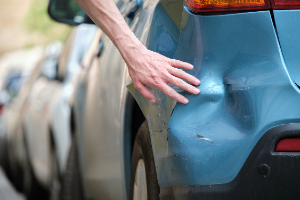
Commonly prosecuted as a misdemeanor hit and run, this is one of the most frequently charged traffic crimes in California. A critical point that trips up many drivers is that fault does not matter.
Even if the other driver cut you off or you hit an illegally parked car, you are still legally required to stop, identify yourself, and fulfill your reporting obligations. Failing to do so shifts the incident from a civil insurance matter to a criminal prosecution.
If you or a loved one is facing hit-and-run accusations or has been contacted by an insurance investigator or law enforcement tracking your license plate, acting early can protect your driver's license and your freedom.
Quick Reference: Misdemeanor Hit and Run Overview
|
Key Statutory Metric |
Legal Standard Under California VC 20002 |
| Offense Level | Misdemeanor (Criminal Charge, not a traffic infraction). |
| Primary Trigger | Any collision resulting in property damage only where a driver leaves the scene. |
| Fault Requirement | Strictly Irrelevant. Duties apply equally to at-fault and entirely innocent drivers. |
| Maximum Jail Term | Up to 6 months in a California county jail. |
| Maximum Statutory Fine | Up to $1,000 base fine (plus substantial court assessments). |
| DMV Record Impact | 2 points added directly to your California driving record. |
| Alternative Resolution | Civil Compromise Eligible (allows for complete case dismissal if the victim is fully repaid). |
Statutory Legal Duties After a Property Damage Collision
If you are involved in an accident in California that damages another vehicle, a mailbox, a fence, or any other property, Vehicle Code 20002 mandates a clear sequence of actions.
What the Prosecution Must Prove to Convict
To secure a conviction under VC 20002, the prosecution must prove four elements beyond a reasonable doubt:
-
You were involved in a vehicle accident while driving.
-
The accident caused visible or structural damage to someone else's real or personal property.
-
You knew, or reasonably should have known, that an accident occurred and that property damage was a likely result.
-
You willfully failed to perform the legal duty of stopping and providing your identifying information.
Penalties and Long-Term Consequences of a Conviction
Although VC 20002 is classified as a misdemeanor rather than a felony, a conviction carries severe statutory penalties, significant financial liabilities, and strict regulatory consequences from the DMV.
Statutory Court Penalties
-
County Jail Time: Up to 6 months in a California county jail. For clean-record or first-time offenders, jail is frequently avoided through aggressive representation, but it remains an option for judges in egregious cases.
-
Criminal Fines: A statutory base fine of up to $1,000. However, with the addition of California's mandatory penalty assessments, state taxes, and court construction fees, the true out-of-pocket cost can easily surpass $4,000.
-
Summary Probation: Up to 3 years of informal/summary probation. Unlike formal probation, you do not report to a probation officer, but you must remain arrest-free and comply with all court orders.
-
Mandatory Restitution: You will be ordered to pay 100% of the property damage to the victim.
Collateral and DMV Repercussions
-
2 DMV Negligent Operator Points: The California DMV treats a hit and run with high severity, placing 2 points directly onto your driving record. For context, accumulating 4 points in a 12-month span results in an automatic administrative license suspension.
-
Insurance Premium Surges: Insurance providers treat hit-and-run offenses as extreme high-risk indicators. A conviction can cause your auto premiums to double or even triple, and some carriers may cancel your policy entirely..
-
Permanent Criminal Record: Unlike a standard speeding ticket, a VC 20002 conviction appears on employer background checks as a criminal misdemeanor involving deceit, potentially hindering future job opportunities, professional licensing, or housing applications.
Real-World Case Example: The Unnoticed Parking Lot Bumper Scratch
-
The Scenario: A driver is operating a large SUV in a crowded grocery store parking lot. While backing out of a tight space, the SUV's rear bumper scrapes the front fender of a compact sedan. Because the radio is playing and the vehicle is heavy, the driver does not feel the impact or realize contact was made and drives away.
-
The Investigation: A witness records the SUV's license plate number and hands it to the sedan's owner, who files a police report. A week later, a hit-and-run investigator contacts the SUV's registered owner to demand an interview.
-
The Legal Defense Strategy: Because the law requires that a driver knowingly leave the scene of an accident, a criminal defense attorney can build a defense centered on a lack of knowledge. By demonstrating that the impact was minimal, that the SUV was disproportionately larger than the sedan, and that no damage was visible on the SUV, counsel can establish that the driver did not realize an accident had occurred, effectively defeating the willful intent required for a VC 20002 conviction..
Aggressive Defense Strategies Against VC 20002 Charges
A strategic defense handles the investigation with care, often stopping criminal filings in their tracks:
-
Lack of Knowledge: Arguing that you were genuinely unaware that a collision had occurred or that any property damage had resulted, due to weather conditions, road noise, or a low-impact clip.
-
You Were Not the Driver: The prosecution can easily identify the car, but they must prove who was in the driver's seat. If multiple people have access to the vehicle and there is no clear eyewitness identification or camera footage, the case weakens significantly.
-
The Only Damage Was to Your Own Vehicle: VC 20002 applies only when you cause damage to someone else's property. If you hit a curb or pole and only dented your own bumper, no crime occurred.
-
Negotiating a Civil Compromise: Under California Penal Code sections 1377-1379, if the offense is a misdemeanor and the victim has a civil remedy, the court may dismiss the criminal charges entirely once the defense proves that the victim's property damage has been paid in full through insurance or direct restitution.
Related California Offenses and Enhanced Risks
When an accident occurs, a hit-and-run charge rarely exists in a vacuum. Prosecutors routinely pair a VC 20002 charge with other severe driving violations:
-
Vehicle Code 20001 (Felony Hit and Run): If the collision results in injury or death to any person—including your own passengers—the offense becomes a serious felony punishable by up to 4 years in state prison.
-
Vehicle Code 23152 (DUI): If authorities suspect you left the scene to hide the fact that you were under the influence of alcohol or drugs, a DUI charge will be added, significantly increasing your probationary terms and driver's license suspensions.
-
Vehicle Code 14601 (Driving on a Suspended License): Frequently, individuals flee a minor accident because they know their driving privileges are already revoked. This adds a separate misdemeanor count that carries a mandatory minimum jail sentence.
-
Vehicle Code 16025 (Failure to Exchange Insurance): A separate financial infraction levied if you stop but refuse to supply valid automobile insurance data to the other driver.
Frequently Asked Questions
Do I have to stop if the accident was entirely the other driver's fault?
Yes. California law mandates that your duty to stop and exchange information is absolute and is triggered solely by property damage, regardless of who caused the collision.
Can I be charged with a hit-and-run if I left the scene but returned an hour later?
Yes. The statute requires you to stop immediately. Leaving the scene to go home, panic, or wait before returning exposes you to a VC 20002 misdemeanor charge, though returning voluntarily can serve as powerful mitigation for your defense lawyer during negotiations.
What should I do if a hit-and-run investigator calls me or leaves a card?
Do not call them back or make a statement. Investigators often call registered owners, claiming they "just want to clear up an insurance matter," but their true objective is to get you to admit that you were driving the car at the time of the crash. Politely inform them that your attorney will handle all communication.
What is a Civil Compromise in a California hit-and-run case?
A civil compromise is a legal mechanism in which a judge exercises judicial discretion to dismiss a misdemeanor hit-and-run charge. This requires the defense to present a signed agreement from the victim confirming they have been fully compensated for all property repairs and that they wish for the criminal matter to be dropped.
Will a VC 20002 conviction cause me to lose my driver's license?
While a standard misdemeanor hit-and-run does not carry an automatic, mandatory license revocation like a felony, a conviction adds 2 points to your DMV record. If you are a negligent operator or already have points, this can trigger an administrative suspension by the DMV.
Can a hit-and-run charge be filed against me if the contact was just a tiny scratch?
Yes. California law does not set a minimum financial threshold for property damage under VC 20002. A microscopic paint transfer on a bumper legally qualifies as property damage, meaning you must still follow the required notification steps to avoid criminal liability.
Secure Proven Defense Representation Now
A misdemeanor hit-and-run conviction creates a permanent criminal record, driving up your insurance premiums exponentially and complicating future employment background checks.
However, many hit-and-run investigations can be quietly resolved without you ever stepping foot in a courtroom or facing criminal charges if handled swiftly.
The defense team at Esfandi Law Group knows how to negotiate with police agencies and insurance entities to secure civil resolutions before a prosecutor files formal court documentation.
Protect your record and your peace of mind. Call us at (310) 274-6529 today or fill out our secure contact form to activate your free consultation.