
House Arrest in California – Penal Code 1203.016 PC
House arrest in California, officially known as home detention or home confinement, offers an alternative sentencing option that allows eligible individuals to serve county jail sentences at home rather than behind bars.
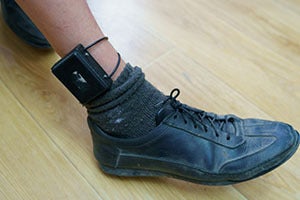
Authorized under California Penal Code Section 1203.016 PC, home detention provides a structured custody framework that balances public safety with rehabilitation.
While home detention allows you to remain in your residence, it is not total freedom. Participants are subjected to rigorous electronic monitoring, strict curfews, and mandatory compliance protocols.
Crucially, time spent in a court-approved house arrest program counts as custody time toward your sentence under California Penal Code 2900.5 PC.
Legal Definition of House Arrest (Home Detention)
Under California criminal law and procedural statutes, "house arrest" or "home detention" under Penal Code Section 1203.016 PC is a legally authorized, court-sanctioned alternative custody program wherein an eligible sentenced inmate or probationer is placed in a specified residential location under continuous electronic monitoring, strict curfews, and officer supervision, earning custody credit against a county jail sentence while permitted limited, pre-approved leaves solely for necessary employment, education, medical care, or court-mandated counseling.
Eligibility and Requirements for Home Detention
Courts and correctional administrators evaluate several statutory factors before approving an individual for home confinement under PC 1203.016.
Key Qualification Standards
-
Non-Violent Offense: The underlying conviction must be a non-violent, low-risk crime (violent felonies under PC 667.5(c) or serious felonies under PC 1192.7(c) are generally disqualified).
-
County Jail Sentence: The sentence must involve local county jail time, not state prison incarceration.
-
Stable Residence: The participant must possess a fixed, safe, and verifiable residence within the county (or an approved adjacent county) equipped with compatible cellular or landline infrastructure for monitoring devices.
-
Agreement to Terms: The defendant must execute a written agreement promising to abide by all monitoring protocols, schedules, and drug/alcohol restrictions.
-
Financial Ability: Participants are typically required to pay daily electronic monitoring administrative fees, though fee waivers or sliding scales are available for indigent defendants.
How Electronic Monitoring Works
Compliance during house arrest is maintained through continuous technological supervision:
-
GPS Ankle Transmitters: Lightweight, tamper-resistant ankle bracelets track the participant's location in real time via satellite GPS.
-
Home Monitoring Units: Base stations installed in the residence verify the participant's presence within their designated home perimeter during non-approved hours.
-
SCRAM Continuous Alcohol Monitoring: In cases involving DUI (VC 23152) or alcohol-related offenses, SCRAM ankle bracelets monitor transdermal alcohol emissions through the skin 24/7.
-
Remote Breathalyzers & Drug Testing: Participants may be required to perform random mobile breathalyzer tests or report for scheduled and unannounced drug screenings.
Penalties and Consequences for House Arrest Violations
Failing to adhere strictly to the conditions of home detention carries severe legal repercussions. Electronic monitoring agencies immediately alert local law enforcement and probation officers upon detecting an infraction.
Penalties for Violations
-
Immediate Arrest & Incarceration: Summary arrest and transfer to standard county jail custody to serve the remainder of the sentence.
-
Revocation of Alternative Custody: Formal judicial revocation of PC 1203.016 status under Penal Code 1203.2 PC.
-
Loss of Custody Credits: Forfeiture of good conduct or work credits accumulated during home confinement.
-
New Criminal Charges: Removing, cutting, or tampering with an electronic monitoring device constitutes a separate criminal offense under Penal Code 620 PC (tampering with an electronic monitoring device), which can be charged as a misdemeanor or felony.
Benefits of House Arrest in California
Understanding how home confinement compares to traditional jail custody highlights why alternative sentencing is often the optimal strategy for eligible defendants:
-
Avoids Jail Incarceration: Allows you to serve custody time at home, eliminating exposure to overcrowded, unsafe, or stressful county jail environments.
-
Maintains Employment & Income: Permits pre-approved leaves to attend your regular job, ensuring financial stability for you and your dependents.
-
Preserves Family Ties: Enables you to remain living with family members, maintaining caregiving, parental, and household responsibilities.
-
Full Custody Credit (PC 2900.5): Every day completed under court-approved home detention counts as one full day of jail credit served toward your sentence.
-
Access to Private Healthcare: Facilitates uninterrupted care from your personal physicians, specialists, and mental health providers.
-
Facilitates Counseling & Treatment: Allows seamless attendance at court-mandated DUI classes, anger management, or domestic violence programs.
Hypothetical Examples of House Arrest
-
The First-Time DUI Defendant: A first-time DUI offender facing 10 days in county jail receives court approval for PC 1203.016 home detention with SCRAM alcohol monitoring, allowing him to work during the day and serve his sentence at home without losing his job.
-
The Unauthorized Departure Violation: A home confinement participant leaves her house outside approved hours to visit a friend. The GPS unit alerts probation officers, resulting in her immediate arrest and order to serve the remaining 60 days in county jail custody.
-
The Medical Exception Grant: An elderly defendant convicted of misdemeanor theft suffers from severe mobility issues. His defense attorney demonstrates that jail facilities cannot accommodate his medical needs, securing house arrest approval under PC 1203.016.
Related California Laws, Statutory Provisions, and Charges
Interfacing with alternative sentencing requires understanding several overlapping California statutory provisions:
-
Penal Code Section 1203.016 PC (Home Detention Programs): Authorizes county board of supervisors and courts to establish electronic monitoring and home detention programs as alternatives to jail.
-
Penal Code Section 2900.5 PC (Credit for Time Served): Mandates that all days spent in a court-approved home detention program must be credited against the defendant's total sentence.
-
Penal Code Section 1203.2 PC (Probation Revocation): Outlines procedural rules for arresting probationers and revoking alternative custody upon an alleged violation.
-
Penal Code Section 620 PC (Tampering with Monitoring Equipment): Makes it a punishable offense to intentionally damage, remove, or disable an electronic monitoring device.
-
Vehicle Code Section 23152 (DUI Offenses): Misdemeanor DUI convictions frequently utilize house arrest and SCRAM monitoring as an alternative to mandatory jail time.
Why Related Charges Matter
Navigating the legal intersection between original criminal charges and alternative sentencing rules is critical. If a defendant faces new accusations—such as probation violations under PC 1203.2 or device tampering under PC 620—the court can immediately cancel home detention privileges and impose full jail terms.
Experienced counsel helps protect your rights during both initial sentence negotiations and any subsequent compliance hearings.
Frequently Asked Questions (FAQs)
Does house arrest count as jail time in California?
Yes. Under California Penal Code 2900.5 PC, each day served in an authorized home detention program under PC 1203.016 counts as one day of custody credit toward your total jail sentence.
Can you leave your house while on house arrest?
You may only leave your residence for pre-approved activities explicitly permitted by the court or monitoring agency, such as employment, school, medical appointments, court dates, or mandatory counseling.
Who pays for the electronic monitoring equipment during house arrest?
Participants are typically responsible for daily monitoring fees. However, California law requires programs to offer fee adjustments or waivers based on financial hardship and inability to pay.
Is house arrest available for violent crimes?
Generally, no. Penal Code 1203.016 programs are reserved for non-violent, low-risk offenders serving local county jail sentences rather than state prison terms.
What happens if you remove or cut off an ankle monitor?
Removing or tampering with a monitoring device triggers an immediate alarm to authorities, resulting in swift arrest, revocation of house arrest, transfer to jail, and potential new criminal charges under PC 620.
Can you do house arrest instead of jail for a California DUI?
Yes. Many individuals convicted of repeat or aggravated DUIs under Vehicle Code 23152 successfully serve required jail terms through home detention combined with continuous alcohol monitoring (SCRAM).
How do authorities track you during home confinement?
Monitoring agencies utilize GPS ankle bracelets that continuously transmit location data via cellular networks to track your movements and ensure you remain within authorized geographical zones.
Can a defense attorney help me get approved for house arrest?
Yes. An experienced criminal defense lawyer can gather medical records, proof of employment, and character references to present a compelling motion for alternative sentencing to the judge or probation department.
Seek Alternative Sentencing
If you are facing criminal charges or an impending jail sentence, do not assume incarceration is your only outcome. Exploring alternative sentencing options like home detention under PC 1203.016 can preserve your career, family relationships, and personal freedom.
The defense team at Esfandi Law Group has extensive experience negotiating house arrest and electronic monitoring agreements across California courts.
Call (310) 274-6529 today or fill out our online contact form to schedule your free, confidential consultation.