
California Public Intoxication: Penal Code 647(f) PC
Under California Penal Code 647(f) PC, public intoxication—commonly known as "drunk in public"—is a misdemeanor offense. Merely being intoxicated in a public place is not a crime in California.
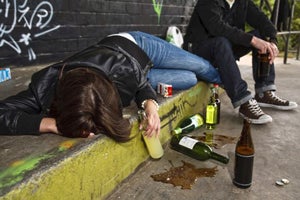
To establish a violation, the prosecution must prove that an individual's level of intoxication rendered them unable to care for their own safety or the safety of others, or that they actively obstructed or interfered with a public street, sidewalk, or walkway.
Legal Definition of Public Intoxication
“Every person who commits any of the following acts is guilty of disorderly conduct, a misdemeanor... Who is found in any public place under the influence of intoxicating liquor, any drug, controlled substance, toluene, or any combination of any intoxicating liquor, drug, controlled substance, or toluene, in a condition that he or she is unable to exercise care for his or her own safety or the safety of others, or by reason of his or her being under the influence of intoxicating liquor, any drug, controlled substance, toluene, or any combination of any intoxicating liquor, drug, controlled substance, or toluene, interferes with or obstructs or prevents the free use of any street, sidewalk, or other public way.” — California Penal Code 647(f) PC
Key Legal Elements of Penal Code 647(f) PC
To secure a conviction for public intoxication under PC 647(f), a prosecutor must prove all four of the following legal elements beyond a reasonable doubt:
-
Willful Intoxication: The individual voluntarily consumed alcohol, controlled substances, or toxic vapors (such as toluene).
-
Presence in a Public Place: The individual was located in an area accessible to the general public, including streets, parks, bars, commercial establishments, or common areas of residential complexes.
-
Inability to Exercise Care OR Public Obstruction: As a direct result of intoxication, the person was either:
-
Incapable of providing for their own safety or the safety of others; or
-
Actively obstructing, interfering with, or blocking the free passage of pedestrian or vehicle traffic on a public way.
-
-
Observation Requirement: For a warrantless misdemeanor arrest under PC 836, the officer generally must personally observe the alleged behavior occurring in a public place.
Penalties & Legal Consequences for PC 647(f) PC
While public intoxication is often treated as a minor offense, a conviction results in a criminal record that carries statutory penalties and collateral consequences:
|
Offense Category |
Statutory Custody Exposure |
Maximum Fines & Court Fees |
| First Offense PC 647(f) | Up to 6 months in county jail | Up to $1,000 plus penalty assessments |
| Repeat PC 647(f) Offense | Up to 6 months in county jail | Up to $1,000 plus penalty assessments |
| Three Convictions within 1 Year | Mandatory 90 days in county jail under PC 647.7 PC | Up to $1,000 plus penalty assessments |
Note: Penal Code 647(f) is a straight misdemeanor and cannot be reduced to an infraction ("wobblette"). However, defense counsel can often negotiate a resolution to a non-alcohol or non-criminal charge like disturbing the peace (PC 415).
Hypothetical Examples
-
Example 1 (Lawful Conduct / Not Guilty): A patron consumes several drinks at a restaurant, becomes visibly tipsy, and walks home along the sidewalk. Because they walk safely without falling, interfering with others, or stepping into traffic, no violation of PC 647(f) has occurred.
-
Example 2 (Public Obstruction): An intoxicated individual falls asleep across a public sidewalk outside a concert hall, forcing pedestrians to walk onto a busy street to bypass them. This satisfies the obstruction element under PC 647(f).
-
Example 3 (Private Property Defense): An individual drinks excessively inside their enclosed backyard and speaks loudly. Because an enclosed backyard is a private residence, they are not in a "public place" for the purposes of PC 647(f), unless they stumble out onto the front driveway or public sidewalk.
Primary Legal Defenses & Trial Strategies
-
Not in a Public Place: Challenging whether the arrest occurred in a public venue. Private homes, hotel rooms, and private backyards are not public places.
-
Sufficient Ability to Exercise Care: Demonstrating through body-worn camera footage or witness testimony that the defendant was not a danger to themselves or others and was capable of safely navigating their surroundings.
-
Involuntary Intoxication: Establishing that the defendant was drugged without their knowledge or consent (e.g., a spiked drink), defeating the requirement of willful consumption.
-
Involuntary Presence in a Public Place: Showing that the defendant was forced into a public area against their will by police or third parties (e.g., ordered out of a private home by officers and then arrested on the sidewalk).
-
Lack of Personal Observation by Police: Under California misdemeanor law, if officers did not personally witness the defendant intoxicated in public and acted solely on third-party reports without a warrant, the arrest may be invalid.
Related California Laws & Statutes
-
Penal Code 415 PC – Disturbing the Peace: Prohibits fighting, loud noise, or offensive words in public. Frequently used as a non-alcohol reduction in PC 647(f) plea negotiations.
-
Vehicle Code 23152 PC – Driving Under the Influence (DUI): Prohibits operating a motor vehicle while impaired by alcohol or drugs.
-
Health and Safety Code 11550 HS – Under the Influence of a Controlled Substance: Prohibits being under the influence of specific controlled substances (e.g., narcotics) regardless of whether the location is public or private.
-
Penal Code 647(e) PC – Illegal Lodging: Prohibits lodging in public or private spaces without permission.
-
Penal Code 849(b)(2) PC – Release Without Charges: Authorizes law enforcement to release an arrested person from custody without formal charges if they were arrested for intoxication only and no further proceedings are desirable.
Frequently Asked Questions (FAQs)
Is being drunk in public automatically a crime in California?
No. Simply being drunk in public is not illegal. To violate PC 647(f), you must be so intoxicated that you cannot care for your own safety or the safety of others, or you must be actively blocking a public street, sidewalk, or walkway.
What qualifies as a "public place" under PC 647(f)?
A public place is any area open to the general public, including streets, sidewalks, parks, bars, restaurants, and common areas of apartment buildings. Private residences and private backyards are generally excluded, though front yards, porches, or driveways may qualify depending on access.
Can police arrest you for PC 647(f) if you are inside your own home?
No. You cannot be convicted of public intoxication for being intoxicated inside your private home. If officers step inside without a warrant or order you outside into a public space, your presence in public is involuntary, providing a strong legal defense.
Does Penal Code 647(f) require a breathalyzer or blood test?
No. Unlike DUI cases under Vehicle Code 23152, prosecutors do not need to prove a specific blood alcohol concentration (BAC) like 0.08%. The charge relies on subjective officer observations, such as slurred speech, unsteadiness, or odor of alcohol, which can be challenged in court.
Can a PC 647(f) charge be reduced to an infraction?
No. Penal Code 647(f) is a straight misdemeanor and cannot be filed or reduced as an infraction. However, defense attorneys often negotiate with prosecutors to dismiss the charge or substitute it with a lower non-alcohol charge, such as disturbing the peace under Penal Code 415 PC.
What happens if you are released under Penal Code 849(b)(2)?
If officers detain you solely for intoxication and hold you in a "sobering cell" until you are sober, they may release you under PC 849(b)(2). This means the arrest is deemed a detention only, no criminal charges are filed, and no formal record of conviction is created.
Will a conviction for PC 647(f) appear on a criminal background check?
Yes. A conviction for PC 647(f) is a misdemeanor that will appear on standard background checks conducted by employers, landlords, and licensing boards unless the record is later expunged under Penal Code 1203.4 PC.
What should you do if you are cited or arrested for public intoxication?
Do not make statements or admissions to law enforcement regarding your level of alcohol consumption. Retain experienced legal counsel promptly to review police body-camera footage, verify whether the officer personally observed the incident, and file pre-trial motions to seek a complete dismissal.
The Esfandi Law Group can help you. Schedule your free consultation today.