
Federal Criminal Defense Lawyer for the Southern District of California
The United States District Court for the Southern District of California (CASD) is one of four federal judicial trial courts in California, operating alongside the Central, Northern, and Eastern Districts.
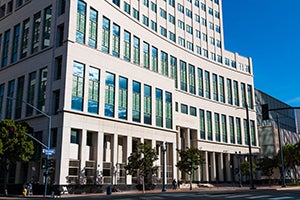
Established in 1850, shortly after California achieved statehood, the Southern District serves as the primary federal venue for resolving federal criminal prosecutions and civil litigation along the United States–Mexico international border.
Geographically, the Southern District encompasses San Diego County and Imperial County and serves an estimated population of over 3.3 million residents.
Although California's smallest federal district by geographic area and population, the Southern District manages one of the nation's highest criminal caseloads per judge because of its proximity to the border, international land ports of entry, and maritime jurisdiction.
Final rulings and judgments issued by Southern District judges fall under the appellate jurisdiction of the United States Court of Appeals for the Ninth Circuit.
What Counties Are Covered by the Southern District of California?
The United States District Court for the Southern District of California maintains territorial jurisdiction over two California counties bordering Mexico:
-
San Diego County: Home to over 3.2 million residents, major military installations, international commercial ports, and the nation's busiest land border crossing (San Ysidro).
-
Imperial County: Located in the southeastern corner of California, encompassing agricultural centers, military testing grounds, and major international land ports of entry in El Centro and Calexico.
What Courthouses Are in the Southern District of California?
The Southern District of California operates through three primary federal courthouse facilities located in San Diego and El Centro. The primary Office of the Clerk of Court is housed in the James M. Carter & Judith N. Keep Courthouse in downtown San Diego.
|
Courthouse Name |
Jurisdiction / Division |
Facility Address & Contact Information |
| James M. Carter & Judith N. Keep U.S. Courthouse | San Diego County |
333 West Broadway, San Diego, CA 92101 Phone: (619) 557-5600 |
| Edward J. Schwartz U.S. Courthouse | San Diego County |
221 West Broadway, San Diego, CA 92101 Phone: (619) 557-5600 |
| El Centro U.S. Courthouse | Imperial County |
2003 W. Adams Ave, Suite 220, El Centro, CA 92243 Phone: (760) 339-4242 |
Who Presides Over the Southern District Court?
Article III district judges, senior judges, and full-time United States magistrate judges manage federal judicial matters in the Southern District.
Article III Federal District Judges
Article III judges are nominated by the President of the United States and confirmed by the U.S. Senate for lifetime judicial appointments under the authority of the U.S. Constitution.
Active district judges preside over felony trials, accept guilty pleas, handle complex civil litigation, and impose sentences under the Federal Sentencing Guidelines. The Chief Judge leads the district and oversees court administration and judicial policies.
Senior Judges and Magistrate Judges
-
Senior Judges: Retired Article III judges who continue to serve the court by volunteering to handle trial dockets, evidentiary hearings, and civil proceedings.
-
U.S. Magistrate Judges: Judicial officers selected by active district judges to serve renewable eight-year terms. In the Southern District, magistrate judges handle criminal initial appearances, arraignments, detention hearings (bail), search warrant applications, misdemeanor trials, and preliminary discovery motions.
What Federal Crimes Does Esfandi Law Group Defend?
Under 18 U.S.C. § 3231, federal district courts hold exclusive original jurisdiction over all criminal offenses committed against the laws of the United States.
In the United States District Court for the Southern District of California (CASD), criminal cases are investigated by federal law enforcement agencies—including Homeland Security Investigations (HSI), U.S. Customs and Border Protection (CBP), the Federal Bureau of Investigation (FBI), the Drug Enforcement Administration (DEA), and IRS Criminal Investigation (IRS-CI)—and aggressively prosecuted by Assistant United States Attorneys (AUSAs) from the U.S. Attorney's Office in San Diego.
Because the Southern District encompasses San Diego and Imperial Counties along the U.S.–Mexico international border, its criminal docket is among the heaviest in the nation, with a strong focus on border security, cross-border narcotics trafficking, financial crimes, and public safety offenses.
Major Categories of Federal Offenses Prosecuted in CASD
-
International Narcotics Trafficking & Importation: Prosecutions under Title 21 for illegal importation, manufacturing, or distribution of controlled substances—including fentanyl, methamphetamine, cocaine, heroin, and illicit pharmaceuticals (21 U.S.C. §§ 952, 960)—as well as maritime drug interdictions under the Maritime Drug Law Enforcement Act (MDLEA).
-
Immigration & Border Violations: Offenses prosecuted under Title 8, including illegal re-entry after deportation (8 U.S.C. § 1326), alien smuggling conspiracies (8 U.S.C. § 1324), visa/passport fraud, and false statements made at land ports of entry (San Ysidro, Otay Mesa, and Calexico).
-
Cross-Border Financial & White-Collar Crimes: Financial fraud schemes involving wire fraud (18 U.S.C. § 1343), mail fraud (18 U.S.C. § 1341), bank fraud, bulk cash smuggling (31 U.S.C. § 5332), customs/tariff fraud, tax evasion, and international money laundering (18 U.S.C. § 1956).
-
Arms Exportation & Firearms Offenses: Illegal exportation of defense materials, firearms, and tactical gear across the southern border without required State Department licenses under the Arms Export Control Act (22 U.S.C. § 2778) and federal firearm trafficking laws (18 U.S.C. § 922/§ 924).
-
Public Corruption & Public Integrity Crimes: Bribery of public officials (18 U.S.C. § 201), honest services wire fraud (18 U.S.C. § 1346), and border agent corruption involving unlawful passage or inspection bypasses.
-
Racketeering, Gangs & Federal Violent Crimes: Prosecutions under the Racketeer Influenced and Corrupt Organizations Act (RICO - 18 U.S.C. § 1962), Violent Crimes in Aid of Racketeering (VICAR), maritime piracy, and violent offenses committed on federal military installations or tribal lands.
What Common Legal Defenses Apply to Federal Charges in the Southern District?
Building an effective legal defense in the Southern District of California requires a detailed understanding of federal constitutional law, strict statutory elements, and the local enforcement dynamics along the U.S.–Mexico border.
Because federal prosecutors in San Diego and El Centro heavily rely on federal task force investigations, digital wiretaps, and border point-of-entry searches, experienced defense counsel will evaluate several core legal strategies:
-
Fourth Amendment Search and Seizure Challenges: Filing motions to suppress evidence if federal law enforcement officers (such as CBP, HSI, or FBI agents) conducted searches of vehicles, homes, or digital devices without probable cause, outside valid search warrant parameters, or in excess of lawful border search exceptions.
-
Lack of Knowledge or Intent (Blind Mule Defense): In cross-border drug trafficking (21 U.S.C. §§ 952, 960) or bulk cash smuggling cases, asserting that the defendant had no knowledge that narcotics, illicit currency, or contraband was concealed inside a vehicle, cargo container, or personal luggage.
-
Duress, Coercion, and Necessity: Demonstrating that the defendant was forced into participating in an offense—such as alien smuggling (8 U.S.C. § 1324) or narcotics transport—under immediate, credible threats of severe physical violence or death to themselves or their family members by organized crime groups.
-
Challenging Wiretaps and Digital Evidence (Title III): Scrutinizing federal wiretap authorizations, cell phone location data, and electronic intercept orders to ensure compliance with the strict statutory requirements of Title III (18 U.S.C. § 2518), seeking exclusion of intercepted communications if agents failed to satisfy necessity rules.
-
Entrapment in Federal Sting Operations: Proving that federal agents or confidential informants induced, coerced, or persuaded an otherwise non-predisposed individual to commit a federal crime they would not have independently attempted.
-
Safety Valve Relief and Mitigation Advocacy: For eligible first-time or non-violent federal drug offenders under 18 U.S.C. § 3553(f), pursuing statutory "safety valve" relief, which authorizes federal judges to sentence defendants below mandatory minimum prison sentences.
Frequently Asked Questions (FAQs)
How does the Southern District differ from the San Diego Superior Court?
California State Superior Courts handle state law violations, local ordinances, state misdemeanors, and California Penal Code felonies. The U.S. District Court for the Southern District of California exclusively hears federal statutory offenses, constitutional claims, interstate commercial disputes, and federal border/immigration crimes.
What happens after an arrest at a San Diego or Imperial County port of entry?
If you are arrested at a land border crossing or port of entry (such as San Ysidro, Otay Mesa, or Calexico), you will be processed by federal agents and brought before a U.S. Magistrate Judge in San Diego or El Centro for an initial appearance, where formal charges are read and conditions for pretrial release or detention are evaluated.
Where are federal criminal appeals from the Southern District submitted?
All appeals from final orders, trial convictions, or sentencing decisions in the Southern District of California are submitted to the United States Court of Appeals for the Ninth Circuit, with oral arguments typically conducted in Pasadena or San Francisco.
Can a border crime be resolved without a federal felony record?
Depending on your prior criminal record, the strength of the evidence, and early defense intervention, defense counsel may negotiate pre-indictment resolutions, entry into federal diversion programs, or reductions to misdemeanor charges under Title 8 or Title 18.
What should I do if federal agents execute a search warrant at my home or business?
If federal agents present a search warrant, do not obstruct the officers, but exercise your absolute right under the Fifth Amendment to remain silent. Refuse to answer questions or consent to searches outside the warrant's scope without consulting a federal criminal defense lawyer.
How are federal sentences calculated in the Southern District?
Federal judges calculate sentences using the statutory minimums and maximums set by Congress, adjusted by the advisory United States Sentencing Guidelines (USSG), which evaluate the defendant's criminal history and specific offense characteristics (such as drug weight or financial loss amounts).
Speak to a Federal Defense Lawyer
If you, a family member, or your business is under federal investigation, faces a grand jury subpoena, or has been charged with a federal crime in the United States District Court for the Southern District of California, you need immediate legal representation.
Federal border and cross-border prosecutions move quickly and involve specialized grand jury procedures, strict detention rules, and severe statutory penalties.
Our legal defense team at Esfandi Law Group provides comprehensive representation across all Southern District courthouse locations:
-
Pre-Indictment Intervention: We communicate directly with Assistant United States Attorneys (AUSAs) and federal task force agents prior to formal indictment to present mitigating evidence, challenge illegal searches, and seek dismissal or charge reductions.
-
Representation in San Diego & El Centro Courthouses: We regularly represent clients at initial appearances, bail hearings, preliminary hearings, and trials in the Carter-Keep, Schwartz, and El Centro federal courthouses.
-
Challenging Border Searches & Wiretaps: We file pre-trial motions to suppress evidence obtained through Fourth Amendment violations at ports of entry, illegal border searches, or unauthorized electronic wiretaps.
-
Federal Trial & Sentencing Defense: If your case proceeds to trial or sentencing, we construct thorough factual defenses, challenge loss or drug-quantity enhancements under the Sentencing Guidelines, and advocate for pretrial release and non-custodial resolutions.
A federal criminal defense lawyer at Esfandi Law Group in Los Angeles can help. To schedule your free consultation, call (310) 274-6529 or use the contact form.