
Federal Criminal Defense Lawyer for the Central District of California
The Central District of California (CACD) is the primary federal trial court serving Southern and Central California.
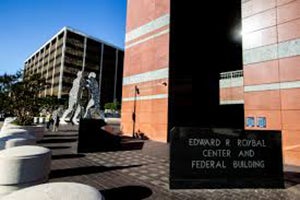
Established by Congress in September 1966, the Central District is one of four federal judicial districts in California—alongside the Northern, Eastern, and Southern Districts—and is one of 94 federal district courts in the United States federal court system.
Serving approximately 19 million residents across seven counties, the Central District of California is the most populous federal judicial district in the United States.
It handles a high volume of federal criminal prosecutions, complex civil litigation, administrative law disputes, and constitutional challenges.
Most final decisions issued by Central District judges are appealed to the United States Court of Appeals for the Ninth Circuit.
United States District Court for the Central District of California: Divisions & Courthouses
|
Division Name |
Counties Included |
Primary Courthouse Name & Address |
| Western Division | Los Angeles, Ventura, Santa Barbara, & San Luis Obispo |
Felicitas and Gonzalo Mendez United States Courthouse Edward R. Roybal Federal Building |
| Southern Division | Orange County |
Ronald Reagan Federal Building & U.S. Courthouse |
| Eastern Division | Riverside & San Bernardino |
George E. Brown, Jr. Federal Building & U.S. Courthouse |
Where Are the Central District Courthouse Locations?
The Central District operates four major federal courthouse facilities across its three divisions:
Western Division (Los Angeles Courthouses)
-
Felicitas and Gonzalo Mendez United States Courthouse
350 W 1st Street, Suite 4311
Los Angeles, CA 90012
Business Hours: 9:00 a.m. to 4:00 p.m., Monday – Friday
Phone: (213) 894-1565
-
Edward R. Roybal Federal Building and U.S. Courthouse
255 East Temple Street
Los Angeles, CA 90012
Business Hours: 9:00 a.m. to 4:00 p.m., Monday – Friday
Phone: (213) 894-1565
Eastern Division (Riverside Courthouse)
-
George E. Brown, Jr. Federal Building and U.S. Courthouse
3470 Twelfth Street
Riverside, CA 92501
Business Hours: 9:00 a.m. to 4:00 p.m., Monday – Friday
Phone: (951) 328-4450
Southern Division (Santa Ana Courthouse)
-
Ronald Reagan Federal Building and U.S. Courthouse
411 West 4th Street, Room 1053
Santa Ana, CA 92701
Business Hours: 9:00 a.m. to 4:00 p.m., Monday – Friday
Phone: (714) 338-4750
Who Presides Over the Central District Court?
Cases in the Central District are presided over by a bench of Article III district judges, senior judges, and federal magistrate judges.
Article III Federal District Judges
Article III district judges are nominated by the President of the United States and confirmed by the U.S. Senate for lifetime judicial appointments. The Chief Judge leads the court and manages administrative operations alongside active district judges.
Senior Judges and Magistrate Judges
-
Senior Judges: Experienced federal judges who elect senior status after meeting statutory age and service requirements, continuing to hear federal trials on a reduced or volunteer caseload.
-
U.S. Magistrate Judges: Judicial officers appointed by the district judges for renewable eight-year terms. Magistrate judges preside over initial criminal appearances, arraignments, bail hearings, search warrant applications, discovery disputes, and misdemeanor trials.
What Crimes Does Esfandi Law Group Defend in Federal District Court?
Federal criminal jurisdiction is established under 18 U.S.C. § 3231, which grants federal district courts exclusive original jurisdiction over all offenses committed against the laws of the United States.
Federal law enforcement agencies—including the Federal Bureau of Investigation (FBI), Drug Enforcement Administration (DEA), Homeland Security Investigations (HSI), Internal Revenue Service Criminal Investigation (IRS-CI), and the U.S. Secret Service—investigate these cases, which are then prosecuted by Assistant United States Attorneys (AUSAs) from the United States Attorney's Office.
The attorneys at Esfandi Law Group provide aggressive representation across the primary categories of federal offenses litigated in the Central District of California:
-
White-Collar & Financial Crimes: Wire fraud (18 U.S.C. § 1343), mail fraud (18 U.S.C. § 1341), bank fraud, corporate embezzlement, securities fraud, tax evasion, PPP/SBA loan fraud, and money laundering (18 U.S.C. § 1956).
-
Public Corruption & Election Law Violations: Bribery of public officials (18 U.S.C. § 201), honest services wire fraud (18 U.S.C. § 1346), extortion under color of official right (Hobbs Act), election fraud, and campaign finance violations (52 U.S.C. § 30109).
-
Federal Drug & Counter-Narcotics Offenses: Large-scale drug distribution, international narcotics trafficking, manufacturing conspiracies, and possession with intent to distribute under Title 21 of the United States Code.
-
Cybercrimes & Intellectual Property Theft: Unauthorized computer access under the Computer Fraud and Abuse Act (CFAA), trade secret theft (18 U.S.C. § 1832), identity theft, and federal copyright infringement.
-
Racketeering & Federal Violent Crimes: Violent crimes in aid of racketeering (VICAR), prosecutions under the Racketeer Influenced and Corrupt Organizations Act (RICO - 18 U.S.C. § 1962), federal felon-in-possession or firearm offenses (18 U.S.C. § 922/§ 924), and bank robbery.
-
Civil Rights & Voter Suppression Offenses: Conspiracy against rights (18 U.S.C. § 241), deprivation of rights under color of law (18 U.S.C. § 242), and voter intimidation (18 U.S.C. § 594).
What Common Defense Strategies Apply in Central District Federal Cases?
Defending a client against federal charges in the Central District of California requires challenging government evidence, scrutinizing investigative tactics, and countering the prosecution's legal theories early in the process. Experienced federal defense lawyers utilize several key defense strategies:
-
Fourth Amendment Search & Seizure Suppression: Challenging digital search warrants, cell phone seizures, or physical searches conducted by FBI, DEA, or HSI agents without probable cause, overbroad warrant scopes, or proper judicial authorization under Rule 41 of the Federal Rules of Criminal Procedure.
-
Title III Wiretap & Electronic Surveillance Objections: Filing motions to suppress wiretap evidence under 18 U.S.C. § 2518 if federal agents failed to satisfy the statutory requirement of "necessity" or failed to minimize non-relevant calls during multi-agency task force wiretaps.
-
Lack of Knowledge or Specific Intent (Mens Rea): In complex white-collar fraud, wire fraud, or money laundering prosecutions, establishing that the defendant acted in good faith, lacked knowledge of an underlying scheme, or operated under a genuine mistake of fact.
-
Challenging Federal Grand Jury Indictments & Subpoenas: Filing pre-trial motions to dismiss indictments for government misconduct, structural defects in grand jury proceedings, or failure to state a federal offense under Title 18 or Title 21.
-
Entrapment in Federal Undercover Operations: Demonstrating that federal undercover agents or confidential informants induced, coerced, or persuaded an individual into committing an offense they had no prior predisposition to engage in.
-
Safety Valve Relief & Sentencing Mitigation: For qualifying drug offenses under 18 U.S.C. § 3553(f), pursuing statutory "Safety Valve" relief to bypass mandatory minimum sentences, alongside presenting comprehensive 3553(a) mitigation packages to lower Federal Sentencing Guidelines ranges.
Frequently Asked Questions (FAQs)
What is the difference between state court and federal district court in California?
California state courts (such as the Los Angeles County Superior Court) have general jurisdiction over state laws, local ordinances, state misdemeanors, and standard state felonies. Federal district courts have specialized jurisdiction, handling prosecutions under federal statutes, interstate disputes, constitutional questions, and federal civil actions.
What should I do if I receive a federal grand jury subpoena from the Central District?
If you receive a subpoena from a federal grand jury or an inquiry from the FBI, DEA, or IRS in the Central District, do not answer questions or produce documents without consulting legal counsel. Contact an experienced federal criminal defense attorney immediately to safeguard your constitutional rights.
Where are federal appeals from the Central District heard?
Appeals challenging rulings or judgments from the United States District Court for the Central District of California are submitted to the United States Court of Appeals for the Ninth Circuit, primarily located at the Richard H. Chambers U.S. Court of Appeals in Pasadena, California.
What happens at an initial appearance in federal court?
During an initial appearance before a U.S. Magistrate Judge, you are formally notified of the charges against you, informed of your constitutional rights, and evaluated for pretrial release or detention (bail). Having defense counsel present during this stage is essential.
Can a state criminal charge be transferred to the Central District of California?
State charges are not directly "transferred" to federal court. However, federal law enforcement and DOJ prosecutors can choose to file federal indictments based on conduct that violates federal law, even if state charges are already pending for the same underlying events.
How are federal trials structured in the Central District?
Federal criminal trials in the Central District follow strict federal rules of evidence and procedure. Cases proceed before a 12-person federal jury selected from cross-sections of the district's seven counties, requiring a unanimous verdict for any conviction.
How Esfandi Law Group Can Help You
If you are under federal investigation, have received a grand jury subpoena, or face active criminal charges in the United States District Court for the Central District of California, securing experienced federal defense counsel immediately is critical.
Federal prosecutions involve complex grand jury proceedings, extensive digital discovery, and stringent Federal Sentencing Guidelines.
Our federal legal defense team at Esfandi Law Group provides skilled representation across all Central District courthouse locations:
-
Pre-Indictment DOJ & FBI Intervention: We engage directly with Assistant United States Attorneys (AUSAs) and federal investigators prior to formal court filings to present exculpatory evidence, challenge government theories, and seek to prevent formal indictments.
-
Representation Across All Central District Divisions: We routinely appear on behalf of clients in downtown Los Angeles (First Street & Roybal courthouses), Santa Ana (Ronald Reagan courthouse), and Riverside (George E. Brown, Jr. courthouse).
-
Challenging Federal Search Warrants & Wiretaps: We analyze government wiretaps, search-warrant affidavits, and electronic surveillance, and file Fourth Amendment suppression motions to exclude illegally obtained evidence.
-
Strategic Federal Trial & Sentencing Defense: If a case proceeds to indictment, we prepare robust trial defenses, challenge Federal Sentencing Guidelines calculations, and advocate for pre-trial release or favorable case resolutions.
Contact our offices today to schedule a confidential legal consultation with a federal criminal defense attorney.