
Vehicle Code § 10853 VC: Malicious Mischief to a Vehicle
California Vehicle Code § 10853 VC makes it a misdemeanor crime to climb on, enter, or tamper with someone else's vehicle or its controls with the intent to cause damage, injury, or commit another crime.
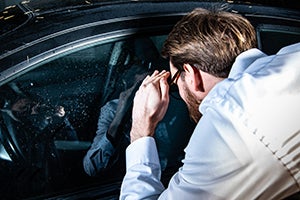
Whether you are accused of jumping on a hood, messing with a car's brakes, or setting an unattended car in motion, facing charges under VC 10853 requires immediate legal defense.
Understanding California's legal definition of vehicle mischief, what the state must prove, potential penalties, and available legal defenses is critical to protecting your rights.
Legal Definition of VC § 10853
“No person shall with intent to commit any malicious mischief, injury, or other crime, climb into or upon a vehicle whether it is in motion or at rest, nor shall any person attempt to manipulate any of the levers, starting mechanism, brakes, or other mechanism or device of a vehicle while the same is at rest and unattended, nor shall any person set in motion any vehicle while the same is at rest and unattended.”
In simple terms, "malicious mischief" refers to intentionally defacing, damaging, or destroying another person's property without their consent.
Under VC 10853, actual physical damage does not necessarily have to occur for charges to be filed—the prosecution only needs to prove that you acted with the specific intent to commit malicious mischief or another crime.
What the Prosecution Must Prove to Convict
To secure a conviction under California Vehicle Code § 10853 VC, a prosecutor must establish the following elements beyond a reasonable doubt:
-
Unlawful Action: You climbed into or onto a vehicle (whether parked or moving), attempted to manipulate its controls, levers, starting mechanisms, or brakes while parked and unattended, or set a parked, unattended vehicle in motion.
-
Lack of Consent: You performed these actions without the permission or consent of the vehicle's owner.
-
Specific Intent: You acted specifically with the intent to commit malicious mischief, damage the vehicle, cause injury, or carry out another crime.
Penalties for Malicious Mischief to a Vehicle
In California, a violation of Vehicle Code § 10853 VC is charged strictly as a misdemeanor. If convicted, potential penalties include:
-
Up to 6 months in county jail
-
A maximum fine of $1,000 (plus state penalty assessments)
-
Summary (Informal) Probation in lieu of jail time
-
Restitution to the vehicle owner for any actual property damage caused
Note: If property was stolen from the vehicle or if your actions caused bodily injury to someone, prosecutors will likely elevate the charges to grand theft, auto burglary, or felony vandalism.
Common Legal Defenses
Fighting a Vehicle Code § 10853 VC charge requires dismantling the prosecution's case by showing that one or more required legal elements cannot be proven beyond a reasonable doubt.
A skilled California criminal defense attorney can leverage several powerful legal defenses depending on the specific facts of your case.
Lack of Specific Intent (Accidental or Unintentional Act)
VC 10853 is a specific intent crime. The prosecution must prove not only that you climbed on or tampered with a vehicle, but that you did so specifically intending to cause damage, injury, or commit another crime. If your actions were accidental, a misunderstanding, or done out of poor judgment without malicious intent (such as leaning against a car or leaning in to check on an item), you cannot be convicted under this statute.
Express or Implied Consent from the Vehicle Owner
You cannot commit malicious mischief against a vehicle if you had permission from the owner or authorized possessor. Consent can be express (the owner explicitly said you could enter or manipulate the vehicle controls) or implied (a past pattern of shared vehicle access or working together on the vehicle). If you reasonably believed you had permission, the charge should be dismissed.
Mistaken Identity and Alibi
Incidents involving vehicle tampering frequently take place at night, in dimly lit parking lots, or during chaotic public gatherings. Eyewitnesses often make errors, and grainy security footage can easily misidentify a suspect. Establishing a verifiable alibi, showing discrepancies in witness descriptions, or proving you were not the individual caught on camera provides a total defense.
False Accusations and Fabricated Claims
False allegations under VC 10853 often stem from personal vendettas, bitter domestic disputes, neighbor conflicts, or attempts to cover up pre-existing vehicle damage for insurance purposes. Demonstrating motive for false claims—supported by text messages, call logs, or inconsistent statements from the accuser—can lead to charges being dropped.
Necessity or Emergency Intervention
Under California law, the defense of necessity applies if you tampered with or entered a vehicle to prevent a greater harm. For example, if you broke into or manipulated a vehicle's mechanisms to rescue a trapped child or pet in extreme heat, or to prevent a parked vehicle from rolling into traffic, your actions were legally justified.
Insufficient Evidence
The burden of proof rests entirely on the state. If the police failed to recover fingerprints, DNA, clear video footage, or direct physical evidence linking you to the vehicle, your attorney can file a motion to dismiss based on a lack of concrete evidence.
Hypothetical Examples
-
Example 1: A spectator at a street rally climbs onto the roof of an unattended luxury car to get a better view, accidentally denting the roof. They may be charged under VC 10853 if prosecutors argue the action was reckless and done with malicious intent.
-
Example 2: An angry ex-partner sneaks into a driveway and tries to disengage the parking brake on an unattended car to roll it down a hill. Even if the car doesn't move, attempting to manipulate the brakes constitutes malicious mischief.
-
Example 3: A mechanic climbs inside a parked car to inspect a dashboard light after receiving key access from the owner. Because they had the owner's explicit consent, they have committed no crime under VC 10853.
Frequently Asked Questions (FAQs)
What is the main difference between VC 10853 and standard vandalism under PC 594?
While Penal Code 594 covers general property vandalism (which can be a misdemeanor or felony depending on the dollar amount of damage), VC 10853 specifically targets entering, climbing on, or manipulating the internal mechanisms of a vehicle with malicious intent, regardless of the dollar amount of actual damage.
Can I be charged under VC 10853 if I didn't actually damage the car?
Yes. Vehicle Code 10853 focuses heavily on intent. If you climbed onto a vehicle or tampered with its mechanisms while intending to commit damage or another crime, you can be charged even if no physical damage occurred.
Is malicious mischief to a vehicle a felony in California?
No, VC 10853 is strictly a misdemeanor charge. However, related acts involving higher property damage value, vehicle theft, or injury can lead to separate felony charges under different statutes.
What happens if I accidentally released the brake on someone's car?
Accidental damage or unintentional tampering lacks the "specific intent" element required for a VC 10853 conviction. While you may be civilly liable for financial damages, you should not be convicted criminally.
Can I be convicted under VC 10853 for tampering with my own car?
No. You cannot commit malicious mischief against your own property under this statute because you consent to your own actions. However, intentionally damaging your vehicle to make a false insurance claim can result in felony insurance fraud charges.
Does VC 10853 apply to exterior parts like side mirrors or license plates?
Yes. Courts apply this statute to items attached to the vehicle, such as removing side mirrors, defacing license plates, or stealing hood ornaments.
Will a conviction under VC 10853 give me a criminal record?
Yes. A conviction under Vehicle Code § 10853 VC results in a misdemeanor criminal record that appears on background checks, which can impact employment, housing, and licensing opportunities unless expunged later.
How can a criminal defense lawyer help get a VC 10853 charge dismissed?
A defense lawyer can highlight gaps in the prosecution's evidence regarding intent, demonstrate that you had consent, negotiate a reduction to a non-criminal infraction, or push for a diversion program to keep your record clean.
Related Laws
Understanding related statutes is critical because prosecutors frequently file multiple charges for a single incident involving a vehicle.
Depending on the evidence—such as whether the car was locked, if items were taken, or the total financial damage—a charge that starts as a VC 10853 misdemeanor can easily be stacked with or elevated to severe offenses like Auto Burglary (PC 459) or Felony Vandalism (PC 594).
Knowing how these laws intersect enables an expert defense team to challenge overcharging and negotiate lesser outcomes. The related laws include:
-
Penal Code § 594 PC – Vandalism: Covers defacing, damaging, or destroying any property belonging to another. Charged as a felony if damage exceeds $400.
-
Vehicle Code § 10851 VC – Unlawful Taking or Driving of a Vehicle: Known as joyriding, this statute prohibits taking or driving a vehicle without the owner's consent.
-
Penal Code § 459 PC – Auto Burglary: Prohibits entering a locked vehicle with the intent to commit theft or any felony inside.
The Esfandi Law Group can help you. Schedule your free consultation at (310) 274-6529 or use the contact form.