
Vehicle Code 2800 VC: Disobeying a Peace Officer
Law enforcement officers are given broad authority to issue directions to maintain public order and manage traffic safety. However, when a driver willfully fails or refuses to follow a lawful command, California prosecutors can file criminal charges under California Vehicle Code 2800 VC.
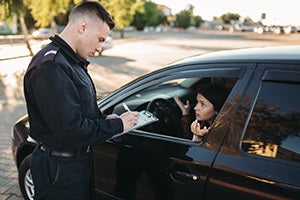
This offense penalizes drivers who deliberately ignore instructions from a uniformed officer or operate vehicles marked as out of service, exposing individuals to potential jail time, substantial court fines, and a criminal record.
Understanding the statutory elements, the prosecutor's burden under CALCRIM, and viable legal defense strategies is critical to navigating these allegations effectively.
Legal Definition & Statutory Text
Under California Vehicle Code 2800 VC, the law explicitly codifies the offense of disobeying an officer:
" (a) It is unlawful to willfully fail or refuse to comply with any lawful order, signal, or direction of any peace officer, as defined in Chapter 4.5 (commencing with Section 830) of Title 3 of Part 2 of the Penal Code, when that peace officer is in uniform and is performing duties under any of the provisions of this code, or to refuse to submit to any lawful inspection under this code.
(b) (1) It is unlawful to willfully fail or refuse to comply with any lawful out-of-service order issued by an authorized employee of the Department of the California Highway Patrol or an employee of a sheriff's department or police department... when that employee is in uniform and performing duties under any of the provisions of this code."
Key Statutory Definitions
Understanding these statutory terms is critical because the prosecution must prove it met each legal threshold to secure a criminal conviction.
-
Willful Failure: Acting deliberately, intentionally, and on purpose rather than out of confusion, accident, or miscommunication.
-
Lawful Order or Direction: A command given by an officer that falls within the legitimate scope of their official duties under the Vehicle Code.
-
Peace Officer in Uniform: A sworn law enforcement officer wearing distinctive apparel or insignia that clearly identifies them as an active peace officer performing official duties.
-
Out-of-Service Order: An official directive issued by authorized law enforcement prohibiting the operation of a commercial or private vehicle determined to be hazardous, unsafe, or inadequately equipped.
Elements Required for Conviction
To convict a defendant of violating Vehicle Code 2800 VC, the prosecution must prove the following elements beyond a reasonable doubt:
-
A peace officer was performing their lawful duties under the California Vehicle Code.
-
The peace officer was wearing a distinctive uniform.
-
The peace officer gave a lawful order, signal, or direction to the defendant, or directed the defendant to submit to a lawful inspection.
-
The defendant willfully failed or refused to comply with that lawful order, signal, direction, or inspection.
Penalties for Vehicle Code 2800 VC
Disobeying a peace officer is typically charged as a misdemeanor offense in California.
|
Offense Level |
Jail / Prison Term |
Fines & Legal Consequences |
| Misdemeanor | Up to 6 months in county jail | Up to $1,000 fine, summary (informal) probation, potential driver's license points, and vehicle impoundment risks. |
Real-World Examples
-
Refusing Traffic Diversions: A driver ignores a uniformed officer's hand signals directing traffic away from an accident scene and drives past road barriers.
-
Declining Inspection Demands: A motorist intentionally refuses to provide identification, registration, or step out of the car after being given a direct, lawful instruction during a traffic stop.
-
Violating Out-of-Service Directives: A commercial truck driver continues operating a heavy vehicle on a highway after receiving an explicit out-of-service order from a California Highway Patrol officer due to severe mechanical defects.
Legal Defense Strategies
Criminal defense attorneys employ several proven strategies to challenge allegations under VC 2800:
-
Lack of Willful Intent / Misunderstanding: Demonstrating that you did not intentionally disobey, but rather misheard the instruction, misinterpreted ambiguous hand signals, or were unaware the officer was directing you.
-
Officer Not in Distinctive Uniform: Establishing that the officer was plainclothes, off-duty, or lacked visible law enforcement insignia, making it unclear that they held legal authority.
-
Unlawful Order or Unlawful Duty Performance: Proving that the officer's directive exceeded their legal authority or was issued during an unlawful detention or arrest.
-
Defense of Necessity: Showing that compliance with the order was impossible or would have created an immediate, life-threatening hazard or medical emergency.
Related California Offenses
Related offenses matter because prosecutors frequently combine multiple charges or offer plea bargains to reduced violations based on evidentiary strength.
-
Penal Code 148(a)(1) PC (Resisting Arrest): Penalizes willfully resisting, delaying, or obstructing a peace officer or emergency medical technician in the discharge of their duties.
-
Vehicle Code 2800.1 VC (Misdemeanor Evading): Prohibits intentionally fleeing or attempting to elude a pursuing marked law enforcement vehicle.
-
Vehicle Code 2800.2 VC (Felony Reckless Evading): Applies when a driver flees an officer while driving with willful or wanton disregard for the safety of persons or property.
-
Penal Code 409.5 PC (Unauthorized Entry into Closed Emergency Area): Makes it an offense to willfully enter or remain in a disaster or emergency area cordoned off by law enforcement.
-
Penal Code 409 & 416 PC (Refusal to Disperse): Prohibits failing to comply with law enforcement orders to disperse during unlawful assemblies or peace disturbances.
Frequently Asked Questions (FAQs)
What is the difference between disobeying an officer (VC 2800) and evading an officer (VC 2800.1)?
VC 2800 applies when a driver refuses to follow a specific instruction or command from a uniformed officer (such as refusing to pull over or bypass a barricade). VC 2800.1 specifically requires an active pursuit where a driver intentionally flees a marked patrol vehicle operating lights and sirens.
Can I be convicted under VC 2800 if the officer was off-duty?
No. To secure a conviction under VC 2800, the prosecution must prove the officer was in a distinctive uniform and actively performing their official duties under the Vehicle Code.
Is disobeying a peace officer under VC 2800 an infraction or a misdemeanor?
A violation of Vehicle Code 2800 VC is classified as a criminal misdemeanor, not a simple traffic infraction, meaning it carries potential jail time and creates a criminal record upon conviction.
What happens if I accidentally misinterpret a police officer's hand signals?
Willful intent is a required element under CALCRIM No. 2672. If your attorney shows that your actions resulted from an honest misunderstanding or poor visibility rather than deliberate refusal, you cannot be convicted under VC 2800.
Can a VC 2800 charge affect my driver's license?
While VC 2800 does not carry a mandatory automatic license suspension like felony evading offenses, a conviction adds points to your DMV driving record, which can lead to higher insurance rates or a negligent operator suspension if you have prior violations.
The best way to secure a favorable outcome is to consult an experienced criminal defense attorney at Esfandi Law Group in Los Angeles. Call us to schedule your free consultation or use the contact form.