
California DUI Drugs Law - Vehicle Code 23152(f)
Driving under the influence of drugs (often called DUID) is a heavily prosecuted offense in California.
Under California Vehicle Code 23152(f), it is illegal to operate a vehicle while under the influence of any drug—whether it is an illegal narcotic, a legal recreational substance like marijuana, a prescription medication, or even an over-the-counter allergy pill.
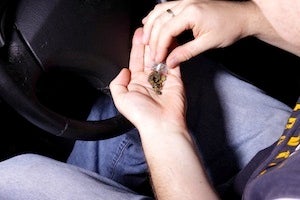
Unlike alcohol DUIs, there is no numerical "legal limit" for drugs in California. This semantic distinction makes DUID cases highly complex, subjective, and dependent on expert interpretation.
Quick Reference Summary Chart
|
Metric / Legal Aspect |
DUI Under the Influence of Drugs (VC 23152(f)) |
Standard Alcohol DUI (VC 23152(b)) |
| Legal Threshold / Limit | No numerical limit. The prosecution must prove actual physical or mental impairment. | 0.08% BAC or higher (per Se limit). No proof of impairment is required. |
| Substances Covered | Illicit drugs, medical/recreational cannabis, prescription pills, over-the-counter medicine. | Alcohol only. |
| Primary State Evidence | Blood tests, Drug Recognition Expert (DRE) evaluations, officer observations, field sobriety tests. | Breath tests, blood tests, field sobriety tests. |
| First-Offense Jail Time | Up to 6 months in county jail. | Up to 6 months in county jail. |
| License Suspension | 6-month administrative suspension (Must request a DMV hearing within 10 days to challenge). | 6-month standard suspension (IID restriction options available). |
| Priorability Window | 10 years. Counts as a prior offense toward future DUI charges. | 10 years. Counts as a prior offense toward future DUI charges. |
What Must a Prosecutor Prove for a DUI Drug Conviction?
Since there is no specific biological cutoff (such as a 0.08% BAC) for drugs, a prosecutor cannot convict someone under VC 23152(f) just by proving a drug was in their system.
Instead, the District Attorney must prove three key elements beyond a reasonable doubt:
-
The Defendant Drove a Vehicle: The individual must have exerted actual physical control over a moving vehicle.
-
The Defendant Had a Drug in Their System: Chemical testing (typically a blood draw) must confirm the presence of an active drug or its metabolites.
-
The Defendant Was "Under the Influence": Because of taking that drug, the driver's physical or mental abilities were compromised to the point where they could not operate a vehicle safely and with the caution expected of a reasonably sober person in similar conditions.
Statutory Penalties for DUI Drugs (VC 23152(f))
In California, a typical drug-related DUI is usually handled as a misdemeanor unless it's a fourth offense within 10 years or causes injury. Penalties increase significantly with each prior conviction.
1st Offense DUID (Misdemeanor)
-
Jail Time: Up to 6 months in county jail, although alternative sentencing or no jail time is often granted for first DUI offenses without aggravating factors.
-
Fines: The base fine ranges from $390 to $1,000, plus additional court assessments that can bring the total to over $2,000.
-
Probation: 3 to 5 years of informal (summary) probation.
-
DUI School: Mandatory 3 to 9 months of state-licensed drug and alcohol education classes.
-
Driver's License: 6-month suspension by the DMV.
2nd Offense DUID (Misdemeanor)
-
Jail Time: 96 hours to 1 year in county jail.
-
Fines: A base fine ranging from $390 to $1,000, plus significant penalty assessments.
-
Probation: 3 to 5 years of informal probation.
-
DUI School: Mandatory 18-month multiple-offender program (SB 38).
-
Driver's License: Up to a 2-year license suspension.
3rd Offense DUID (Misdemeanor)
-
Jail Time: 120 days to 1 year in county jail.
-
Fines: $390 to $1,000 base fine plus assessments.
-
DUI School: Mandatory 18 to 30 months of education programming.
-
Driver's License: Up to a 3-year license suspension, along with potential designation as a Habitual Traffic Offender (HTO).
4th or Subsequent Offense (Felony)
If you receive a fourth DUID charge within 10 years or have a previous felony DUI on your record, the offense is classified as a felony.
-
Incarceration: 16 months, 2 years, or 3 years in California State Prison or county jail under state realignment rules.
-
Fines: Up to a $1,000 base fine ($5,000 if injury occurs) plus maximum penalty assessments.
-
Driver's License: Up to a 4-year driver's license revocation.
Note on Ignition Interlock Devices (IIDs): In California, drug-only DUIs are treated differently from alcohol-only DUIs, which typically require an IID to restore driving privileges. If your conviction involved only drugs and no alcohol, you might be exempt from the usual IID requirements.
Real-World Example Case
The Scenario: David is pulled over in Los Angeles for failing to signal before changing lanes. The officer notices his pupils are dilated, his mouth is dry, and his speech is somewhat sluggish. David states he is returning home from work and took his prescribed Xanax for anxiety a few hours earlier.
The Evaluation: The officer suspects drug impairment and calls a specialized Drug Recognition Expert (DRE) to the scene. David performs poorly on cognitive and physical coordination tests, and a subsequent blood test confirms the presence of alprazolam (Xanax) in his system.
The Outcome: David is charged with a misdemeanor under Vehicle Code 23152(f). Although his medication is fully legal and correctly prescribed, the law does not offer immunity if the drug impairs his driving ability. He risks a six-month license suspension and probation unless his defense can prove that his lack of coordination stemmed from exhaustion rather than drug impairment.
Common Legal Defense Strategies
DUI drug cases depend greatly on police officers' subjective judgments and intricate toxicology reports, which can be highly contested in court.
-
Presence Does Not Equal Impairment: Some drugs, especially marijuana, leave inactive metabolites in the blood that can be detected days or weeks after all effects have faded. An experienced defense lawyer can employ a toxicologist to demonstrate you were not actively impaired at the time of driving.
-
Challenging the Drug Recognition Expert (DRE): DRE protocols rely on subjective assessments and are highly susceptible to human error. Factors such as nervousness, injuries, or eye conditions can cause an officer to incorrectly believe a driver is intoxicated.
-
Blood Split Motion: If the police performed a forced or requested blood draw, your attorney can file a formal motion to access part of that sample. An independent lab can then re-test it to verify for contamination, procedural errors, or preservation issues.
-
Alternative Explanations for Symptoms: Physical symptoms such as red eyes, slurred speech, or poor balance may result from medical issues, physical disabilities, extreme fatigue from long-distance driving, or natural anxiety experienced during stressful police interrogations.
Frequently Asked Questions (FAQs)
Can I get a DUI for driving under the influence of prescription pills?
Yes. Under California law, the legality or medical prescription status of a drug does not matter. If a medication—like a sleep aid, muscle relaxant, or opioid painkiller—causes drowsiness or slows your reactions, you can legally be convicted under VC 23152(f).
Is there an automatic license suspension after a DUI drug arrest?
Yes. Just like an alcohol DUI, you will be issued a pink temporary license that expires after 30 days. You must contact the DMV Driver Safety Office within exactly 10 days of your arrest to request an Administrative Per Se (APS) hearing and pause the suspension while your case unfolds.
How do police test for drugs during a traffic stop?
Unlike alcohol, which can be easily quantified through roadside breathalyzers, drugs cannot be accurately detected by breath analysis. Instead, law enforcement depends largely on physical assessments, pupil examinations, and coordination tests conducted in the field. If you are arrested, you will usually be required to submit to a blood test for evidentiary purposes.
What happens if I refuse a blood test during a DUI drug investigation?
Under California's Implied Consent Law, refusing a chemical test after a lawful arrest triggers severe penalties. For a first offense, a refusal results in an automatic one-year driver's license revocation with absolutely no option for restricted driving privileges, and prosecutors can use the refusal in court as an admission of guilt.
Can I be charged with multiple crimes during a drug DUI arrest?
Yes. Prosecutors frequently stack charges. If you are found with drugs in the car, you can face charges for DUI drugs (VC 23152(f)), driving under the combined influence of drugs and alcohol (VC 23152(g)), possession of a controlled substance (HS 11350), or transporting an open container of cannabis (VC 23222(b)).
Will a DUI drugs conviction stay on my record forever?
A DUI conviction remains on your California DMV driving record for 10 years and will appear on standard criminal background checks indefinitely unless you successfully petition the court for an expungement (Penal Code 1203.4) after completing probation.
Related California Laws & Code Sections
Navigating a DUI drug charge requires an understanding of how multiple elements of the California Vehicle Code and Health and Safety Code connect:
-
Vehicle Code 23152(a): Driving under the influence of alcohol or drugs based strictly on impairment.
-
Vehicle Code 23152(c): Makes it an independent crime to drive a motor vehicle if you are physically or psychologically addicted to any drug, unless you are participating in an approved treatment program.
-
Vehicle Code 23152(g): Driving under the combined influence of alcohol and drugs.
-
Vehicle Code 23153: DUI causing physical bodily injury to another person—a serious "wobbler" offense that can lead to state prison time.
-
Vehicle Code 23222(b): Operating a motor vehicle while in possession of an open container of cannabis or loose marijuana that is accessible to the driver.
-
Health & Safety Code 11350: Illegal possession of a controlled substance.
Proactive Legal Intervention is Critical
A DUI conviction involving drugs can risk your freedom, lead to significant insurance hikes, and threaten your professional licenses.
Since such cases depend heavily on subjective forensic chemistry analysis and field observations, it's essential to start an assertive defense early to protect your future.
To schedule a free, completely confidential consultation regarding your charges, contact the Esfandi Law Group at (310) 274-6529 or connect with our team through our online contact portal today.