
California Health and Safety Code 11377(a) HS: Possession of Methamphetamine
Under Health and Safety Code Section 11377(a) HS, it is illegal to possess methamphetamine (commonly known as meth, crystal, or ice) without a valid, lawful medical prescription.
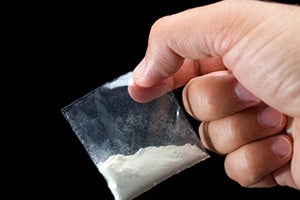
While California's Proposition 47 reclassified most personal, simple possession drug offenses from felonies to misdemeanors, a conviction still carries significant legal, personal, and professional consequences.
If you are facing an investigation or arrest for methamphetamine possession, navigating the legal system requires early, strategic action.
Many eligible individuals can leverage pre-trial drug diversion programs to complete treatment and secure a complete dismissal of their criminal charges.
Quick Reference Summary Chart: California HS 11377(a)
|
Legal Element |
Details & Statutory Guidelines |
| Statute | California Health and Safety Code Section 11377(a) HS |
| Standard Classification | Misdemeanor (For most simple personal use possession cases under Prop 47) |
| Felony Classification | Applied if the defendant has a prior "Super Strike" violent felony or must register as a sex offender under PC 290 |
| Prohibited Act | Knowingly possessing a usable amount of methamphetamine without a lawful prescription |
| Standard Misdemeanor Penalties | Up to 1 year in county jail, fines up to $1,000, and summary probation |
| Felony Penalties | 16 months, 2 years, or 3 years in county jail, and fines up to $10,000 |
| Weight Enhancements | Quantity over 1 kilogram triggers 3 to 15 additional years in state prison (HS 11370.4) |
| Diversion Eligibility | Highly eligible for PC 1000, Prop 36, or PC 1001.95 judicial diversion |
What the Prosecution Must Prove (Elements of the Crime)
To secure a conviction under HS 11377(a), the prosecutor must establish four distinct elements beyond a reasonable doubt:
-
Exercise of Control (Possession): The defendant had actual, constructive, or joint possession of the substance.
-
Knowledge of Presence: The defendant was fully aware that the substance was on their person or within their controlled property.
-
Knowledge of Character: The defendant knew the substance was a regulated or controlled narcotic, even if they did not know its specific chemical name.
-
Usable Quantity: The amount discovered must be a "usable amount"—meaning there is enough of the drug to be consumed or used to produce a physiological effect, rather than mere trace residue inside a pipe or container.
Understanding Legal Possession
Legally, possession falls into three categories:
-
Actual Possession: The drugs are physically on you, such as in your hands, pockets, clothes, or inside a bag you are carrying.
-
Constructive Possession: The drugs are not on your person but are located in a spot you actively control, such as your bedroom drawer, glove box, or locker.
-
Joint Possession: You and at least one other person share operational control over the space where the drugs are found.
Penalties for Methamphetamine Possession
Although Proposition 47 reduced most simple possession offenses to misdemeanors, a conviction under Health and Safety Code 11377(a) HS still carries significant penalties.
The legal consequences depend on the defendant's criminal history and the amount of the seized substance.
Misdemeanor Penalties (Standard Offense)
For the vast majority of personal-use possession cases, HS 11377(a) is charged as a misdemeanor. If convicted, penalties may include:
-
Up to 1 year in a county jail
-
A maximum fine of up to $1,000
-
Summary (informal) probation
-
Mandatory drug treatment or counseling
Pretrial Diversion: Eligible first-time or non-violent offenders may avoid these penalties entirely by entering a diversion program under Penal Code 1000 or Proposition 36. Upon successful completion, the charges are dismissed in full.
Felony Penalties (Aggravated Offense)
Simple possession becomes a felony if the defendant has specific disqualifying factors on their record, such as a prior conviction for a "super strike" violent felony or a requirement to register as a sex offender under Penal Code 290. A felony conviction carries:
-
16 months, 2 years, or 3 years in county jail
-
A maximum fine of up to $10,000
-
Formal (supervised) probation
Large Quantity Weight Enhancements
If an individual is found in possession of an exceptionally large quantity of methamphetamine, prosecutors can apply strict weight enhancements under Health and Safety Code 11370.4 HS.
These enhancements add consecutive, mandatory prison time to the underlying sentence—even if the state cannot prove an intent to sell:
-
Over 1 kilogram (2.2 lbs): Adds 3 additional years in state prison
-
Over 4 kilograms (8.8 lbs): Adds 5 additional years in state prison
-
Over 10 kilograms (22 lbs): Adds 10 additional years in state prison
-
Over 20 kilograms (44 lbs): Adds 15 additional years in state prison
Legal Defenses to Fight HS 11377(a) Charges
A defense attorney can challenge the state's case using several proven strategies:
-
Unlawful Search and Seizure (Fourth Amendment Violations): If the police discovered the methamphetamine during an illegal traffic stop without a valid warrant or by exceeding the scope of a standard "Terry stop" (stop-and-frisk), your lawyer can file a Motion to Suppress Evidence (Penal Code 1538.5). If successful, the evidence is suppressed, and the case is typically dismissed.
-
Lack of Knowledge or Control: If you were driving a friend's vehicle or sharing an apartment and the meth was hidden in a shared space without your knowledge, you cannot be convicted. Mere proximity to a drug does not constitute possession.
-
The Amount Was Not Usable: If the seized item contains nothing more than trace residue or microscopic stains that cannot be scraped up and consumed, the legal threshold for a usable quantity has not been met.
-
Valid Medical Prescription: In exceptionally rare clinical cases, pharmaceutical methamphetamine (such as Desoxyn) is legally prescribed for conditions such as severe ADHD or narcolepsy. A valid, current prescription is an absolute defense against this charge.
Real-World Example of an HS 11377(a) Case
The Shared Vehicle Stop
Sarah borrows her coworker's car to run an errand. She is pulled over by law enforcement for driving with an expired registration tag. During the interaction, the officer conducts a lawful search of the vehicle and discovers a small baggie containing 0.5 grams of crystal methamphetamine hidden deep in the center console. Sarah is arrested and charged under HS 11377(a).
Sarah's defense attorney investigates the case, obtains statements from the car's owner admitting that the drugs belonged to him, and shows that Sarah had no knowledge that the baggie was in the console. Because the prosecution cannot prove that Sarah knew the drugs were present, the HS 11377(a) misdemeanor charge is dismissed.
Related California Laws & Narcotics Offenses
Simple possession of methamphetamine frequently intersects with other sections of the California Health and Safety Code, Vehicle Code, and Penal Code:
-
HS 11378 – Possession of Methamphetamine for Sale: A straight felony charge if police find evidence of commercial distribution, such as digital scales, multiple individual baggies, large amounts of cash, or text messages arranging sales.
-
HS 11379 – Transporting or Selling Methamphetamine: Felony prosecution for anyone caught moving, driving, importing, or selling meth across city or county lines.
-
HS 11350 – Possession of a Controlled Substance: The sister statute to HS 11377(a) that criminalizes the unlicensed possession of other common narcotics, including cocaine, heroin, or prescription medications like Adderall.
-
HS 11370.6 – Possession of Drug Money: Makes it a serious felony offense to possess cash or financial instruments exceeding $100,000 that can be tied directly to illicit narcotics trafficking.
-
HS 11379.6 – Manufacturing a Controlled Substance: A high-level felony penalizing the chemical synthesis, extraction, or processing of methamphetamine (operating a meth lab).
-
HS 11383.5 – Possession of Meth Precursors: Criminalizes possessing specific chemical compounds (like ephedrine or pseudoephedrine) with the intent to manufacture methamphetamine.
-
HS 11365 – Presence During Controlled Substance Use: A misdemeanor penalizing anyone who knowingly remains in a location where narcotics are being actively consumed while assisting or encouraging that use.
-
Penal Code 381b PC – Recreational Use of Nitrous Oxide: A separate misdemeanor statute governing the unlawful possession or personal inhalation of nitrous oxide ("laughing gas").
Frequently Asked Questions
Is possession of methamphetamine always a misdemeanor in California?
No. While Proposition 47 reduced most simple personal-use possession cases to misdemeanors, they can still be filed as felonies if the defendant has specific severe prior convictions on their record (such as murder, gross vehicular manslaughter, or registerable sex offenses under Penal Code 290).
What exactly counts as a "usable amount" of meth?
A usable amount means there is enough of the physical substance present to be effectively consumed or introduced into the body as a drug. It does not mean it has to be enough to get you high—just more than a simple, un-scrappable trace residue or surface stains left on a pipe.
Can I avoid jail time if this is my first methamphetamine arrest?
Yes. California offers highly structured drug diversion pathways including Penal Code 1000 (PC 1000), Proposition 36, and PC 1001.95 judicial diversion. If you are eligible, the court will place your criminal case on hold while you complete drug education or counseling. Upon successful completion, your charges will be dismissed, and you will avoid jail entirely.
What happens if I am caught with a large quantity of methamphetamine?
If you possess more than one kilogram (2.2 pounds) of methamphetamine, prosecutors can file weight enhancements under HS 11370.4. Even if you have no documented intent to sell, these large-quantity enhancements can add an additional 3 to 15 years in California State Prison to your base sentence.
What is the difference between an HS 11377(a) charge and an HS 11378 charge?
HS 11377(a) covers simple possession intended solely for personal use and is typically a misdemeanor. HS 11378 covers possession with the explicit intent to sell methamphetamine. HS 11378 is a straight felony that does not qualify for simple drug diversion programs and can carry substantial jail terms.
Protect Your Record: Contact Esfandi Law Group
A methamphetamine possession charge does not necessarily result in a permanent criminal record or jail time. Early defense intervention can maximize your chances of case dismissal, chemical diversion entry, or a reduction in charges.
Contact Esfandi Law Group today at (310) 274-6529 to schedule a free, confidential case evaluation with an experienced California defense attorney.
Want to review your eligibility for a drug diversion program like PC 1000?