
California Vehicle Code 23136 VC – Underage DUI Zero-Tolerance Law
California enforces some of the strictest drunk-driving laws in the United States, especially for motorists under the age of 21.
Under Vehicle Code 23136 VC, commonly known as the Zero-Tolerance Law, it is strictly illegal for anyone under 21 to operate a motor vehicle with a Blood Alcohol Concentration (BAC) of 0.01% or higher.
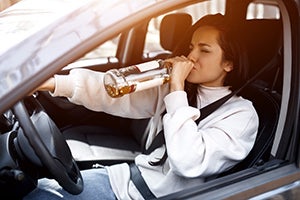
Because this is a civil administrative standard rather than a traditional criminal impairment standard, prosecutors and the DMV do not need to prove you were actually "drunk" or physically impaired.
If a chemical test detects any measurable amount of alcohol in your system, your driving privileges are at immediate risk.
Quick Reference Summary Chart
|
Key Factor |
Underage Zero-Tolerance Law (VC 23136) |
Underage DUI Infraction (VC 23140) |
| BAC Threshold | 0.01% or higher | 0.05% or higher |
| Legal Nature | Civil / Administrative Violation | Infraction |
| Court Trial? | No (Handled via DMV Hearing) | Yes (Traffic Court) |
| Primary Penalty | 1-Year License Suspension | 1-Year License Suspension + Fines |
| Implied Consent | Applies to PAS (Roadside Breath Test) | Applies to post-arrest chemical test |
| Criminal Record | No | No |
What Triggers a Zero-Tolerance Violation?
For an underage driver, even a fraction of a standard drink can push a breath test result above the 0.01% threshold.
Because the legal standard is so low, measurable alcohol levels do not have to come from beer, wine, or liquor. A violation can be triggered by everyday household and medical products, including:
-
Alcohol-based cough syrups and cold medications (such as NyQuil)
-
Certain mouthwashes
-
Homeopathic or herbal remedies containing ethanol bases
Real-World Example of VC 23136
The Scenario: Chloe, a 19-year-old college student, drinks half a glass of champagne at a family dinner. Believing she is fit to drive because she doesn't feel buzzed or impaired, she drives back to her apartment. On the way, she is pulled over for a minor equipment violation (a broken taillight). The officer detects a faint odor of alcohol and administers a roadside Preliminary Alcohol Screening (PAS) breath test. The device reads 0.015% BAC.
The Legal Outcome: Although Chloe is fully coherent, driving safely, and well below the adult limit of 0.08%, she is in immediate violation of VC 23136. The officer will confiscate her physical driver's license on the spot and issue a temporary 30-day driving permit and a notice of suspension.
Mandatory PAS Testing & Implied Consent for Minors
For drivers aged 21 and older, a roadside Preliminary Alcohol Screening (PAS) breath test is generally optional prior to a lawful DUI arrest. However, California law treats underage drivers differently.
Under the doctrine of implied consent, any person under 21 who obtains a California driver's license is deemed to have given implied consent to a roadside breathalyzer test if an officer has reasonable suspicion to believe they have consumed alcohol.
-
The Trap of Refusal: If you are under 21 and refuse to take a requested PAS test, the DMV will automatically suspend your driver's license for one year (or revoke it for up to three years if you have prior violations), completely bypassing your ability to qualify for a critical hardship restriction.
Administrative & Collateral Penalties for Underage DUI (VC 23136)
Because California Vehicle Code 23136 VC is classified as an administrative civil violation rather than a criminal offense, it does not carry traditional criminal penalties such as punitive court-ordered fines, mandatory community service, or time in county jail.
However, the Department of Motor Vehicles (DMV) imposes strict, immediate penalties that can severely disrupt a young driver's life and financial stability.
The Standard Penalty: 1-Year Driver's License Suspension
The primary penalty for a confirmed VC 23136 violation is an absolute one-year suspension of your driving privileges.
-
If You Have a Valid License: Your physical license is confiscated by law enforcement during the traffic stop. The DMV initiates a formal physical suspension exactly 30 days after the arrest, when your temporary paper permit expires.
-
You Do Not Have a Valid License: If you are an unlicensed minor or hold an out-of-state license, the California DMV will impose a 1-year delay, preventing you from legally obtaining a California driver's license for 12 months.
The Penalties for Refusing a Breath Test (PAS)
Under California's strict underage implied consent rules, a refusal to submit to a handheld roadside Preliminary Alcohol Screening (PAS) breath test dramatically increases the severity of your administrative penalties:
-
First Refusal: An automatic, non-negotiable one-year suspension with an absolute ban on applying for a restricted hardship license. You cannot drive for any reason for 365 days.
-
Second Refusal (Within 10 Years): Upgraded to a two-year administrative license revocation.
-
Third or Subsequent Refusal: Upgraded to an administrative three-year license revocation.
Long-Term Secondary & Financial Consequences
The repercussions of an underage zero-tolerance violation extend far beyond the immediate loss of a driver's license.
-
Severe Insurance Premium Hikes: A VC 23136 violation is classified by auto insurers as a major risk factor. After a suspension, your monthly premiums will likely double or triple, costing thousands of dollars over time. Many standard insurers will drop young drivers entirely, forcing families to rely on high-cost, high-risk insurance markets.
-
A Long-Lasting DMV Record: The administrative suspension under VC 23136 remains clearly visible on your public California DMV driving record for 7 years. This record is visible to future employers, university background checks, and any corporate entities checking your driving history for jobs that require operating a company vehicle.
-
Reinstatement Fees and Requirements: Once your one-year suspension term concludes, your driving privileges are not automatically restored. To get your license back, you must pay a mandatory $100 DMV reissue fee, file an SR-22 Financial Responsibility Insurance Certificate (which requires maintaining high-risk insurance rates for up to 3 consecutive years) and retaking the California driving exams.
Restricted Hardship Licenses: Can You Keep Driving?
Losing your driving privileges for an entire year can severely disrupt school attendance, job security, and family obligations. If your license is suspended under VC 23136, you may apply to the DMV for a Critical Need / Hardship License.
To qualify for a restricted hardship license, you must successfully demonstrate:
-
A legitimate, verified need to drive to and from school, work, or medical appointments.
-
That alternative public or family transportation is entirely inadequate or unavailable.
-
That you fully complied with all chemical or PAS testing requests during your traffic stop (test refusals instantly disqualify you).
Important Notice: Even if the DMV approves your hardship application, you are legally required to serve a mandatory 30-day hard suspension period during which you cannot drive under any circumstances before the restricted license becomes active.
How to Contest a Zero-Tolerance Violation
A VC 23136 citation is not an automatic open-and-shut case. You have the right to challenge the suspension by requesting an administrative DMV Writ / Safety Hearing.
However, you must act quickly: you have exactly 10 days from the date of your citation to request this hearing. If you miss this deadline, your suspension goes into effect automatically when your 30-day temporary permit expires.
Skilled defense strategies at a DMV administrative hearing often include:
-
Challenging Probable Cause: Proving the officer did not have a valid, legal reason to initiate the initial traffic stop.
-
Disputing the Driving Element: Establishing that the minor was not actually operating or controlling the physical vehicle when contact occurred.
-
Equipment Inaccuracy: Demonstrating that the breathalyzer or PAS device was improperly calibrated, poorly maintained, or operated in violation of strict Title 17 regulations.
Related California Alcohol and Traffic Laws
Underage driving incidents frequently involve a complex web of overlapping civil infractions, misdemeanors, and severe criminal filings:
-
VC 23140 – Underage DUI (BAC of 0.05% or Higher): An infraction handled in traffic court specifically targeting minors driving with elevated BAC levels. It carries fines and mandatory alcohol education programs alongside a one-year license suspension.
-
VC 23152 – Driving Under the Influence: The standard California misdemeanor DUI law. If a driver under 21 has a BAC of 0.08% or higher, or is actively impaired by drugs or alcohol, they face full criminal prosecution, potential jail time, large fines, and a permanent criminal record.
-
VC 23224 – Minor in Possession of Alcohol in a Vehicle: A misdemeanor penalizes any underage driver or passenger carrying unsealed alcohol in a motor vehicle unless accompanied by a parent or legal guardian. Penalties include up to $1,000 in fines and vehicle impoundment.
-
BP 25661 – Use of a Fake ID: Criminalizes possessing or presenting fraudulent identification to purchase alcohol. This offense can be charged alongside an underage DUI arrest.
-
VC 22651 – Vehicle Towing and Impoundment: Outlines the legal parameters under which law enforcement may immediately impound a vehicle following an alcohol-related arrest or a license suspension.
-
PC 1203.4 – DUI Expungement: Allows individuals who successfully complete probation for criminal DUI charges (such as VC 23152) to have their convictions removed from their criminal records.
Frequently Asked Questions
What exact BAC level violates California's underage zero-tolerance law?
Any blood alcohol concentration of 0.01% or higher constitutes a violation of Vehicle Code 23136 VC. This threshold is so low that a single sip of beer or even certain medicinal syrups can trigger a positive reading.
Is a violation of VC 23136 a criminal offense?
No, VC 23136 is a civil administrative offense handled directly by the Department of Motor Vehicles (DMV), not by the criminal court system. It will not result in a criminal record, but it will appear on your public DMV driving transcript.
Can I legally refuse a roadside breathalyzer test if I am under 21?
Legally, no. Under California's implied consent rules for minors, refusing a PAS breath test results in an automatic, mandatory one-year license suspension and zero eligibility for a restricted hardship license.
How long will my driver's license be suspended for a zero-tolerance violation?
The standard administrative penalty is a strict one-year suspension. If you do not currently hold a valid driver's license, the DMV will delay your ability to apply for one by one full year.
Can I still face standard criminal DUI charges if I am under 21?
Yes. VC 23136 does not replace other DUI laws—it stacks with them. If your BAC is 0.05% or higher, you can be charged under VC 23140. If your BAC is 0.08% or higher, or if you are physically impaired, you will face full misdemeanor charges under VC 23152.
Can a defense attorney help me fight a VC 23136 citation?
Yes. An experienced attorney can request a formal DMV administrative hearing on your behalf, subpoena the breathalyzer calibration logs, cross-examine the arresting officer, and build a defense to save your driving privileges or help you obtain a hardship license.
Need Immediate Help? Protect Your Future Today
The clock is ticking. You have only 10 days from the date of your citation to pause your license suspension and request an official DMV administrative hearing.
The specialized legal team at Esfandi Law Group knows how to aggressively contest flawed breath testing data, question unlawful stops, and help young drivers preserve their educational and professional opportunities.
Contact our offices immediately to set up your free, confidential consultation:
-
Phone Call: (310) 274-6529
-
Online Portal: Connect directly through our website contact form for prompt legal review.