
California Implied Consent Law: Vehicle Code 23612 VC DUI Refusal Penalties
Under California Vehicle Code Section 23612 VC, operating a motor vehicle on public roads signifies that you have already given your implicit agreement—or implied consent—to chemical testing if you are lawfully arrested for driving under the influence (DUI).
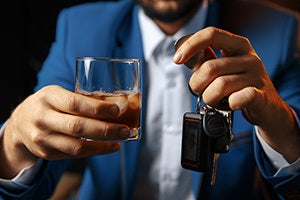
Many drivers mistakenly believe they can protect themselves from a DUI conviction by refusing to submit to blood or breath testing.
In California, refusing a post-arrest chemical test triggers immediate, severe administrative penalties from the DMV and mandatory sentencing enhancements in criminal court.
Critical Notice: A DUI chemical test refusal eliminates your eligibility for a restricted driver's license. If you have been accused of a chemical test refusal, you have exactly 10 days from your arrest date to request a DMV administrative hearing to challenge a license suspension. Contact Esfandi Law Group immediately at (310) 274-6529 to protect your rights.
Quick Reference Summary: Pre-Arrest vs. Post-Arrest Testing Rules
Understanding exactly when your legal obligation begins is the most critical aspect of navigating a California DUI stop:
|
Phase of the DUI Stop |
Test Type requested |
Immediate Penalty for Refusal |
| Pre-Arrest (Investigation) | Standard Field Sobriety Tests (FSTs) | None. Cannot be used to suspend your license.* |
| Pre-Arrest (Investigation) | Preliminary Alcohol Screening (PAS) Handheld Breath Test | None. Cannot trigger administrative suspension.* |
| Post-Arrest (Formal Detention) | Desktop Evidentiary Breath Test or Official Blood Draw | Automatic 1-year hard license suspension; mandatory jail custody enhancement. |
*Note: Pre-arrest testing is mandatory only if you are under the age of 21 or actively serving criminal DUI probation.
Enhanced Criminal Penalties for Refusal Convictions
If you are convicted of a DUI in criminal court and the jury finds the allegation of a chemical test refusal to be true, judges are statutorily required to add mandatory, consecutive county jail time and expanded educational terms to your base sentence:
|
Prior DUI Offenses Within 10 Years |
Additional Mandatory Jail Time |
Total Length of DUI School Required |
| 0 Priors (First-Time DUI) | +48 consecutive hours in County Jail | Elevated to a 9-month program (from 3 months) |
| 1 Prior Conviction | +96 consecutive hours in County Jail | Standard 18-month or 30-month multiple-offender track |
| 2 Prior Convictions | +10 consecutive days in County Jail | Standard 30-month multiple-offender track |
| 3 or More Priors | +18 consecutive days in County Jail | Advanced multi-year multiple-offender track |
Real-World Case Example: The Station House Dilemma
1. The Traffic Stop (Pre-Arrest)
A driver is pulled over in Los Angeles for failing to signal. The officer detects the odor of alcohol and observes bloodshot eyes. The officer asks the driver to step out of the car to perform the walk-and-turn test and to blow into a handheld Preliminary Alcohol Screening (PAS) device.
-
The Driver's Choice: The driver declines the roadside physical tests and the handheld breathalyzer test.
-
The Legal Reality: Because the driver is not yet under arrest, the implied consent law has not taken effect. The refusal to submit to these preliminary testing measures cannot be used by the DMV to suspend their license.
2. The Police Station (Post-Arrest)
Based on the driver's driving patterns and physical symptoms, the officer establishes probable cause, makes an arrest, and transports the driver to the station.
The officer reads the mandatory VC 23612 Implied Consent Admonition verbatim, informing the driver that they must choose between a formal blood test and the station's desktop breathalyzer.
-
The Driver's Choice: The driver states, "I am not taking any test until I talk to a lawyer."
-
The Legal Reality: In California, you do not have the right to speak with an attorney before deciding to take a chemical test. Conditioning your consent on speaking with a lawyer is treated as an official refusal.
3. The Consequences
Even if the criminal defense lawyer later uncovers a flaw that forces the prosecutor to dismiss the underlying DUI charge in court, the driver's license will still be suspended for one full year by the DMV with zero options for a work or school hardship permit, because the administrative refusal process operates independently of the criminal court outcome.
Statutory Rights to Re-Testing: The Blood Split Motion
If you comply with a mandatory post-arrest blood test, you preserve critical defense options that are lost if you take a breath test. Under California law, the state forensic laboratory must preserve a portion of your extracted blood sample.
Your defense attorney can file a Blood Split Motion, requiring the state to surrender a portion of the sample to an independent laboratory to verify calibration accuracy, test for contamination, or check for proper preservative levels.
Related California DUI Statutes
-
Vehicle Code 23152(a) VC: Driving under the influence of alcohol or drugs; the impairment-based DUI charge prosecutors can easily win by treating your refusal as a "consciousness of guilt."
-
Vehicle Code 23153 VC (DUI Causing Injury): If an accident causes bodily injury, refusing a chemical test elevates the case profile, making a search warrant for a forced blood draw an immediate priority for law enforcement.
-
Vehicle Code 23136 VC (Zero Tolerance for Underage DUI): Dictates that drivers under 21 must submit to a PAS test if an officer suspects any measurable amount of alcohol. Refusal results in an automatic 1-year license suspension.
Strategic Defenses Against a DUI Refusal Allegation
An experienced defense attorney can challenge a refusal allegation at both the DMV administrative hearing and in criminal court using specific legal strategies:
-
Unlawful Initial Stop or Arrest: For the implied consent obligation to be legally binding, the initial traffic stop and the subsequent arrest must be lawful. If the officer lacked probable cause to arrest you, the request for a chemical test is invalid, and the refusal allegation must be dismissed.
-
Defective or Misleading Admonition: Officers are legally required to explicitly warn you of the consequences of refusing. If the officer failed to read the warning, read it unclearly, or confused you by mixing the implied consent warnings with your Miranda rights (leading you to believe you had an immediate right to a lawyer), the refusal is legally excused due to "officer-induced confusion."
-
Physical or Medical Inability to Complete Testing: If a non-alcohol-related medical condition, such as severe asthma, chronic obstructive pulmonary disease (COPD), or a severe physical injury, prevents you from providing sufficient deep lung air to complete a breath test, it cannot be legally classified as a willful refusal.
-
Severe Language Barriers: If you lack fluency in English and law enforcement failed to provide an approved interpreter or a translated admonition form, the refusal can be dismissed for lack of intentional non-compliance.
Frequently Asked Questions (FAQs)
Can I choose which chemical test to take after a California DUI arrest?
Yes. Under standard conditions, you have the right to choose between a breath test and a blood test.
However, if the officer has probable cause to suspect driving under the influence of drugs (DUID) or if the breathalyzer is broken, you may be required to take a blood test.
Is it better to take or refuse the post-arrest chemical test in California?
From a legal standpoint, it is almost always better to take the test. Refusing does not prevent the prosecution from convicting you based on the officer's observations, and it automatically triggers a mandatory 1-year hard license suspension with no restricted options, plus mandatory jail time.
Can I speak to a defense lawyer before deciding whether to take a chemical test?
No. The constitutional right to an attorney does not apply to the administrative decision to take a chemical test under the implied consent law. Requesting to speak to a lawyer before taking the test is legally classified as an official refusal.
Can law enforcement legally force me to take a blood test if I refuse?
Yes. If you refuse to cooperate, officers can contact a night judge to obtain a judicial search warrant. Once the warrant is signed, medical personnel are legally authorized to perform a forced blood draw, using reasonable physical restraint if necessary.
Can the DMV suspend my license for a refusal if my court case is dropped?
Yes. The DMV administrative system and the criminal court system are entirely separate. Even if a prosecutor drops your criminal DUI charges, the DMV can still enforce its 1-year suspension for violating the implied consent law.
Can I get a restricted Ignition Interlock Device (IID) license if I refuse the test?
No. While standard DUI defendants can avoid a hard suspension by installing an IID, California law explicitly bars this option for drivers who refuse a post-arrest chemical test. A refusal triggers a strict, unmitigated 1-year hard suspension with no exceptions for work or school.
What happens if I refuse a chemical test and it is my second DUI arrest?
If you have a prior DUI or "wet reckless" conviction within the last 10 years, a chemical test refusal triggers an automatic 2-year driver's license revocation and a mandatory minimum addition of 96 hours in county jail.
Does a medical fear of needles exempt me from taking a blood test?
No. A general fear of needles or blood draws does not exempt you from the implied consent law. If you decline a blood test because of a phobia, you must take the breath test instead. Refusing both options is a willful refusal.
Can the prosecution use my refusal against me during a jury trial?
Yes. The prosecutor will introduce your refusal as "consciousness of guilt." They will argue to the jury that you refused the test because you knew you were intoxicated and that the scientific results would prove your guilt.
How can a defense lawyer help if I am accused of a chemical test refusal?
A defense lawyer can review police dashcam and bodycam footage to determine whether the officer properly read the implied consent warning.
They can also look for signs of officer-induced confusion or show that a medical condition made it physically impossible for you to complete the test.
Consult a Specialized Los Angeles DUI Defense Firm
Defending against a DUI charge complicated by a chemical test refusal requires an aggressive, calculated legal defense.
Because the administrative and criminal tracks run concurrently, you must build a defense that addresses both court procedures and the DMV's evidence.
The legal team at Esfandi Law Group has decades of experience challenging violations of implied consent and protecting driving privileges in Los Angeles County courts.
Do not risk losing your license for a full year without a defense. Call Esfandi Law Group today at (310) 274-6529 or complete our secure online contact form to schedule your immediate, free case evaluation.