
Los Angeles Misdemeanor DUI Attorney: California Vehicle Code 23152(a) and (b)
The vast majority of driving under the influence arrests in Los Angeles County are prosecuted as misdemeanors under Vehicle Code Section 23152 VC. However, do not mistake a misdemeanor classification for a minor offense.
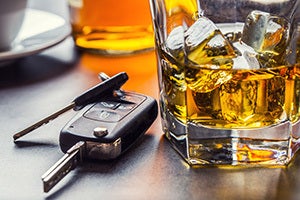
A misdemeanor DUI conviction is a serious criminal matter that carries mandatory penalties, including up to six months or one year in county jail, thousands of dollars in fines, court-ordered license suspensions, and a permanent criminal record.
When law enforcement arrests you for drunk driving or driving under the influence of drugs, prosecutors almost always file two distinct charges: VC 23152(a) and VC 23152(b).
These charges represent two separate legal theories designed to give the state multiple paths to a conviction.
Urgent Notice: Following a DUI arrest, you have a strict 10-day window to request an Administrative Per Se (APS) hearing with the California DMV. Failure to act will result in the automatic suspension of your driver's license. Contact Esfandi Law Group today at (310) 274-6529 for immediate, expert defense representation.
Quick Reference Summary: VC 23152(a) vs. VC 23152(b)
|
Statutory Subsection |
Key Elements of Proof |
Primary Evidence Utilized |
|
VC 23152(a) VC Impairment DUI |
Driving while physical or mental abilities are too impaired to operate a vehicle like a sober person. | Driving patterns, officer observations, slurred speech, field sobriety tests (FSTs). |
|
VC 23152(b) VC Per Se BAC DUI |
Driving with a Blood Alcohol Concentration (BAC) of 0.08% or higher, regardless of actual sobriety. | Preliminary Alcohol Screening (PAS) breath tests, evidentiary breathalyzers, or blood draws. |
The Prosecution's Strategy: Why Both Charges Are Filed Together
If you review your citation or criminal complaint, you will likely see both subsections listed. Although they stem from a single traffic stop, they address the alleged offense from different angles:
-
The Safety Net Matrix: Proving actual physical impairment can be subjective. Conversely, a breathalyzer reading can be challenged by chemical errors. By charging both, the prosecution strengthens its case. If a jury believes you felt completely sober but the chemical test legally registered 0.08%, you can be convicted under subsection (b). If your blood test is suppressed due to laboratory errors but dashcam footage shows severe swerving, you can be convicted under subsection (a).
-
The Sentencing Outcome: While a jury can find you guilty of both counts, California law dictates that you can only be sentenced for a single DUI offense.
Statutory Penalties for Misdemeanor DUI in California
The penalty framework for a misdemeanor DUI escalates significantly based on your prior record within a 10-year look-back window:
First-Time DUI Offense
-
3 to 5 years of informal (summary) probation.
-
Up to 6 months in county jail (often replaced with alternative sentencing).
-
$390 to $1,000 base fines (escalating to $2,000+ after court penalty assessments).
-
Mandatory 3- or 9-month licensed DUI education program.
-
6-month driver's license suspension (immediate restricted options available through Ignition Interlock Device installation).
Second DUI Offense (Within 10 Years under VC 23540)
-
Mandatory minimum 96 hours to 1 year in county jail.
-
18-month or 30-month multiple-offender DUI program.
-
Mandatory 1-year Ignition Interlock Device (IID) requirement.
Third Offense (Within 10 Years under VC 23546)
-
Mandatory minimum 120 days to 1 year in county jail.
-
30-month formal drug/alcohol rehabilitation program.
-
Extended multi-year driver's license revocation.
Aggravating Factors and Sentence Enhancements
Certain variables present at the time of your arrest will elevate misdemeanor penalties or transform the charge into an automatic felony:
-
High Blood Alcohol Content (VC 23578): A chemical test showing a BAC of 0.15% or higher triggers mandatory enhanced penalties, longer DUI school terms, and stricter probation conditions.
-
Chemical Test Refusal (VC 23612): Under California's implied consent law, refusing a chemical test after a lawful arrest triggers an immediate 1-year driver's license revocation with zero eligibility for a restricted license, alongside mandatory consecutive jail time.
-
Minor Passenger (VC 23572): Driving under the influence with a child under 14 inside the vehicle adds mandatory consecutive jail days and exposes you to a separate felony or misdemeanor charge of Child Endangerment (Penal Code 273a PC).
-
Speeding and Reckless Driving (VC 23582): Driving 20+ mph over the speed limit on a street (or 30+ mph on a highway) while concurrently committing a DUI adds a mandatory, consecutive 60 days in jail.
Related California Laws
-
Vehicle Code 23153 VC (DUI Causing Injury): If an impaired driver causes bodily injury to another person, the offense shifts from a simple misdemeanor to a "wobbler" that is often prosecuted as a felony.
-
Vehicle Code 23103.5 VC (Wet Reckless): A highly sought-after plea bargain that reduces a DUI charge to reckless driving involving alcohol. It carries reduced fines, a shorter school duration, and no court-ordered license suspension.
-
Vehicle Code 14601 VC (Driving on a Suspended License): Operating a vehicle while your license is actively suspended or revoked for a prior DUI arrest carries mandatory jail custody and steep financial penalties.
-
Penal Code 191.5 PC (Vehicular Manslaughter While Intoxicated): Causing a fatal accident while driving under the influence due to negligence can lead to severe state prison sentences.
Real-World Case Examples
Scenario A: Conviction Under VC 23152(a) Without a High BAC
A driver is pulled over after weaving wildly across lanes on Sunset Boulevard. The driver smells of alcohol, speaks slurredly, and has significant difficulty with the One-Leg Stand and Walk-and-Turn field sobriety tests. After arrest, a blood sample reveals a BAC of 0.07%.
-
The Outcome: Even though the driver's BAC was strictly below the legal limit of 0.08%, prosecutors can proceed with a trial under VC 23152(a) because the behavioral evidence, driving patterns, and field test performance show that the driver was too impaired to operate a vehicle safely.
Scenario B: Conviction Under VC 23152(b) Without Obvious Impairment
A driver passes through a sobriety checkpoint in downtown Los Angeles. The driver speaks clearly, maintains steady physical balance, and performs well on field sobriety tests. However, an evidentiary breathalyzer test shows a BAC of 0.09%.
-
The Outcome: Because California law enforces a per se statutory limit, the driver's apparent physical sobriety is legally irrelevant. Prosecutors can secure a conviction under VC 23152(b) based solely on the scientific verification that their chemical level exceeded 0.08% at the time of driving.
Strategic Legal Defenses Against Misdemeanor DUI Charges
An expert criminal defense firm can systematically challenge the state's case through established legal avenues:
-
Challenging Probable Cause for the Stop: Under the Fourth Amendment, law enforcement must possess a valid, articulable reason to stop your vehicle. If the officer lacked reasonable suspicion, all subsequent evidence can be suppressed under a 1538.5 PC motion, typically resulting in a complete dismissal of the case.
-
Rising Blood Alcohol Defenses: Alcohol absorption takes time. If you consumed alcohol shortly before driving, your BAC may have been below 0.08% while you were operating the vehicle, rising above the limit only during the delay before your test at the police station.
-
Title 17 Forensic Compliance Defenses: California Code of Regulations Title 17 sets strict rules for chemical testing. If an officer failed to observe you continuously for 15 minutes before a breath test, or if blood samples were stored improperly without the required preservatives, the test results may be deemed unreliable.
-
Alternative Explanations for Physical Symptoms: Standard indicators of intoxication—such as bloodshot eyes, slurred speech, or poor balance—can be attributed to non-alcoholic factors such as extreme physical fatigue, allergies, neurological conditions, or orthopedic injuries.
Frequently Asked Questions (FAQs)
Can you be convicted of a DUI in California if your BAC is under 0.08%?
Yes. Under Vehicle Code 23152(a), you can be convicted of an impairment-based DUI if the prosecution proves that alcohol or drugs impaired your physical or mental abilities, regardless of your precise chemical test result.
Is a first-time DUI always a misdemeanor in California?
Generally, yes. A first-time DUI is treated as a misdemeanor unless there are aggravating factors, such as causing an accident that results in bodily injury or death, or if you have a prior felony conviction.
What is the difference between a pre-arrest PAS test and a post-arrest chemical test?
The Preliminary Alcohol Screening (PAS) test is a handheld roadside breathalyzer used before an arrest. For most drivers over 21 who are not on DUI probation, this test is entirely voluntary. The post-arrest breath or blood test at the station is mandatory under the implied consent law.
Can a misdemeanor DUI charge be reduced to a lesser offense?
Yes. Depending on weaknesses identified in the prosecution's evidence (such as flawed chemical tests or an illegal stop), an attorney can negotiate to reduce the charge to a Wet Reckless (VC 23103.5), a dry reckless, or an exhibition of speed.
5. Can a misdemeanor DUI conviction impact my professional license?
Yes. A misdemeanor conviction under VC 23152 can jeopardize state-regulated professional licenses, including those for nurses, doctors, lawyers, real estate agents, and teachers. Licensing boards require timely disclosure and may initiate disciplinary reviews.
Can I get a misdemeanor DUI expunged from my criminal record?
Yes. Under California Penal Code Section 1203.4 PC, once you have successfully completed all terms of your probation, paid all fines, and finished your required DUI school, you can petition the court to expunge the conviction.
This dismisses the case and helps clear your record for private employment background checks.
Am I legally required to perform roadside field sobriety tests?
No. Roadside field sobriety tests—such as walking a straight line or standing on one leg—are entirely voluntary. You can politely decline to perform them, and your refusal cannot result in automatic DMV license suspensions.
What happens if I am caught driving after my license is suspended for a DUI?
If caught driving while your license is suspended for a DUI, you will face additional misdemeanor charges under VC 14601. This offense carries a mandatory minimum sentence of 10 days in county jail and requires the installation of an Ignition Interlock Device.
What is an Ignition Interlock Device (IID) restricted license?
An IID-restricted license allows individuals convicted of DUI to maintain unrestricted driving privileges by installing a mini-breathalyzer connected to their vehicle's ignition system. This option allows you to bypass the traditional hard suspension period.
Does a misdemeanor DUI ever automatically drop off my record?
No. A criminal conviction does not automatically disappear over time. It remains on your background check indefinitely unless you formally petition the court for an expungement under PC 1203.4. It will also remain on your DMV driving record for 10 years for priorability purposes.
Consult a Dedicated Los Angeles DUI Defense Attorney
Facing misdemeanor DUI charges under Vehicle Code 23152(a) and (b) requires a proactive, strategic defense.
Because these cases involve both strict criminal court timelines and rapid DMV administrative proceedings, early intervention can directly affect your ability to retain your driving privileges and protect your future.
Our legal team has extensive experience analyzing police reports, identifying Title 17 forensic errors, and fighting for charge reductions and dismissals in Los Angeles County courts.
Take immediate action to protect your rights. Call Esfandi Law Group today at (310) 274-6529 or submit your details through our secure online contact form to schedule your comprehensive, free legal consultation.