
California Health and Safety Code § 11353 - Selling or Furnishing Drugs to a Minor
California Health and Safety Code Section 11353 (HSC § 11353) is a serious felony statute designed to protect minors from exploitation in the drug trade.
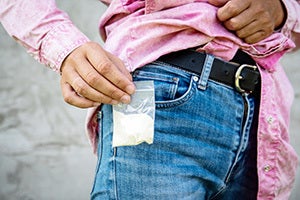
It targets adults who use children to traffic, sell, prepare, or administer specific controlled substances, including heroin, cocaine, and certain prescription opioids.
Quick Reference Summary Chart
|
Feature |
Details |
| Statute | California Health and Safety Code § 11353 |
| Primary Offense | Using a minor to transport, carry, sell, give away, prepare for sale, or peddle controlled substances; or selling/furnishing controlled substances to a minor. |
| Classification | Felony (Non-reducible to a misdemeanor) |
| Base Prison Sentence | 3, 6, or 9 years in California State Prison |
| Age Requirement | Defendant must be $\ge 18$ years old; Victim/Minor must be $< 18$ years old. |
| Enhancements | Additional 1–2 years if the offense occurs on or near schools, playgrounds, or churches; additional years if the minor is more than 4 years younger than the adult. |
Key Elements of the Crime
To convict a defendant under HSC § 11353, the prosecution must prove the following four elements beyond a reasonable doubt:
-
The defendant was an adult (18 years of age or older).
-
The other person involved was a minor (under 18).
-
The defendant knowingly engaged in one of the prohibited acts (e.g., hiring, employing, or using the minor to transport or sell the drug, or furnishing the drug to the minor).
-
The drug involved was a specific controlled substance covered by the statute.
Case Example
The Scenario
Marcus (24 years old) runs a localized drug distribution operation. To avoid police suspicion, he hires Leo (15 years old) to ride his bicycle across town and deliver packages of cocaine to Marcus's buyers.
Marcus pays Leo $50 per delivery. During a routine traffic stop on the sidewalk, police search Leo's backpack, find the packages, and Leo admits he is working for Marcus.
Legal Application
-
Adult Status: Marcus is 24 (meets the age requirement).
-
Minor Status: Leo is 15 (meets the < 18 requirement).
-
Prohibited Act: Marcus hired and used a minor to transport and sell a controlled substance.
-
Outcome: Marcus will be charged with a felony under HSC § 11353. Because Leo is 9 years younger than Marcus, Marcus may face an additional sentence enhancement for the significant age gap.
Penalties and Sentencing for HSC § 11353
Because California treats the exploitation of children in drug operations with extreme severity, a conviction under Health and Safety Code § 11353 carries some of the most stringent penalties in the state's penal code.
Base Prison Sentences
A violation of HSC § 11353 is always a felony. If convicted, the defendant faces a definite prison term in California State Prison rather than county jail.
Under California's determinate sentencing triad, a judge will issue one of the following base terms, depending on the case's mitigating or aggravating factors:
-
Low Term: 3 years in state prison
-
Middle Term: 6 years in state prison
-
High Term: 9 years in state prison
While a judge may grant formal felony probation in very rare, limited circumstances, the default expectation for this offense is substantial prison time.
Sentence Enhancements (HSC § 11353.1)
The total time a defendant serves can increase significantly beyond the base sentence if specific aggravating conditions are met. These statutory enhancements are served consecutively (added to the base term):
-
Significant Age Gap: If the adult defendant is at least 4 years older than the minor, the court may add 1, 2, or 3 years to the prison sentence.
-
School or Youth Zones: If the offense involves hard narcotics (such as cocaine, heroin, or fentanyl) and occurs on the grounds of, or within 1,000 feet of, a school, playground, church, youth center, day-care facility, or public pool while children are present, it triggers an additional 1 to 2 years of prison time.
Additional Consequences
Beyond incarceration, an individual convicted of HSC § 11353 faces lasting financial and personal repercussions:
-
Substantial Fines: Courts can impose steep criminal fines of up to $20,000.
-
Asset Forfeiture: Under California asset forfeiture laws, law enforcement can permanently seize any cash, vehicles, real estate, or personal property suspected of being obtained through or used to facilitate the drug operation.
-
Immigration Consequences: For non-U.S. citizens, an HSC § 11353 conviction is classified as an "aggravated felony" under federal immigration law, making deportation virtually mandatory and eliminating any pathway to legal residency.
Legal Defenses to HSC § 11353
Beating a charge under California Health and Safety Code § 11353 requires challenging the specific elements the prosecution must prove—your intent, your knowledge, or the lawfulness of the police investigation.
Because "mistake of age" (honestly believing the minor was an adult) is not a valid defense in California for this crime, defense attorneys generally rely on the following strategies:
1. Lack of Knowledge
To be convicted, you must have known both that the substance was present and that it was a controlled substance.
If someone slipped the drugs into your possession or vehicle without your knowledge, or if you genuinely believed the substance was lawful (such as baking soda or a legal over-the-counter supplement), you cannot be held criminally liable.
2. Lack of Inducement or Control
The law targets adults who actively involve minors in the drug trade.
If the minor acted entirely on their own, or if you were simply present in the same area where a minor was selling drugs without your encouragement, direction, or employment, you do not meet the criteria for HSC § 11353.
3. False Accusations or Wrongful Arrest
It is not uncommon for an arrested minor to blame an adult to deflect responsibility or secure a lighter sentence from juvenile authorities.
A defense attorney can investigate the minor's motives, credibility, and text or digital message history to prove you were falsely accused or misidentified.
4. Illegal Search and Seizure
If law enforcement discovered the drugs or intercepted communications through an unlawful traffic stop, a warrantless search, or by exceeding the scope of a search warrant, your constitutional rights were violated.
Your attorney can file a Motion to Suppress Evidence under California Penal Code § 1538.5. If successful, the judge will throw out the illegally obtained drugs or statements, which usually forces the prosecution to drop the entire case.
Related Laws and Statutes
If an individual is facing charges under HSC § 11353, prosecutors frequently add or substitute related offenses:
-
Health and Safety Code § 11350 (Drug Possession): Possessing a controlled substance without a valid prescription.
-
Health and Safety Code § 11351 (Possession for Sale): Possessing illegal drugs with the specific intent to sell them.
-
Health and Safety Code § 11352 (Transportation or Sale of Controlled Substances): The adult equivalent of drug trafficking (selling, transporting, or importing drugs).
-
Penal Code § 272 (Contributing to the Delinquency of a Minor): A misdemeanor charge involving any act that causes or tends to cause a minor to become a dependent of the juvenile court or a delinquent.
Frequently Asked Questions (FAQs)
Does the adult have to know the person was a minor to be convicted?
No. Under California law, "mistake of age" is generally not a valid defense to HSC § 11353. Even if the minor lied about their age, appeared to be an adult, or possessed a fake ID, the adult remains strictly liable if the person is legally under 18.
What is the difference between HSC § 11353 and HSC § 11380?
While both involve minors and drugs, they apply to different types of substances.
-
HSC § 11353 applies to "hard" illegal narcotics and specific prescription drugs classified under Schedules I and II (e.g., cocaine, heroin, fentanyl).
-
HSC § 11380 applies to synthetic drugs, hallucinogens, and phencyclidine (PCP) listed under Schedules III, IV, and V.
Can a 17-year-old be charged under HSC § 11353 if they use a 14-year-old to sell drugs?
No. This statute applies only to adults (age 18). If a minor uses another minor to sell drugs, the older minor will be charged under juvenile delinquency laws, typically via standard drug trafficking statutes (like HSC § 11352), but not under HSC § 11353.
Are there sentence enhancements if the crime happens near a school?
Yes. Under HSC § 11353.1, if the offense occurs on school grounds or within 1,000 feet of a school, church, playground, or youth center during hours when children are present, the court can add 1 to 2 years to the base state prison sentence.
Speak to an Experienced California Drug Crime Lawyer
Facing charges under California Health and Safety Code § 11353 is a high-stakes situation.
Because this offense is a straight felony that carries mandatory state prison time, significant enhancements, and lifetime consequences, you cannot afford to navigate the legal system alone or rely on a generic defense.
An experienced criminal defense attorney at the Esfandi Law Group who specializes in California drug crimes can make a critical difference in your case by:
-
Evaluating the Evidence: Aggressively scrutinizing police reports, body camera footage, and witness statements to identify inconsistencies.
-
Filing Constitutional Motions: Fighting to reduce or dismiss the charges if law enforcement violated your Fourth Amendment rights during a search or arrest.
-
Negotiating with Prosecutors: Working to negotiate a plea to a lesser, non-reducible offense if a dismissal isn't immediately possible, thereby shielding you from the severe penalties associated with using a minor.
Get a Free Consultation Today
If you or a loved one has been arrested, accused, or is under investigation for involving a minor in a drug offense, time is of the essence. Protect your future, your freedom, and your rights by speaking with a qualified defense attorney right away.
Most reputable firms offer a confidential, no-obligation case evaluation to help you understand your options.
Schedule your free consultation at (310) 274-6529 or use the contact form.