
Fentanyl is a synthetic opioid up to 100 times more potent than morphine and 50 times more potent than heroin.
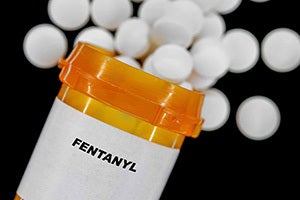
While pharmaceutical fentanyl is legally prescribed as a transdermal patch, lozenge, or injection for severe pain management, street fentanyl refers to illicitly manufactured fentanyl (IMF) distributed without a prescription.
Because a lethal dose can be as small as 2 to 3 milligrams, illicit fentanyl represents both an unprecedented public health crisis and a top enforcement priority for state and federal prosecutors.
The Origins and Supply Chain of Illicit Fentanyl
Street fentanyl is primarily manufactured outside the United States in clandestine laboratories, predominantly using precursor chemicals sourced globally.
-
Importation & Distribution: Precursor chemicals are frequently processed into raw fentanyl powder or pressed into counterfeit prescription pills (often disguised as oxycodone, Percocet, or Xanax) before being smuggled across U.S. borders.
-
Lacing & Cross-Contamination: Illicit distributors frequently mix fentanyl into cocaine, methamphetamine, heroin, and counterfeit pills to increase potency at a low cost.
-
Involuntary Overdose Risks: Because fentanyl is odorless, tasteless, and invisible to the naked eye, buyers are often unaware their drugs are laced. This lack of awareness drastically increases the risk of fatal respiratory depression and central nervous system failure.
California Controlled Substance Schedules & Fentanyl Classification
California law classifies controlled substances into distinct statutory schedules based on their medical utility, potential for abuse, and safety profile under the California Health and Safety Code (HSC).
Fentanyl is classified as a Schedule I (or Schedule II for pharmaceutical formulations) controlled substance, placing it in the highest tier of legal restriction alongside opiates and cocaine derivatives.
|
Controlled Substance Schedule |
Representative Substances |
Statutory Classification & Severity |
| Schedule I | Fentanyl (illicit), Heroin, Mescaline, MDMA | High potential for abuse; no accepted medical use or high risk of severe dependence. Highest legal severity. |
| Schedule II | Pharmaceutical Fentanyl, Morphine, Methadone, Raw Opium | High potential for abuse; restricted medical applications under strict prescription controls. |
| Schedule III | Anabolic Steroids, Buprenorphine, Ketamine | Moderate to low physical dependence risk; established medical uses. |
| Schedule IV | Diazepam (Valium), Zolpidem (Ambien), Alprazolam | Low potential for abuse relative to Schedule III. |
| Schedule V | Low-dose Codeine preparations, Cough suppressants | Lowest restriction tier among controlled prescription substances. |
State and Federal Legal Consequences for Fentanyl Offenses
Due to the escalation of fatal overdoses, local, state, and federal law enforcement agencies enforce rigorous penalties for fentanyl-related crimes.
-
Simple Possession (HSC § 11350): Unlawful possession of fentanyl for personal use is generally charged as a misdemeanor under California law, carrying up to 1 year in county jail and court fines. However, repeat offenders or individuals with specific disqualifying prior convictions may face enhanced penalties.
-
Possession for Sale (HSC § 11351): Possessing fentanyl with the intent to sell or distribute is a non-reducible felony punishable by 2, 3, or 4 years in state prison.
-
Transportation or Sale (HSC § 11352): Transporting, importing, selling, or furnishing fentanyl is a serious felony punishable by 3, 4, or 5 years in state prison (or up to 9 years if transported across county lines).
-
Weight and Quantity Enhancements (HSC § 11352.5): Possession or sale of large quantities of fentanyl triggers substantial mandatory prison enhancements based on weight (e.g., additional consecutive prison terms for exceeding 1 kilogram, 4 kilograms, or more).
-
Homicide / "Watson" Theory Prosecution: Prosecutors increasingly file implied malice murder (PC § 187) or manslaughter charges against dealers who supply fentanyl that results in a fatal overdose, arguing conscious disregard for human life.
-
Federal Drug Conspiracy (21 U.S.C. § 846): Manufacturing, importing, or distributing fentanyl on a commercial scale frequently triggers federal prosecution by the Department of Justice and DEA, carrying mandatory minimum sentences ranging from 10 years to life in federal prison.
Strategic Criminal Defense Options
Defending against state or federal fentanyl charges requires challenging the government's evidence, procedure, and intent:
-
Unlawful Search and Seizure: Demonstrating that law enforcement located the substance through an unconstitutional traffic stop, illegal search warrant, or lack of probable cause under the Fourth Amendment.
-
Lack of Possession or Knowledge: Proving the defendant was unaware of the presence of the drug or did not exercise control over the area where it was recovered.
-
Lack of Intent to Sell: Rebutting felony sale allegations by demonstrating the quantity recovered was strictly consistent with personal use rather than commercial distribution.
-
Diversion & Treatment Eligibility: Qualifying eligible first-time or non-violent possessors for court-mandated treatment programs (such as Proposition 36, PC § 1000, or California Drug Court) to secure a complete charge dismissal upon completion.
Frequently Asked Questions (FAQs)
What is the minimum amount of fentanyl required for a fatal overdose?
Because of its extreme potency, a dose as small as 2 milligrams—roughly equivalent to a few grains of salt—can be fatal depending on an individual's body weight, tolerance, and physical health.
Is fentanyl possession always a felony in California?
No. Simple possession of fentanyl for personal use under California Health and Safety Code § 11350 is typically charged as a misdemeanor. However, possession of any amount with intent to sell or distribute (HSC § 11351) is an automatic felony.
Can a drug dealer be charged with murder if a buyer overdoses on fentanyl?
Yes. Federal and state prosecutors increasingly charge drug distributors with second-degree murder or involuntary manslaughter if they knowingly supply fentanyl or counterfeit pills that directly result in a fatal overdose.
What is the difference between state and federal fentanyl charges?
State charges generally handle simple possession, small-scale sales, or local distribution under the California Health and Safety Code. Federal charges target large-scale distribution, interstate trafficking, cross-border smuggling, or conspiracy, carrying mandatory minimum federal prison terms.
Can you avoid jail time for a first-time fentanyl possession charge?
Yes. First-time, non-violent offenders charged with simple possession under HSC § 11350 may be eligible for drug diversion programs under California PC § 1000 or Proposition 36. Successful completion of treatment allows the court to dismiss the criminal charges entirely.
The Esfandi Law Group in Los Angeles can help you. Schedule your free consultation today.
