
California Penal Code § 245(c) PC: Assault with a Deadly Weapon on a Police Officer
Under Penal Code § 245(c) PC, committing an assault with a deadly weapon (other than a firearm) or by means of force likely to produce great bodily injury upon a police officer or firefighter is a straight felony offense.
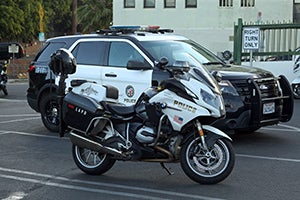
While standard assault with a deadly weapon under PC 245(a)(1) is a "wobbler" that can be charged as a misdemeanor, an assault directed at a peace officer or first responder performing their official duties is always prosecuted as a felony.
Convictions carry mandatory state prison sentences, significant fines, and an automatic "strike" on your record under California's Three Strikes Law.
Because PC 245(c) PC triggers severe, non-negotiable prison terms and permanent loss of constitutional rights, understanding the legal threshold for a "deadly weapon," the required officer status, and available legal defense strategies is critical.
Statutory Definition of PC 245(c)
California Penal Code Section 245(c) PC states:
"Any person who commits an assault with a deadly weapon or instrument, other than a firearm, or by any means likely to produce great bodily injury upon the person of a peace officer or firefighter, and who knows or reasonably should know that the victim is a peace officer or firefighter engaged in the performance of his or her duties when the peace officer or firefighter is engaged in the performance of his or her duties, shall be punished by imprisonment in the state prison for three, four, or five years."
Key Statutory Definitions
To enforce Penal Code § 245(c) PC, California criminal courts and jury instructions (CALCRIM 860) rely on specific legal definitions:
-
Deadly Weapon or Instrument: Any object, instrument, or weapon (excluding a firearm) that is inherently deadly or used in a manner capable of—and likely to cause—death or great bodily injury. Examples include knives, brass knuckles, baseball bats, broken bottles, pipe wrenches, and even motor vehicles when driven directly toward an officer.
-
Force Likely to Produce Great Bodily Injury (GBI): Force that is inherently capable of causing significant, substantial, or severe physical injury (e.g., severe concussions, bone fractures, deep lacerations, or internal organ damage). Actual physical injury does not need to occur to satisfy this element.
-
Peace Officer / Firefighter: Broadly defined under California law to include local police officers, sheriff's deputies, California Highway Patrol (CHP) officers, county marshals, correctional officers, District Attorney investigators, state arson investigators, and professional or volunteer firefighters.
-
Engagement in Official Duties: The peace officer or firefighter must be actively engaged in performing lawful job duties—such as executing an arrest, serving a warrant, extinguishing a fire, or responding to an emergency call. If an officer uses excessive physical force or conducts an illegal arrest, they are no longer acting within the scope of lawful duties.
What Must Be Proven to Convict
To secure a felony conviction under PC 245(c) PC, the District Attorney must prove five essential legal elements beyond a reasonable doubt:
-
Assaultive Act: The defendant committed an act with a deadly weapon (other than a firearm) or used force that, by its nature, would directly and probably result in applying force to another person.
-
Willful Conduct: The defendant acted willfully (intentionally or on purpose).
-
Awareness of Risk and Present Ability: When acting, a reasonable person would know the act would directly result in physical force, and the defendant had the immediate present ability to apply that force.
-
Officer Status and Engagement: The victim was a peace officer or firefighter actively performing their official duties.
-
Knowledge of Officer Status: The defendant knew, or reasonably should have known, that the victim was a peace officer or firefighter engaged in performing official duties.
Penalties for Penal Code § 245(c) PC & Related Firearm Provisions
Assaulting a police officer or firefighter with a deadly weapon under PC 245(c) PC is a straight felony carrying harsh mandatory prison terms.
-
State Prison Sentence (PC 245(c)): 3, 4, or 5 years in California state prison.
-
Enhanced Firearm Penalties (PC 245(d)): If the assault is committed using a firearm against a police officer or firefighter, penalties increase dramatically under PC 245(d):
-
Standard Firearm (PC 245(d)(1)): 4, 6, or 8 years in state prison.
-
Semiautomatic Firearm (PC 245(d)(2)): 5, 7, or 9 years in state prison.
-
Assault Weapon, Machinegun, or .50 BMG Rifle (PC 245(d)(3)): 6, 9, or 12 years in state prison.
-
-
California Three Strikes Law: PC 245(c) PC and PC 245(d) PC are classified as serious and violent felonies. A conviction counts as a "strike" on your criminal record. A second strike doubles any future prison sentence, while a third strike carries a mandatory minimum sentence of 25 years to life.
-
Criminal Fines: Maximum fines up to $10,000 plus state penalty assessments.
-
Loss of Constitutional Rights: Permanent loss of firearm ownership and voting rights while serving a felony sentence.
Common Legal Defenses to PC 245(c) Charges
Defense attorneys utilize tailored strategies to challenge PC 245(c) PC charges, aiming to secure dismissals, pre-filing rejects, or charge reductions to non-strike misdemeanors:
-
Officer Was Acting Unlawfully (Excessive Force):
An officer is not legally "engaged in the performance of their duties" if they carry out an illegal arrest, perform an unlawful search, or apply unprovoked excessive physical force. Demonstrating officer misconduct invalidates a core element of PC 245(c), forcing the charge down to simple assault or standard ADW.
-
Self-Defense or Defense of Others:
If an officer or firefighter applies unlawful or excessive force that creates an immediate threat of bodily harm, a citizen retains the legal right to use reasonable force to protect themselves or others from injury.
-
Lack of Knowledge of Officer Status:
The prosecution must prove you knew or reasonably should have known the victim was a peace officer. If the officer was working plainclothes undercover, driving an unmarked civilian vehicle, or failed to identify themselves in a dark or chaotic setting, PC 245(c) enhanced penalties cannot legally stand.
-
Item Was Not a "Deadly Weapon" / Force Not Likely to Cause GBI:
Unless an object is inherently dangerous (like a dagger), the state must prove it was used in a deadly manner. Defending counsel can show that a lightweight object or minimal force lacked the physical capacity to inflict great bodily injury.
-
Lack of Intent / Accidental Conduct:
Assault requires a willful act. If physical movements were accidental, caused by a sudden slip, or resulted reflexively from a vehicle collision, the required criminal intent (mens rea) is absent.
Hypothetical Examples
-
Straight Felony PC 245(c) Example: A suspect fleeing a robbery swerves their vehicle directly toward a uniformed police officer standing on a sidewalk, forcing the officer to dive out of the path of the accelerating car. Because a vehicle used in this manner constitutes a deadly weapon aimed at a known officer on duty, PC 245(c) applies even without physical contact.
-
Charge Downgraded (Lack of Officer Knowledge) Example: A driver gets into a road rage encounter with an individual in plain clothes driving an unmarked car who brandishes a badge after the driver swerves defensively. Because the driver could not reasonably know the individual was an off-duty officer during the altercation, charges are reduced from PC 245(c) to PC 245(a)(1) standard assault with a deadly weapon.
-
Self-Defense (Excessive Force) Example: An officer uses an unprovoked, illegal chokehold on a compliant suspect during a minor stop. The suspect grabs a nearby flashlight and strikes the officer's arm to break the hold and breathe. Because the officer was acting unlawfully by using excessive force, the suspect exercised valid self-defense.
Frequently Asked Questions (FAQs)
Is assault with a deadly weapon on a police officer under PC 245(c) a wobbler or a straight felony?
Unlike standard ADW under PC 245(a)(1), PC 245(c) PC is a straight felony. It cannot be reduced or filed as a misdemeanor if the victim was an officer engaged in official duties.
Does a police officer have to suffer physical injury for PC 245(c) charges to apply?
No. Assault requires only an act with a deadly weapon that would directly result in applying force. Actual physical contact, injury, or touching is not required to convict under California law.
What qualifies as a "deadly weapon" under Penal Code § 245(c) PC?
A deadly weapon is any object, tool, or instrument used in a way capable of inflicting death or severe bodily injury. Common examples include motor vehicles, knives, bats, iron pipes, heavy tools, and broken glass.
What is the legal difference between PC 245(c) and PC 245(d)?
PC 245(c) covers assault on an officer using deadly weapons other than firearms (or force likely to produce GBI) and carries 3, 4, or 5 years in prison. PC 245(d) applies specifically when a firearm is used, carrying 4 to 12 years in state prison.
Can I be convicted under PC 245(c) if the officer was off-duty?
Generally no, unless the off-duty officer was performing official law enforcement actions (such as stepping in to stop a felony in progress) and you knew or reasonably should have known they were an officer.
Does a PC 245(c) conviction count as a "strike" under California's Three Strikes Law?
Yes. Assault with a deadly weapon on a peace officer is classified as a serious felony under California Penal Code § 1192.7(c), making it an automatic "strike."
What happens if the police officer used excessive physical force against me?
If an officer uses excessive force, they are acting outside the lawful scope of their official duties. This serves as a primary defense that can defeat PC 245(c) charges or justify lawful self-defense.
How can a criminal defense attorney fight a PC 245(c) charge before court?
Through pre-filing intervention, defense counsel can present dashcam footage, witness statements, or proof of officer misconduct to the District Attorney to persuade them to reject charges or reduce them prior to formal arraignment.
Related California Laws
Reviewing related statutes provides crucial legal context, showing how prosecutors build complex multi-charge cases and revealing alternative, reduced offenses that criminal defense attorneys can leverage during negotiations.
-
Penal Code 240 PC – Simple Assault: Prohibits an unlawful attempt, coupled with present ability, to commit a violent injury on another person. A misdemeanor carrying up to 6 months in county jail.
-
Penal Code 242 PC – Misdemeanor Battery: Criminalizes any willful and unlawful use of force or violence against another person. A misdemeanor carrying up to 6 months in county jail.
-
Penal Code 241(c) PC – Assault on a Police Officer: Prohibits committing simple assault against a peace officer or first responder performing official duties. A misdemeanor carrying up to 1 year in county jail.
-
Penal Code 243(d) PC – Battery Causing Serious Bodily Injury: Criminalizes battery that inflicts severe physical impairment. A wobbler carrying up to 4 years in custody.
-
Penal Code 245(a)(1) PC – Assault with a Deadly Weapon (Standard ADW): Criminalizes assaulting a private citizen using a deadly weapon other than a firearm. A wobbler carrying up to 4 years in state prison.
-
Penal Code 217.1 PC – Assault on a Public Official: Prohibits committing assault against public officials (such as judges, prosecutors, or elected leaders) in retaliation for or to prevent official duties. A wobbler carrying up to 3 years in state prison.
-
Penal Code 417 PC – Brandishing a Weapon or Firearm: Criminalizes drawing or exhibiting a deadly weapon or firearm in a rude, angry, or threatening manner. A misdemeanor or felony carrying up to 3 years in prison.
-
Penal Code 664/187 PC – Attempted Murder of a Peace Officer: Prohibits attempting to kill a peace officer with malice aforethought. A felony carrying 15 years to life or life with possibility of parole.
Why Related Laws Matter
Reviewing related statutes provides crucial legal context, showing how prosecutors build complex multi-charge cases and revealing alternative, reduced offenses that criminal defense attorneys can leverage during negotiations.
Because weapon and assault offenses in California often carry severe custody terms, firearm prohibitions, and potential strike records under the Three Strikes Law, identifying weaknesses in the prosecution's evidence—such as establishing consent, proving the target was completely uninhabited, or demonstrating an accidental discharge—enables defense attorneys to negotiate felony charges down to non-strike misdemeanors like PC 240 simple assault or PC 242 battery, protecting a client's criminal record and freedom.
The most effective way to secure a favorable outcome is by consulting an experienced criminal defense attorney at Esfandi Law Group in California. Call us to schedule your free consultation or use the contact form.