
California Health and Safety Code § 11375.5: Sale of Synthetic Stimulants
Health and Safety Code § 11375.5: HS criminalizes the sale, distribution, furnishing, administration, or possession for sale of synthetic stimulants—commonly known as "designer drugs" or "bath salts."
The statute also penalizes personal use or simple possession of these chemically engineered compounds.
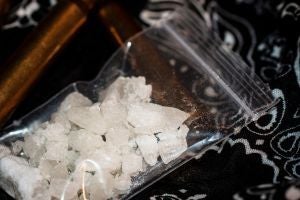
Synthetic stimulants are laboratory-created substances designed to mimic the psychoactive effects of traditional stimulants such as cocaine, MDMA, or methamphetamine.
They are frequently marketed under deceptive labels such as "plant food," "glass cleaner," or "research chemicals."
However, labeling a product "not for human consumption" does not shield an individual or business from prosecution under California law.
Quick Reference Summary: HS 11375.5 Penalties & Offenses
|
Offense Type |
Maximum Jail Time |
Maximum Fine |
| Sale or Possession for Sale | Up to 6 months | Up to $1,000 |
| First Offense (Possession/Use) | None | Up to $250 |
| Second Offense (Possession/Use) | Up to 6 months | Up to $500 |
| Third+ Offense (Possession/Use) | Up to 6 months | Up to $1,000 |
Legal Elements: What the Prosecutor Must Prove
To secure a conviction for a sales or distribution charge under HS 11375.5, the prosecution must establish the following elements beyond a reasonable doubt:
-
The Prohibited Act: The defendant sold, offered to sell, distributed, furnished, or possessed a substance with intent to sell.
-
Chemical Classification: The substance meets the explicit chemical criteria set forth in the statute (such as compounds structurally derived from 2-amino-1-phenyl-1-propanone, including MDPV, mephedrone, or Alpha-PVP/Flakka).
-
Knowledge: The defendant knew of the substance's presence and its nature as a synthetic stimulant or restricted chemical.
Real-World Example of an HS 11375.5 Violation
A smoke shop owner stocks small, colorful foil packets labeled "Ultra-Pure Plant Food - Not for Human Consumption." An undercover police officer purchases one, and subsequent laboratory testing confirms it contains mephedrone, a banned synthetic stimulant derivative.
Although the packet was labeled as plant food and explicitly stated it was not for consumption, the owner can be arrested and charged with the sale of synthetic stimulants under Health and Safety Code § 11375.5 because they knowingly sold a compound prohibited by the state's designer drug regulations.
Penalties and Sentencing for HS 11375.5
Unlike traditional drug trafficking charges in California, which carry steep felony state prison terms, violations involving synthetic stimulants under Health and Safety Code § 11375.5 are prosecuted as misdemeanors or low-level infractions.
The exact sentence depends directly on whether the charge involves commercial distribution or simple personal use, as well as on the defendant's prior criminal record.
Sale or Possession for Sale Penalties
If an individual or retail business is convicted of selling, distributing, furnishing, or possessing synthetic stimulants (such as "bath salts") with the intent to sell them, the offense is treated as a misdemeanor.
-
Jail Time: Up to 6 months in a county jail.
-
Fines: A maximum statutory fine of up to $1,000.
-
Probation: The court may grant summary (informal) probation instead of imposing jail time, with the requirement to comply with specific court terms.
Personal Use or Simple Possession Penalties
For individuals caught using or merely possessing a prohibited synthetic stimulant derivative for personal consumption, the law applies an escalating penalty scale based on prior offenses:
-
First Offense: Charged strictly as a non-criminal infraction, carrying a fine of up to $250 and zero jail time.
-
Second Offense: Can be charged as an infraction or a misdemeanor. If pursued as a misdemeanor, it carries up to 6 months in county jail and/or a fine of up to $500.
-
Third or Subsequent Offense: Charged as a misdemeanor, carrying up to 6 months in county jail and/or a maximum fine of $1,000.
Collateral & Aggravating Consequences
While these charges are misdemeanors or infractions, a conviction on a permanent record still has severe long-term impacts:
-
Business & Professional Licensing: Retail shop owners, smoke shop owners, or licensed professionals risk losing their commercial operating permits, corporate standing, or state professional licenses.
-
Priorability: Infractions automatically escalate to criminal misdemeanors upon subsequent arrests, so a minor first-time citation establishes a record that later exposes the individual to jail.
-
Immigration Risks: Any controlled-substance or drug-related conviction can still trigger scrutiny from federal immigration authorities, potentially affecting visas, green card renewals, or residency applications for non-citizens.
Common Legal Defenses to Challenge the Charges
Because synthetic stimulant cases are technically complex and often rely on circumstantial evidence, several defense strategies may be applicable:
-
Misidentification of the Substance: If independent laboratory testing proves that the compound's exact chemical structure does not match the specific molecular formulas or analogs prohibited under HS 11375.5, the case must be dismissed.
-
Lack of Intent to Sell: For possession-for-sale charges, the defense can argue that the substance was strictly for personal use, which can reduce a misdemeanor charge to a minor infraction.
-
Unlawful Search and Seizure: If law enforcement discovered the synthetic stimulants during an illegal traffic stop or without a valid search warrant, the defense can file a motion to suppress the evidence under Penal Code § 1538.5.
-
Lack of Knowledge: Proving that the defendant genuinely did not know the item was a restricted synthetic chemical (e.g., a delivery driver transporting a sealed, mislabeled box).
To secure a reduction or a complete dismissal of a synthetic stimulant charge under California Health and Safety Code § 11375.5, an experienced defense attorney at the Esfandi Law Group will focus on the statute's unique scientific and technical requirements, alongside standard constitutional protections.
Because designer drugs are constantly evolving, these cases offer highly specific legal loopholes that traditional drug cases do not.
Defense Tactics to Secure a Dismissal or Reduction
Challenging the Exact Chemical Identity (The "New Substance" Defense)
HS 11375.5 explicitly targets designer drugs that match specific molecular criteria, such as compounds structurally derived from 2-amino-1-phenyl-1-propanone.
-
The Strategy: Illicit labs frequently modify chemical structures to create new variations to evade the law. If an independent toxicologist or a laboratory analysis shows that the compound you possessed does not exactly match the specific molecular configurations, substitutions, or analogs listed in the California statute, the case must be dismissed. You cannot be convicted of selling an unregulated substance.
Attacking "Intent to Sell" to Secure a Non-Criminal Reduction
If you are charged with a misdemeanor for possession for sale, the prosecution must prove that you intended to distribute the substance.
-
The Strategy: Defense counsel will dissect the arrest details to show the absence of sales indicators. If there are no digital scales, individual baggies, or text messages arranging transactions, your attorney will argue that the drugs were for personal use only.
-
The Outcome: Shifting the narrative down to simple possession reduces a criminal misdemeanor to a minor, first-time infraction (similar to a traffic ticket), entirely avoiding jail time and a criminal record.
Exploiting Pre-Filing Diversion (Keeping Your Record Clean)
Because personal possession under HS 11375.5 escalates to a misdemeanor only after multiple offenses, an attorney can pursue alternative pathways early.
-
The Strategy: Your attorney can leverage Penal Code 1000 or collaborative court drug diversion programs. By proactively enrolling in a minor drug education class or community counseling before the first court date, your attorney can convince the judge or prosecutor to dismiss the charges entirely upon completion.
Suppression of Evidence via Fourth Amendment Violations
Many synthetic drug arrests occur at music festivals, raves, or during routine traffic stops where police overstep their legal bounds.
-
The Strategy: Your lawyer will file a Motion to Suppress Evidence (PC 1538.5) if law enforcement conducted a search based on mere hunches rather than clear probable cause or a valid warrant. If the police illegally patted you down or searched your car's glove box without permission, the court will deem the physical package of synthetic stimulants inadmissible. Without that evidence, the prosecution is forced to drop the case.
Exposing Entrapment in Law Enforcement Sting Operations
Law enforcement agencies frequently conduct undercover sting operations targeting smoke shops, vitamin stores, or individuals online.
-
The Strategy: If an undercover officer or confidential informant used excessive pressure, manipulation, or fraudulent coercion to persuade you to sell a product you were not already predisposed to sell, your attorney can assert an entrapment defense. If proven, the court will dismiss the action outright.
Related California Drug Laws
-
Health and Safety Code § 11357.5 – Synthetic Cannabis: Criminalizes the sale, distribution, or possession of synthetic marijuana ("Spice" or "K2"). It is punishable as a misdemeanor, with up to 6 months in jail.
-
Health and Safety Code § 11352 – Sale or Transportation of Narcotics: A severe felony statute that covers traditional, non-synthetic controlled substances such as cocaine, heroin, and prescription opioids.
-
Health and Safety Code § 11366 – Operating a Drug House: Penalizes maintaining or opening a location for the purpose of unlawfully selling, giving away, or using controlled substances.
-
Health and Safety Code § 109575 – Imitation Controlled Substances: Restricts the distribution of counterfeit substances deliberately packaged to look exactly like genuine prescription or illicit drugs.
-
Health and Safety Code § 11366.8 – Hidden Vehicle Compartments: Makes it a crime to install, use, or build a false compartment within a vehicle to hide or smuggle controlled substances.
Frequently Asked Questions (FAQs)
Can I be convicted under HS 11375.5 if the packaging says "Not for Human Consumption"?
Yes. Under California law, branding or labeling a product as a "research chemical," "bath salt," or "not for human consumption" is irrelevant if the product's chemical composition matches the prohibited compounds or structural analogs defined in the statute.
Is a violation of Health and Safety Code § 11375.5 a felony?
No. Unlike traditional drug trafficking statutes, a conviction for selling or possessing synthetic stimulants for sale under HS 11375.5 is classified as a misdemeanor. Simple possession is treated as a non-criminal infraction.
What happens if a police laboratory cannot identify the chemical compound?
The prosecution bears the burden of proving that the seized material meets the complex chemical criteria set forth in the law. If the laboratory cannot definitively identify the substance as a banned stimulant or analog, the charges cannot stand.
What are the names of some common synthetic stimulants banned by this law?
Street and commercial names often change, but common examples include Bath Salts, Flakka, Cloud Nine, White Lightning, Scarface, MDPV, Mephedrone, and Alpha-PVP.
Can a defense attorney help me get into a diversion program instead of jail?
Yes. For possession or use violations that fall into misdemeanor territory, an attorney can routinely negotiate for collaborative court options or drug diversion programs (such as PC 1000), which allow you to complete classes or treatment to keep your record clean.
Speak With a California Drug Crime Defense Attorney
A charge under Health and Safety Code § 11375.5 involves complex scientific evidence and rapidly evolving constitutional questions regarding search and seizure.
Securing legal counsel early ensures that laboratory findings are independently verified and that your rights are fully protected.
To review your case options, schedule a confidential, free consultation with Esfandi Law Group by calling (310) 274-6529 or submitting a request through our secure online portal.