
California Health and Safety Code 11378 HS: Possession of Methamphetamine for Sale
Under California Health and Safety Code Section 11378 HS, it is a felony to possess methamphetamine with the intent to sell it.
Unlike simple personal possession under HS 11377(a), which is generally a misdemeanor, possession for sale is treated as a severe offense against public safety.
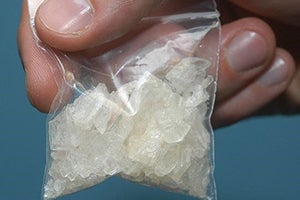
A critical nuance of HS 11378 is that prosecutors do not need to prove an actual sale took place.
They only need to establish that you possessed the drug and intended to sell or distribute it at some point.
Because intent is central to this charge, it is the primary legal battleground for defense attorneys seeking to reduce the offense to a simple possession charge, which qualifies for record-saving drug diversion programs.
Quick Reference Summary Chart: California HS 11378
|
Legal Element |
Details & Statutory Guidelines |
| Statute | California Health and Safety Code Section 11378 HS |
| Offense Classification | Straight Felony (Does not qualify for automatic misdemeanor reduction under Prop 47) |
| Prohibited Act | Unlawfully possessing methamphetamine (or other designated stimulants/narcotics) with intent to sell |
| Standard Felony Sentencing | 16 months, 2 years, or 3 years in California county jail under realignment |
| Weight Enhancements | Quantities over 1 kg add 3 to 15 years consecutive in state prison (HS 11370.4) |
| Diversion Eligibility | Ineligible for PC 1000, Prop 36, or drug courts unless reduced to simple possession |
| Immigration Impact | Classified as an aggravated felony; triggers mandatory deportation and permanent inadmissibility |
How Prosecutors Prove "Intent to Sell"
Because law enforcement rarely catches a defendant mid-transaction, prosecutors rely on circumstantial evidence known as indicia of sales to build their case.
To prove "intent to sell" under HS 11378, law enforcement and prosecutors look for specific indicators of commercial activity, including:
-
Large Drug Quantity: Possessing a bulk amount of methamphetamine that far exceeds what an average individual could consume for personal use.
-
Individual Packaging: The substance is split up into multiple small plastic baggies, bindles, or balloons.
-
Distribution Tools: Finding digital scales, cutting agents, and packaging materials like unused miniature Ziploc bags near the drugs.
-
Unusual Amounts of Cash: Holding significant sums of currency, especially in small, mixed denominations, which suggests recent cash transactions.
-
Lack of Ingestion Equipment: The total absence of personal-use paraphernalia, such as glass smoking pipes, straws, or needles, at the scene of the arrest.
If these indicators are present, law enforcement will bypass a simple possession charge and arrest the individual for a felony sales offense under HS 11378.
Real-World Example of an HS 11378 Case
The Traffic Stop Baggy Discovery
Carlos is pulled over for speeding. The officer observes a digital scale in plain view on the dashboard and conducts a lawful vehicle search. Under the passenger seat, the officer finds a pouch containing 20 grams of methamphetamine, a box of small plastic ziplock baggies, and $1,200 in cash. No pipes, straws, or personal-use ingestion paraphernalia are found.
Although Carlos did not actively sell drugs to anyone during the traffic stop, the quantity of methamphetamine, the individual packaging materials, the digital scale, and the cash allow the prosecutor to infer commercial intent. Carlos is charged with a straight felony under HS 11378.
Penalties for Methamphetamine Possession for Sale
A conviction under HS 11378 carries severe mandatory penalties, long-term collateral consequences, and ineligibility for standard drug treatment diversion programs.
Base Felony Sentencing
The standard penalty for a conviction under HS 11378 is as follows:
-
16 months, 2 years, or 3 years of incarceration served in a California county jail.
-
Formal supervised probation.
-
Criminal fines up to $10,000 plus statutory assessments.
Sentence Enhancements (Aggravating Factors)
The base sentence can increase dramatically under specific aggravating conditions:
-
Drug Weight Enhancements (HS 11370.4 HS): If the prosecution establishes that the quantity of methamphetamine seized exceeds specified weight thresholds, mandatory consecutive state prison sentences are added to the base term:
-
Over 1 kilogram (2.2 lbs): 3 additional years in prison
-
Over 4 kilograms (8.8 lbs): 5 additional years in prison
-
Over 10 kilograms (22 lbs): 10 additional years in prison
-
Over 20 kilograms (44 lbs): 15 additional years in prison
-
-
Location-Based Enhancements: Possessing methamphetamine for sale within 1,000 feet of a detox/drug treatment facility or an active homeless shelter adds an additional 1 year to the sentence.
-
Involving a Minor (HS 11353 / PC 272): Using or employing a minor under the age of 18 to carry, prepare, or sell methamphetamine adds a consecutive 3, 6, or 9 years in state prison, alongside misdemeanor charges for Contributing to the Delinquency of a Minor.
Proven Legal Defenses to Challenge Sales Charges
An experienced California criminal defense attorney can deploy several tactical strategies to contest HS 11378 allegations:
-
The Drugs Were Strictly for Personal Use: If the defense can show that the quantity was consistent with a heavy personal habit and that any cash or baggies had an innocent explanation, the charge can be reduced to simple possession (HS 11377). This reduction immediately makes the defendant eligible for a drug diversion program (PC 1000) to keep their record clean.
-
Unlawful Search and Seizure (Fourth Amendment): If police searched your vehicle, home, or person without a valid warrant, lacked probable cause, or exceeded the scope of a probation search, a defense attorney can file a Motion to Suppress Evidence (Penal Code 1538.5). If granted, the methamphetamine is suppressed, forcing a total case dismissal.
-
Lack of Knowledge or Constructive Control: If the meth was found in a shared vehicle's trunk or a common living area, the defense can argue that you were unaware of its presence or that it belonged entirely to someone else. Proximity to contraband does not equal possession.
-
Entrapment by Law Enforcement: If an undercover officer or confidential informant used extreme pressure, coercion, or fraudulent tactics to persuade you to engage in an illegal distribution scheme you were not otherwise predisposed to commit, an entrapment defense may apply.
Related California Narcotics & Financial Laws
-
Health and Safety Code 11377 – Simple Possession of Methamphetamine: The lesser-included misdemeanor offense for possessing meth strictly for personal use.
-
Health and Safety Code 11379 – Selling or Transporting Methamphetamine: Applies if a defendant completes a sale, or transports/imports methamphetamine across county lines.
-
Health and Safety Code 11351 – Possession of Controlled Substances for Sale: The parallel felony statute used if the drug intended for sale is a non-stimulant narcotic, such as cocaine, heroin, or prescription opiates.
-
Health and Safety Code 11370.6 – Possession of Drug Proceeds: Penalizes possessing more than $100,000 in cash that can be directly linked to illicit drug trafficking.
-
Penal Code 186.10 PC & HS 11370.9 – Money Laundering: Severe felony charges apply if a defendant attempts to channel illicit drug profits through legitimate business fronts or structured banking deposits to conceal their source.
-
Health and Safety Code 11379.6 – Manufacturing a Controlled Substance: Punishes the chemical manufacturing, cooking, or laboratory extraction of methamphetamine.
Why Related Crimes are Important
Understanding how related charges fit into your situation is a core part of building a strong legal defense strategy. These California statutes are highlighted above for several important practical reasons:
-
Evaluating "Lesser-Included" Offenses for Plea Deals: The primary goal in many HS 11378 felony cases is to secure a charge reduction. By comparing the sales statute with HS 11377 (Simple Possession), your legal team can argue that the narcotics were for personal dependency rather than distribution. Getting a judge or prosecutor to agree to this lesser charge opens the door to California's drug diversion programs (like PC 1000) to dismiss the case entirely.
-
Understanding "Stacked" Charges: District attorneys frequently file multiple counts stemming from a single arrest. If an individual is stopped with methamphetamine, cash, and digital scales, prosecutors will routinely layer charges, alleging HS 11378 (possession for sale) simultaneously alongside HS 11379 (transportation) or HS 11370.6 (possession of drug proceeds). Knowing these overlapping laws outlines your full scope of legal exposure.
-
Pinpointing Proof Gaps in Different Drug Schedules: Different narcotics fall under distinct sections of the law. While HS 11378 specifically targets methamphetamine and other non-narcotic stimulants, HS 11351 applies the same "intent to sell" rules to substances such as cocaine, heroin, or prescription opiates. Understanding these thresholds helps ensure you are not overcharged based on the specific substance recovered.
Frequently Asked Questions
What is the main difference between HS 11377 and HS 11378?
HS 11377 covers simple possession for personal use and is a misdemeanor that allows for drug rehabilitation instead of jail time. HS 11378 covers possession with intent to sell, which is a straight felony carrying up to 3 years in jail and disqualifies the defendant from automatic drug diversion programs.
Can I get drug diversion (PC 1000 or Prop 36) for an HS 11378 charge?
No. California drug diversion programs are reserved for simple, personal-use possession offenses. Because HS 11378 involves commercial distribution, it is ineligible for diversion. To qualify for diversion, your attorney must negotiate with the prosecutor to reduce the charge to a simple possession offense.
What if police found scales and baggies, but the meth belonged to a friend?
To convict you, the state must prove that you had knowledge of and operational control over the narcotics. If your attorney can establish that the methamphetamine belonged to someone else and that you did not exercise joint control over it, you cannot be convicted of possession, regardless of the packaging present.
How much methamphetamine triggers a weight enhancement?
Under HS 11370.4, weight enhancements begin when the net weight of the methamphetamine exceeds 1 kilogram (2.2 pounds), which adds a mandatory, consecutive 3 years to your prison sentence. Enhancements extend up to an additional 15 years for quantities exceeding 20 kilograms.
What are the immigration consequences of an HS 11378 conviction?
Under federal immigration law, possession of a controlled substance for sale is classified as an aggravated felony involving drug trafficking. A conviction carries devastating consequences for non-citizens, including mandatory deportation, denial of citizenship, and permanent exclusion from reentering the United States.
Can an open container or a digital scale alone prove intent to sell?
No single piece of circumstantial evidence is usually sufficient. Courts look at the "totality of the circumstances." A digital scale combined with trace amounts of meth may indicate personal use, whereas a digital scale paired with bulk weight, split packaging, and the absence of smoking pipes strongly indicates an intent to sell.
Face the Charges Strategically: Contact Esfandi Law Group
A charge of possession for sale under HS 11378 is a high-stakes felony, but it can be aggressively defended.
Because prosecutors rely heavily on circumstantial evidence to infer intent, there are multiple avenues to create reasonable doubt, protect your freedom, and fight for a charge reduction or a complete dismissal.
Contact Esfandi Law Group today at (310) 274-6529 to schedule your free, confidential consultation with an expert California criminal defense attorney.