
California Penal Code 30605 PC: Possession of an Assault Weapon
Possession of an assault weapon in California is a severe criminal offense prosecuted under Penal Code § 30605 PC.
Due to California's complex and constantly evolving statutory framework, many gun owners find themselves facing felony charges without realizing their firearm meets the state's technical definition of a prohibited "assault weapon."
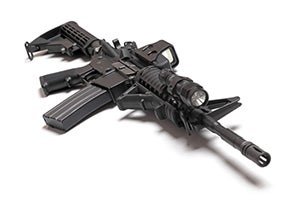
If you are facing allegations under PC 30605, understanding the statutory definitions, potential penalties, and legal defense strategies is essential to protecting your freedom and constitutional rights.
Under California law, it is illegal to possess, display, or transport any firearm classified as an assault weapon unless you held a valid, lawful registration for the specific weapon prior to state registration deadlines.
Penal Code § 30605(a) PC Legal Definition
“Any person who, within this state, possesses any assault weapon, except as provided in this chapter, shall be punished by imprisonment in a county jail for a period not to exceed one year, or pursuant to subdivision (h) of Section 1170.”
The statute does not require proof that you owned the firearm, used it, or intended to commit a crime. Mere possession—whether actual, constructive, or joint—is sufficient to support a criminal conviction.
What Constitutes an "Assault Weapon" in California?
California identifies assault weapons using two distinct mechanisms under Penal Code § 30510 PC and Penal Code § 30515 PC:
-
Specified Make and Model List (PC § 30510): Firearms explicitly banned by name, including AR-15 series, AK series, Uzi variants, and specific named semi-automatic rifles, pistols, and shotguns.
-
Feature-Based Criteria (PC § 30515): Firearms defined as assault weapons based on specific physical characteristics or configurations, regardless of brand or model name.
California Penal Code § 30515(a) PC Legal Definition
“A semiautomatic, centerfire rifle that does not have a fixed magazine but has any one of the following: (A) A pistol grip that protrudes conspicuously beneath the action of the weapon. (B) A thumbhole stock. (C) A folding or telescoping stock. (D) A grenade launcher or flare launcher. (E) A flash suppressor. (F) A forward pistol grip.”
Additional feature-based classifications apply to semi-automatic centerfire rifles with an overall length under 30 inches, semi-automatic pistols with detachable magazines and threaded barrels or barrel shrouds, and semi-automatic shotguns with folding stocks or revolving cylinders.
Statutory Penalties for Penal Code 30605 PC
Penal Code 30605 PC is a wobbler in California, meaning the District Attorney has discretion to file the charge as either a misdemeanor or a felony based on the defendant's criminal history and the circumstances of the arrest.
|
Charge Classification |
Sentence + Fine |
Collateral Consequences |
| Misdemeanor PC 30605 | Up to 1 year in county jail. Up to $1,000 | 10-year California firearm prohibition |
| Felony PC 30605 | 16 months, 2 years, or 3 years in county jail (PC § 1170(h)). Up to $10,000 | Lifetime state and federal firearm ban |
| Infraction Reduction (PC § 30605(b)) | None. Up to $500 fine | Requires proof of lawful purchase prior to Jan 1, 2017 |
Legal Forms of Possession Recognized in California
To convict under PC 30605, prosecutors must establish that you possessed the weapon under one of three legal theories:
-
Actual Possession: The prohibited firearm is physically on your person or within your direct physical control (e.g., in a backpack you are holding or concealed in your waistband).
-
Constructive Possession: The firearm is not on your physical person, but located in a place over which you exercise dominion and control (e.g., inside your locked home, glove compartment, or personal storage unit).
-
Joint Possession: Two or more individuals share access, control, or dominion over the location where the prohibited firearm is recovered (e.g., a shared apartment or vehicle).
Defense Strategies Against PC 30605 Charges
An experienced criminal defense attorney can employ several strategies to challenge an assault weapon charge:
-
Lack of Knowledge (Mistake of Fact): Establishing that you were genuinely unaware that an aftermarket modification (such as installing a pistol grip or flash hider) caused the firearm to cross the threshold into a restricted assault weapon configuration.
-
Firearm Meets Fixed-Magazine Exemption: Demonstrating through expert forensic examination that the rifle utilizes a compliant "fixed magazine" (requiring disassembly of the firearm action to remove) or a featureless build, removing it from PC 30515 restrictions.
-
Unlawful Search and Seizure (PC § 1538.5 Motion): Filing a motion to suppress evidence if law enforcement seized the firearm during an unconstitutional traffic stop, an invalid warrantless home search, or an improper execution of a search warrant.
-
Lack of Possession or Control: Proving that you were merely present near a weapon controlled exclusively by a third party, establishing a lack of constructive or actual possession.
Hypothetical Examples
-
Aftermarket Feature Violation: A gun owner legally purchases a featureless semi-automatic rifle. After installing an aftermarket flash suppressor and telescoping stock without adding a fixed-magazine lock, police discover the rifle during a traffic stop. The owner is charged under PC 30605 due to the feature-based restrictions of PC 30515.
-
Shared Residence Constructive Possession: Officers execute a search warrant at a shared apartment and find an unregistered AR-15 in a common closet. Police arrest all roommates for constructive joint possession. The defense attorney proves one roommate had no key or access to the locked case, securing a full dismissal for that client.
-
Suppression of Unlawfully Discovered Firearm: Police conduct an unauthorized search of a driver's trunk during a routine stop for a broken taillight and locate an illegal semi-automatic shotgun. The defense files a PC 1538.5 Motion to Suppress, proving the search violated the Fourth Amendment, resulting in a complete case dismissal.
Related Laws & California Penal Code Sections
-
California Penal Code § 30600 PC: Felony manufacturing, importing, selling, or distributing an assault weapon.
-
California Penal Code § 30515 PC: Statutory definition and feature list establishing what constitutes an assault weapon.
-
California Penal Code § 32310 PC: Restrictions on possessing, manufacturing, or importing large-capacity magazines (holding over 10 rounds).
-
California Penal Code § 25400 PC: Carrying a concealed firearm on your person or within a vehicle.
-
California Penal Code § 25850 PC: Carrying a loaded firearm in a public place or vehicle.
-
California Penal Code § 1538.5 PC: Statutory motion to suppress evidence seized during an unlawful search or seizure.
Frequently Asked Questions (FAQs)
Do I have to own the firearm to be convicted under Penal Code 30605 PC?
No. Ownership is irrelevant under PC 30605. The prosecution only needs to prove that you had physical control over or access to the assault weapon (actual or constructive possession).
Is possession of an assault weapon a felony or a misdemeanor in California?
PC 30605 is a "wobbler" offense. Depending on the facts of the case, the presence of aggravating factors, and your prior criminal record, prosecutors can file the charge as either a misdemeanor (up to 1 year in jail) or a felony (up to 3 years in jail).
What if I did not know my rifle was classified as an illegal assault weapon?
While ignorance of the law is generally not a complete defense, a lack of knowledge regarding the physical character or specific modifications of the firearm can be used by defense counsel to challenge whether you "knowingly" possessed a prohibited weapon.
Can a PC 30605 felony charge be reduced to a misdemeanor?
Yes. A skilled defense attorney can negotiate with the prosecutor to file or reduce the charge to a misdemeanor under California Penal Code § 17(b) PC, or seek a complete case dismissal or diversion program if eligible.
Can a PC 30605 charge be reduced to a non-criminal infraction?
Under California Penal Code § 30605(b) PC, first-time offenders who lawfully possessed the firearm prior to January 1, 2017, and voluntarily relinquish the weapon to law enforcement can qualify to have the charge reduced to an infraction punishable by a fine of up to $500.
Will a conviction under PC 30605 result in losing my gun rights?
Yes. A felony conviction under PC 30605 triggers a lifetime ban on owning or possessing firearms under state and federal law. A misdemeanor conviction under PC 30605 carries a mandatory 10-year California firearm prohibition.
Can police search my car or home for assault weapons without a warrant?
No. Unless a recognized exception to the Fourth Amendment applies—such as voluntary consent, plain view discovery, or exigent circumstances—police must obtain a valid search warrant under PC 1524 to search private property.
What should I do if law enforcement seizes my firearm under suspicion of PC 30605?
Do not answer police questions or make statements regarding how, when, or where you acquired the firearm. Exercise your right to remain silent under the Fifth Amendment and contact an experienced California criminal defense attorney immediately.
Protect Your Rights with Expert Legal Defense
Facing criminal charges under Penal Code 30605 PC carries severe penalties that can permanently impact your criminal record and constitutional firearm rights.
Early legal intervention allows defense counsel to challenge police search procedures, examine the physical configuration of the firearm, and negotiate directly with prosecutors before formal court filings.
Contact Esfandi Law Group to schedule a confidential case consultation today.