
California Penal Code § 626.9 PC – Gun-Free School Zone Act
Penal Code § 626.9 PC, officially known as the California Gun-Free School Zone Act, makes it a serious crime to possess, discharge, or attempt to discharge a firearm in or near educational facilities.
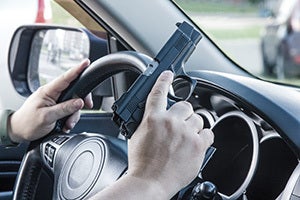
Enacted to safeguard students and faculty, this strict statute creates a 1,000-foot safety perimeter around all public and private K-12 schools and imposes comprehensive prohibitions across college and university campuses.
What Makes a Firearm Violation a PC 626.9 Offense?
Under California law, possessing a firearm within a designated school zone is typically prosecuted as a mandatory felony rather than a misdemeanor. To fall under PC 626.9, three critical conditions generally apply:
-
Prohibited Location: The weapon is brought onto public/private K-12 school grounds, within a 1,000-foot radius of a school, or onto a college/university campus.
-
Statutory Firearm Definition: The device qualifies as a firearm (handgun, rifle, shotgun, or revolver) powered by an explosive charge.
-
Lack of Authorization: The individual lacks explicit, written permission from the school superintendent, university president, or authorized campus authority.
Unless a specific legal exception applies—such as transporting an unloaded firearm in a locked container—a conviction under PC 626.9 carries mandatory state prison time, substantial court fines, and a lifetime loss of gun ownership rights under California law.
Statutory Text (Legal Definition)
California Penal Code Section 626.9(b) states:
“Any person who possesses a firearm in a place that the person knows, or reasonably should know, is a school zone, as defined in paragraph (1) of subdivision (e), unless it is with the written permission of the school district superintendent, his or her designee, or equivalent school authority, shall be punished as specified in subdivision (f).”
Key Statutory Definitions Under PC 626.9
Understanding how California law specifically defines terms like "school zone," "firearm," and "possession" is critical. Small factual distinctions—such as how a weapon is stored or where property lines are drawn—often determine whether a prosecutor can legally prove a violation under Penal Code § 626.9 PC:
-
School Zone:
Defined as any area inside the physical grounds of a public or private school providing instruction in kindergarten through 12th grade (K-12), or within a 1,000-foot perimeter measured from the outer boundary lines of the school grounds.
-
Firearm:
Any device designed to be used as a weapon from which a projectile is expelled through a barrel by the force of an explosion or combustion. This encompasses handguns, revolvers, rifles, shotguns, hand-assembled "ghost guns," and frame/receiver components. Under campus-specific provisions, stun guns and tasers also trigger separate carrying prohibitions.
-
Possession (Actual vs. Constructive):
-
Actual Possession: Holding the firearm on your physical person, inside your clothing, or in a bag you are carrying.
-
Constructive Possession: Having direct control over the firearm or the right to control it, such as storing it in a glove compartment, under a car seat, or inside a vehicle trunk you drive.
-
-
College or University Campus:
Under PC 626.9(h) & (i), possessing a firearm on the grounds of, or inside buildings owned/operated by, a public or private university or college is strictly prohibited without explicit written permission. Unlike K-12 schools, the higher-education prohibition focuses on campus grounds and facilities rather than an automatic 1,000-foot external boundary line.
-
Locked Container:
Under California Penal Code § 16850, a secure container is a fully enclosed, locked receptacle (such as a hard-sided gun case or vehicle trunk) opened by a key, combination, or biometric lock. Utility boxes, glove compartments, and center consoles are explicitly excluded from this definition.
What Must Be Proven to Convict
To secure a conviction under Penal Code § 626.9 PC, prosecutors must establish each legal element beyond a reasonable doubt, as detailed in CALCRIM No. 2510 (Possession of Firearm in School Zone):
-
Possession of a Firearm: You possessed, brought, or controlled a firearm.
-
Location Within a School Zone: You were inside a public or private K-12 school or within 1,000 feet of school grounds (or on a college/university campus).
-
Knowledge of Location: You knew, or reasonably should have known, that you were in or within 1,000 feet of a school zone.
-
Lack of Lawful Authority: You did not possess a valid exemption or written authorization from the school superintendent or authorized university official.
Penalties for a PC 626.9 Violation
Penalties under the Gun-Free School Zone Act vary based on where the weapon was possessed, whether it was discharged, and the defendant's prior criminal record.
|
Offense Type |
Potential Jail / Prison Time |
Additional Consequences |
| Possession in a K-12 School Zone | 2, 3, or 5 years in California State Prison | Felony record, lifetime ban on possessing firearms |
| Possession on College/University Grounds | 2, 3, or 4 years in California State Prison | University expulsion, permanent felony record |
| Discharging a Firearm in a School Zone | 3, 5, or 7 years in California State Prison | Serious felony enhancement, substantial court fines |
| Aggravated Factors (Prior Felonies/Gang Affiliation) | Up to 7+ years in state prison | Consecutive sentencing enhancements |
An improved, search-optimized revision of the Effective Defense Strategies section:
Effective Defense Strategies for PC 626.9 Charges
Securing a conviction under California Penal Code § 626.9 PC requires the prosecution to prove every element of the offense beyond a reasonable doubt.
An experienced California criminal defense attorney can challenge the state's evidence using several established legal defenses to seek a charge reduction or complete dismissal:
-
Lack of Knowledge Regarding Location:
You cannot be convicted if you did not know, and could not reasonably have known, that you were within a 1,000-foot school perimeter. This defense is effective in cases involving unmarked private schools, specialized tutoring centers operating out of non-descript commercial plazas, or ambiguous property lines.
-
Lawful Locked Container Exception (Safe Transport):
Under PC 626.9(c)(2), individuals may lawfully transport a handgun through a school zone if the firearm is completely unloaded and secured inside a locked container (e.g., a hard-sided locked gun case or vehicle trunk). Glove compartments, utility boxes, or soft zippered bags do not meet California's statutory definition of a locked container.
-
Private Property Exception:
Penal Code § 626.9 specifically exempts firearm possession on private property that you own, lease, or lawfully occupy—even if that property falls entirely within the 1,000-foot school zone radius. This protection extends to private residences, private land, and commercial businesses where the owner or authorized tenant possesses the weapon.
-
Unlawful Search and Seizure (4th Amendment Violation):
If police officers discovered the firearm during an illegal traffic stop, an unwarranted search of your vehicle, or an unlawful personal detention, your attorney can file a Motion to Suppress Evidence under PC 1538.5. If the court rules the search unconstitutional, it excludes the firearm evidence, typically forcing the prosecution to dismiss the case.
-
Lack of Possession or Knowledge of the Weapon:
If the firearm was hidden in a borrowed vehicle, a shared trunk, or a friend's bag without your knowledge or consent, you lack the requisite legal "possession" or "knowledge" required for a conviction.
-
Statutory Law Enforcement or Official Authorization Exemptions:
Active-duty peace officers, honorably retired law enforcement personnel, authorized security guards acting within the scope of their employment, and individuals with valid, explicit written authorization from the school district superintendent or campus authority are legally exempt from PC 626.9 prosecution.
Hypothetical Examples
-
Example 1 (Misdemeanor/Felony Charge): A driver pulls into a commercial parking lot 400 feet from a high school with a loaded handgun in an unlocked glove box, resulting in arrest under PC 626.9.
-
Example 2 (Successful Defense - Private Property): An individual cleans an unloaded rifle on their front porch located 500 feet from an elementary school, which is protected under the private property exception.
-
Example 3 (University Violation): A college student carries a concealed handgun inside their backpack on a university campus without written permission, triggering felony charges under PC 626.9(h).
Related California Laws
Understanding related California weapons statutes is critical because prosecutors frequently stack companion charges based on how the firearm was carried, whether it was loaded, and where the incident took place.
-
California Penal Code § 25850 PC – Carrying a Loaded Firearm in Public: Charged alongside PC 626.9 when the firearm possessed in the school zone contains live ammunition.
-
California Penal Code § 25400 PC – Carrying a Concealed Firearm: Applies if the firearm was concealed on your person or inside a vehicle while within a school zone.
-
California Penal Code § 417 PC – Brandishing a Weapon: Applies if a firearm was drawn, exhibited, or displayed in a threatening manner near school grounds.
-
California Penal Code § 26350 PC – Openly Carrying an Unloaded Handgun: Prohibits openly carrying an unloaded firearm in public places, even outside a school perimeter.
Frequently Asked Questions (FAQs)
Does the 1,000-foot school zone rule apply to private residences near schools?
No, Penal Code § 626.9 contains a specific statutory exception for private property. If you possess a firearm inside your own home or on private land that falls within 1,000 feet of a school, you are not in violation of the Gun-Free School Zone Act.
How is a firearm legally transported through a school zone in California?
To legally transport a handgun through a school zone, the firearm must be completely unloaded and locked inside a secure container (such as a locked gun case or vehicle trunk). A glove compartment or utility box does not qualify as a locked container under California law.
Does a California Concealed Carry Weapon (CCW) permit exempt you from PC 626.9?
No. After legislative amendments, a standard California CCW permit does not automatically allow you to carry a firearm on K-12 school grounds or college campuses. Permit holders must still obtain explicit written authorization from the school superintendent or campus authority.
What is the difference between K-12 rules and university rules under PC 626.9?
For K-12 schools, the law prohibits firearms on school grounds AND within a 1,000-foot outer perimeter. For colleges and universities, the prohibition applies only to campus grounds and university-owned buildings, not to a 1,000-foot radius around the campus boundary.
Are unloaded firearms illegal in a California school zone?
Yes. Unloaded firearms are strictly prohibited on school grounds and within 1,000 feet of a school unless they are locked in a secure container for lawful transportation or fall under a statutory exception.
Is Penal Code § 626.9 always prosecuted as a felony?
While most violations of PC 626.9 are prosecuted as felonies carrying mandatory state prison time, certain minor technical violations involving individuals with no prior criminal record may be evaluated for charge reductions depending on prosecutor discretion and specific case facts.
The Esfandi Law Group in Los Angeles can help you. Schedule your free consultation at (310) 274-6529 or use the contact form.