
Auto Burglary Law in California: Penal Code 459
Auto burglary—commonly called car or vehicle burglary—is a highly specific offense under California law. A common point of confusion is what actually triggers this charge.
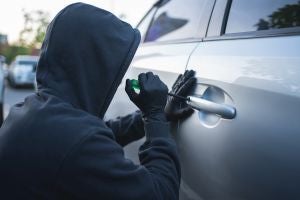
Unlike general theft, you do not have to successfully steal an item to be convicted. The crime is legally complete the exact second a person breaches a secured vehicle with criminal intent.
Because auto burglary is classified as second-degree burglary under California Penal Code 459 PC, understanding how prosecutors define a "locked" vehicle and how they attempt to prove your internal state of mind is essential to building an effective defense.
What is the Legal Definition of Auto Burglary?
To understand how the state evaluates this crime, we look directly at the statutory text of California Penal Code Section 459 PC:
Every person who enters any house, room, apartment... or vehicle as defined by the Vehicle Code, when the doors are locked... with intent to commit grand or petty larceny or any felony is guilty of burglary.
To secure a conviction for auto burglary in a Los Angeles County court, the prosecution must establish three distinct elements beyond a reasonable doubt:
-
The defendant entered the interior of a vehicle, including the cabin or trunk.
-
The vehicle was completely locked at the time of the entry.
-
The defendant entered the vehicle with the specific, concurrent intent to commit either petty theft, grand theft, or any other felony inside.
Quick Reference Summary: Auto Burglary Penalties
Auto burglary is classified as a "wobbler" offense in California. Prosecutors have discretion to file the charge as either a misdemeanor or a felony based on the value of the targeted items, the damage to the vehicle, and the defendant's prior criminal history.
|
Charge Classification |
Custody Exposure |
Additional Financial & Legal Impacts |
| Misdemeanor | Up to 1 year in county jail | Fines up to $1,000; full victim restitution; potential stay-away orders. |
| Felony | 16 months, 2 years, or 3 years in county jail | Fines up to $10,000; asset forfeiture; loss of firearm rights; permanent felony record. |
What Legally Qualifies as a "Locked" Vehicle?
The presence of a physical lock is the absolute dividing line between a standard theft charge and a serious PC 459 burglary charge.
-
The Strict Locking Standard: For auto burglary to apply, the vehicle's doors, trunk, or utility compartments must be fully secured using a key, electronic fob, or an internal locking mechanism.
-
The Open Window Exception: If a car's windows are completely rolled down, or if the doors are left entirely unlocked, entering the vehicle to steal an object does not constitute auto burglary. The prosecution cannot satisfy the statutory requirements of PC 459, meaning the charge must be filed under standard theft laws.
-
Mechanical Defects and Forced Entry: If a vehicle has a broken lock mechanism but the owner clearly intended to lock it, and a suspect uses physical force (such as a crowbar or slim jim) to alter the vehicle's structural alignment to gain entry, California courts have held that this can still satisfy the legal definition of entering a locked vehicle.
Real-World Case Scenario: Auto Burglary vs. Petty Theft
To illustrate how critical the "locked" element is under California law, consider the following example:
The Scenario: A suspect walks down a residential street in Los Angeles, testing car door handles. They find a sedan with the front window rolled down halfway and the door unlocked; they reach inside and take a designer purse. They walk to the next car, which is completely locked with the windows rolled up. The suspect uses a specialized center-punch tool to shatter the side window, reaches inside, and pulls out a laptop bag.
Legal Breakdown:
-
For the first car, because the vehicle was entirely unlocked and the window open, the suspect cannot be charged with auto burglary. They will instead face charges for Petty Theft (PC 484).
-
For the second car, the physical destruction of the glass to bypass a secure locking system perfectly executes a PC 459 Auto Burglary. It is a standalone second-degree burglary charge, completely separate from any property value considerations.
Proven Defense Strategies to Fight PC 459 Vehicle Charges
An experienced Los Angeles criminal defense attorney will systematically analyze police reports and digital evidence to identify gaps in the state's case:
-
Lack of Intent at Entry: If you entered the vehicle for a non-felonious reason—such as seeking temporary shelter from dangerous weather—and only decided to look through the glove box after you were inside, the mandatory element of concurrent intent is missing.
-
The Vehicle Was Unlocked: If the defense can show that the vehicle doors were left unlocked or a window was open wide enough to retrieve items without breaking the vehicle's seal, the case drops from a felony-level wobbler to a basic misdemeanor theft.
-
Mistaken Identity: Auto burglaries regularly happen at night or in dark parking structures. Defense attorneys frequently dismantle these accusations by highlighting low-resolution surveillance footage, obscured facial angles, or flawed eyewitness cross-identifications.
-
Constitutional Violation Reductions: If law enforcement found the allegedly stolen items by performing an illegal search of your person, backpack, or home without a valid warrant or probable cause, a Motion to Suppress Evidence can effectively nullify the prosecution's entire case.
Related California Criminal Statutes
-
Grand Theft Auto – PC 487(d)(1): While auto burglary targets the theft of items inside a vehicle, grand theft auto focuses entirely on the unlawful taking of the vehicle itself with the intent to permanently deprive the owner of it.
-
Attempted Auto Burglary – PC 664/459: If a suspect takes a direct, unambiguous step toward breaking into a locked car (such as tampering with a door lock with a tool) but is scared off by a car alarm before gaining entry, they face half the jail exposure of a completed burglary.
-
Vehicle Tampering – VC 10852: This California Vehicle Code misdemeanor makes it illegal to alter, injure, or tamper with a vehicle or its component parts (like stealing a catalytic converter) without ever physically entering the cabin or trunk.
-
Vandalism – PC 594: If a suspect shatters a window or breaks a door handle during a vehicle break-in, prosecutors will routinely append a vandalism charge alongside the burglary charge to account for the physical property damage.
-
Possession of Burglary Tools – PC 466: It is a misdemeanor to possess master keys, slim jims, spark plug ceramic fragments, or lockpicks if law enforcement can prove you intended to use those objects to unlawfully bypass a vehicle or building lock.
Frequently Asked Questions (FAQs)
What is auto burglary under California Penal Code 459 PC?
Auto burglary is defined as entering a vehicle whose doors and trunk are fully locked with the specific intent to commit a theft or a felony offense inside. The charge centers entirely on the unauthorized entry into a secured vehicle rather than on the cash value of the items taken.
Can I be charged with auto burglary if the vehicle's windows were rolled down?
No, you cannot be convicted of auto burglary if the windows were rolled down far enough to permit entry without manipulating a lock, or if the doors were unlocked. Because the vehicle was not fully secured, the state must instead pursue charges of petty theft or grand theft.
Does a person have to successfully steal property to face an auto burglary charge?
No, a completed theft is not required. The offense is legally complete the moment entry is gained with criminal intent. If a suspect breaks a car window to steal a laptop but finds the laptop bag empty, they can still be fully prosecuted for felony auto burglary.
What is the primary difference between auto burglary and vehicle tampering?
The difference hinges on whether you entered the vehicle's interior. Auto burglary requires entering the cabin or a locked trunk to commit a crime. Vehicle tampering under Vehicle Code 10852 VC involves defacing or damaging the vehicle's exterior or stealing external components without breaking into the vehicle.
Is an auto burglary conviction considered a strike under California's Three Strikes Law?
No, second-degree commercial and auto burglaries are non-residential offenses and do not count as a strike on your record. Only first-degree residential burglaries are legally classified as serious felonies that trigger California's Three Strikes sentencing enhancements.
Can a felony auto burglary charge be reduced to a misdemeanor after probation?
Yes. Because auto burglary is a wobbler offense, a skilled defense attorney can file a motion under Penal Code Section 17(b) PC upon successful completion of felony probation, seeking a permanent reduction of the conviction to a clean misdemeanor record.
At Esfandi Law Group, our Los Angeles defense team knows exactly how to expose constitutional violations, challenge circumstantial intent, and aggressively pursue case dismissals, charge reductions, or diversion programs.
To speak with a premier defense advocate about your case in complete confidence, call Esfandi Law Group today for a free consultation.