
Bringing in and Harboring Aliens – Title 8 U.S. Code § 1324
Every year, individuals seek to cross the United States border to pursue economic opportunities or reunite with family. However, under federal immigration law, assisting, transporting, or sheltering unauthorized noncitizens constitutes a serious federal offense carrying severe criminal penalties.
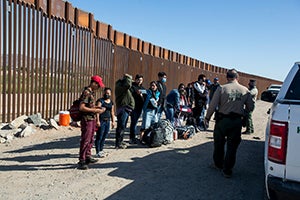
Title 8 U.S. Code § 1324 is the central statutory framework governing human smuggling, unlawful transportation, harboring, and the employment of unauthorized noncitizens.
Federal prosecutors actively enforce this statute to dismantle commercial smuggling operations and penalize individuals who facilitate illegal entry or unlawful stay within the United States.
What Is 8 U.S.C. § 1324? Statutory Language and Overview
Under federal law, 8 U.S.C. § 1324 codifies the primary criminal prohibitions against bringing in, transporting, concealing, or encouraging the unlawful entry of non-U.S. nationals:
Any person who knowingly brings or attempts to bring to the United States in any manner whatsoever an alien at a place other than a designated port of entry or place designated by the Commissioner... or knowing or in reckless disregard of the fact that an alien has come to, entered, or remains in the United States in violation of law, transports, moves, conceals, harbors, or shields from detection such alien... shall be punished as provided in subsection (b).
Key Statutory Definitions
To understand how federal law applies under 8 U.S.C. § 1324, it is essential to review the key statutory terms governing these offenses:
-
Alien / Noncitizen: Any person who is not a natural-born citizen, naturalized citizen, or national of the United States.
-
Harboring / Shielding: Providing physical shelter, transportation, financial support, or deliberate concealment designed to prevent federal immigration authorities from detecting an unauthorized noncitizen.
-
Reckless Disregard: A conscious disregard of a substantial and unjustifiable risk that a person is an unauthorized noncitizen, where failing to perceive that risk constitutes a gross deviation from standard conduct.
-
Commercial Advantage or Private Financial Gain: Committing a smuggling, transportation, or harboring offense in exchange for payment, property, or pecuniary profit.
What Are the Key Offenses Under 8 U.S.C. § 1324?
The statute outlines several distinct criminal acts involving the unlawful entry and remaining of unauthorized noncitizens in the United States.
|
Offense Subsection |
Prohibited Action & Legal Standard |
|
8 U.S.C. § 1324(a)(1)(A)(i) (Alien Smuggling) |
Bringing or attempting to bring an unauthorized noncitizen into the U.S. outside a designated port of entry, regardless of official authorization status. |
|
8 U.S.C. § 1324(a)(1)(A)(ii) (Unlawful Transportation) |
Transporting or moving an unauthorized noncitizen within the U.S. with knowledge or reckless disregard of their unlawful status. |
|
8 U.S.C. § 1324(a)(1)(A)(iii) (Harboring / Concealing) |
Concealing, harboring, or shielding an unauthorized noncitizen from detection in any place, including domestic dwellings or commercial buildings. |
|
8 U.S.C. § 1324(a)(1)(A)(iv) & (v) (Encouraging & Conspiracy) |
Encouraging or inducing an unauthorized noncitizen to reside in the U.S., or conspiring/aiding and abetting any § 1324 offense. |
What Must Federal Prosecutors Prove to Secure a Conviction?
To obtain a guilty verdict under 8 U.S.C. § 1324, the Department of Justice (DOJ) must establish every element of the charged offense beyond a reasonable doubt:
-
Noncitizen Status: The individual brought, transported, or sheltered was not a citizen or lawful national of the United States.
-
Unlawful Status / Entry: The individual entered or remained in the United States in violation of federal immigration law.
-
Knowledge or Reckless Disregard: The defendant knew, or acted in reckless disregard of the fact, that the individual was an unauthorized noncitizen.
-
Affirmative Act: The defendant performed a specific physical act—such as driving a vehicle across state lines, providing a hidden safe house, or arranging border transit—to facilitate the violation.
What Are the Penalties and Sentencing Enhancements for Alien Harboring?
Punishment under 8 U.S.C. § 1324 depends heavily on the specific subsection charged, whether a commercial profit motive existed, and whether bodily harm occurred during the offense.
Base Sentences and Cumulative Counts
Federal statutory penalties are assessed per individual noncitizen, meaning multiple counts compound quickly:
-
Simple Bringing In / Transporting / Harboring: 1 to 5 years per noncitizen.
-
Offenses Committed for Commercial Advantage or Financial Gain: Up to 10 years imprisonment per noncitizen.
Statutory Sentencing Enhancements
Under 8 U.S.C. § 1324(a)(1)(B), severe sentence enhancements apply if aggravated circumstances exist:
-
Serious Bodily Injury or Life Endangerment: Up to 20 years in federal prison if the offense causes serious bodily harm or places any person's life in jeopardy.
-
Resulting in Death: Up to life imprisonment or the death penalty if any person dies as a result of the offense.
-
Commercial Enterprise / Group Transit: An additional sentence enhancement of up to 10 years applies if the conduct was part of an ongoing commercial organization, involved groups of 10 or more noncitizens, or exposed transit individuals to life-threatening conditions (such as unventilated cargo trailers or extreme desert temperatures).
Hypothetical Example of an 8 U.S.C. § 1324 Prosecution
Scenario: A commercial truck driver agrees to transport six individuals from a border town in Arizona to a distribution warehouse in Texas. The driver is paid $2,000 per person by a third party and conceals the passengers in an unventilated trailer to bypass a federal immigration checkpoint.
Prosecutorial Charges: Federal prosecutors charge the driver with six counts of transporting unauthorized noncitizens for commercial gain under 8 U.S.C. § 1324(a)(1)(A)(ii) and § 1324(a)(1)(B)(i), along with reckless endangerment enhancements.
Legal Outcome: Because the offense involved commercial gain and unsafe transit conditions involving six individuals, the driver faces a theoretical maximum statutory sentence of up to 60 years in federal prison (10 years per count), along with mandatory federal sentencing guidelines calculations.
What Defenses Apply to Federal Alien Harboring Charges?
A federal criminal defense attorney at the Esfandi Law Group can deploy several legal defense strategies to challenge the government's burden of proof:
-
Lack of Knowledge / Reasonable Belief: Demonstrating that the defendant had no knowledge of the noncitizen's unlawful status and held a reasonable, good-faith belief that the individual possessed lawful status or citizenship.
-
Absence of Financial Gain: Rebutting prosecution claims of commercial gain to eliminate 10-year statutory sentencing enhancements.
-
Humanitarian Assistance / Lack of Concealment: Establishing that shelter or aid was provided purely out of basic humanitarian care without intent to conceal or shield the individual from federal immigration authorities.
-
Duress or Coercion: Proving that the defendant was forced to transport or harbor individuals under threat of immediate death or severe bodily harm by criminal syndicates.
What Laws Are Related to 8 U.S.C. § 1324?
Understanding statutory provisions linked to federal human smuggling provides context on how the government constructs comprehensive immigration indictments.
-
8 U.S.C. § 1321 – Prevention of Unauthorized Landing of Aliens: Establishes legal duties and liabilities for vessel and vehicle operators to prevent unauthorized passenger departures.
-
8 U.S.C. § 1323 – Unlawful Bringing of Aliens Into the United States: Imposes civil and criminal penalties on commercial transportation companies that transport noncitizens without valid visas or passports.
-
8 U.S.C. § 1325 – Improper Entry by Alien: Codifies misdemeanor and felony criminal penalties directly against the noncitizen for unauthorized entry or eluding immigration officers.
-
8 U.S.C. § 1326 – Reentry of Removed Aliens: Imposes severe federal prison terms on noncitizens who reenter the U.S. after formal deportation or removal.
-
18 U.S.C. § 1961 – Racketeer Influenced and Corrupt Organizations (RICO): Allows federal prosecutors to charge large-scale alien smuggling networks under federal racketeering statutes.
Frequently Asked Questions (FAQs)
What is the difference between alien smuggling and alien harboring under federal law?
Alien smuggling under 8 U.S.C. § 1324(a)(1)(A)(i) involves actively bringing noncitizens across U.S. borders outside designated ports of entry. Alien harboring under § 1324(a)(1)(A)(iii) refers to sheltering, concealing, or protecting unauthorized noncitizens who are already inside the United States.
Can an employer be prosecuted under 8 U.S.C. § 1324 for hiring unauthorized workers?
Yes. Under 8 U.S.C. § 1324(a)(3)(A), it is a federal felony to knowingly hire or recruit at least 10 unauthorized noncitizens within a 12-month period, carrying penalties of up to 5 years in federal prison.
Does providing shelter to a family member violate federal harboring laws?
To secure a harboring conviction, prosecutors must prove deliberate action intended to shield or conceal an unauthorized noncitizen from law enforcement. Simply housing a family member without an affirmative step to hide them from federal authorities may lack the requisite legal intent for criminal harboring.
Are penalties under 8 U.S.C. § 1324 calculated per incident or per person?
Statutory prison terms and fines under 8 U.S.C. § 1324 are calculated per noncitizen. Transporting five unauthorized noncitizens in a single trip exposes a defendant to five individual criminal counts.
What constitutes "reckless disregard" in a federal human smuggling prosecution?
Reckless disregard means the defendant deliberately ignored obvious indicators that passengers were unauthorized noncitizens, such as accepting cash payments to bypass official checkpoints or concealing individuals in hidden compartments.
How We Can Help You
Facing federal human smuggling, transportation, or harboring allegations under 8 U.S.C. § 1324 exposes you to severe statutory penalties, multi-count indictments, and mandatory federal sentencing guidelines.
Our federal criminal defense team provides strategic representation to protect your rights at every stage of a federal investigation or prosecution:
-
Immediate Pre-Indictment Intervention: We step in during active Homeland Security Investigations (HSI) or Border Patrol inquiries to protect your constitutional rights, prevent formal grand jury charges, and challenge unlawful property seizures.
-
Forensic Evidence & Intent Analysis: We independently analyze GPS logs, wiretaps, financial records, and witness statements to disprove prosecution claims of "reckless disregard" or commercial financial gain.
-
Aggressive Pre-Trial Motion Practice: We file targeted motions to suppress evidence seized during illegal traffic stops or warrantless searches, while moving to dismiss charges that lack proper statutory grounds.
-
Federal Trial & Sentencing Defense: From presenting affirmative legal defenses like humanitarian care, lack of knowledge, or duress before a federal jury to fighting for reduced sentences under federal guidelines, we build a rigorous defense tailored to your case.
Contact a federal criminal defense attorney at the Esfandi Law Group today for a confidential, risk-free case evaluation.