
Preliminary Hearings in California Felony Cases: Process, Evidence & Defense Strategy
A California preliminary hearing (commonly referred to as a "prelim") is a critical judicial screening process in felony criminal proceedings where a Superior Court judge evaluates the prosecution's evidence to decide whether sufficient cause exists to send the defendant to trial under California Penal Code § 872.
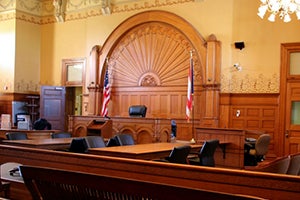
Unlike a jury trial, a preliminary hearing does not evaluate guilt or innocence beyond a reasonable doubt.
Instead, it serves as a statutory checkpoint under Penal Code § 859b, forcing the District Attorney to present admissible evidence establishing a reasonable suspicion that a felony was committed and that the accused committed it.
Legal Definitions & Key Concepts
Navigating felony preliminary hearings in California requires an understanding of specific statutory standards and evidentiary rules:
-
Probable Cause (Holding Standard): The legal standard of proof required at a preliminary hearing—significantly lower than "beyond a reasonable doubt"—requiring only a strong suspicion based on stateable facts that the defendant committed the charged felony.
-
Held to Answer: A judge's formal order under Penal Code § 872 finding that sufficient probable cause exists, binding the defendant over for trial and directing the prosecution to file an Information in Superior Court.
-
Prop 115 Hearsay (Penal Code § 872(b)): A California statutory exception permitting qualified law enforcement officers with specific training or experience to testify to out-of-court statements made by victims and witnesses at the preliminary hearing.
-
Information: The formal post-preliminary hearing charging document filed by the District Attorney within 14 days under Penal Code § 739 detailing the felony counts that will proceed to trial.
-
Wobbler Motion (Penal Code § 17(b)(5)): A motion made by defense counsel at the conclusion of the preliminary hearing asking the magistrate to reduce a wobbler felony charge down to a misdemeanor.
Penalties, Holding Orders & Legal Outcomes
While a California preliminary hearing does not directly impose criminal penalties, the magistrate's ruling determines the defendant's ongoing exposure to state prison and court-ordered conditions.
Holding Orders and Trial Exposure
If the magistrate finds probable cause on felony counts, the case is bound over for trial. The prosecution then files a formal Information, exposing the defendant to the maximum statutory prison terms provided by the California Penal Code for those specific counts.
Judicial Reductions Under PC § 17(b)(5)
If a felony charge is a "wobbler" (an offense punishable as either a felony or a misdemeanor), the magistrate has statutory authority under Penal Code § 17(b)(5) to reduce the charge to a misdemeanor at the close of the hearing.
This caps the defendant's maximum custody exposure to 364 days in county jail instead of state prison.
Discharge and Dismissal Under PC § 871
If the prosecution fails to establish probable cause on a count, the judge enters an order of discharge under Penal Code § 871, dismissing the charge and terminating any related bail or custody conditions.
Preliminary Hearing vs. Criminal Trial in California
|
Feature / Category |
Preliminary Hearing |
Criminal Trial |
| Primary Purpose | Screen for probable cause to hold for trial | Determine guilt or innocence |
| Applicable Cases | Felony charges only | Felony and misdemeanor charges |
| Fact Finder / Decision Maker | Single Superior Court judge (magistrate) | 12-member jury (or judge in bench trial) |
| Burden of Proof | Probable cause (low standard) | Beyond a reasonable doubt (highest standard) |
| Hearsay Rules | Relaxed (qualified police officer hearsay under Prop 115) | Strict application of Evidence Code hearsay rules |
| Outcome Options | Held to answer, charge reduced, or dismissed | Guilty, not guilty, or hung jury mistrial |
| Typical Duration | A few hours to several days | Several days to multiple weeks |
Hypothetical Examples of Preliminary Hearing Outcomes
-
At a preliminary hearing for felony grand theft, cross-examination reveals the stolen property was worth only $400; the magistrate grants a Penal Code § 17(b)(5) motion, reducing the charge to a misdemeanor petty theft.
-
During an assault preliminary hearing, the investigating officer's testimony fails to connect the defendant to the physical altercation; the judge issues an order of discharge under Penal Code § 871, dismissing the felony count for lack of probable cause.
-
In a commercial burglary prosecution, the state presents video surveillance and officer testimony establishing basic probable cause; the judge holds the defendant to answer, binding the case over to the trial department.
Related Laws, Statutes, and Legal Provisions
The preliminary hearing process in California operates alongside specific statutory deadlines, discovery rules, and pre-trial motion frameworks:
-
Penal Code § 859b (10-Day / 60-Day Rule): Establishes a defendant's absolute right to a preliminary hearing within 10 court days of arraignment if in custody, and no later than 60 calendar days overall, unless personal time waivers are granted.
-
Penal Code § 995 (Motion to Dismiss Information): Permits defense attorneys to petition a trial judge to set aside an Information if the preliminary hearing magistrate improperly held the defendant to answer without reasonable cause or violated key procedural rights.
-
Penal Code § 1538.5 (Motion to Suppress Evidence): Authorizes pre-trial motions to exclude evidence obtained through illegal searches or seizures; these motions are often litigated concurrently with the preliminary hearing.
-
Evidence Code § 1043 (Pitchess Motion): Grants defense counsel access to police officer personnel records upon a showing of good cause, allowing the defense to obtain evidence of officer misconduct or falsification prior to cross-examination at the preliminary hearing.
-
Penal Code § 1387 (Two-Dismissal Rule): Limits the prosecution from refiling a felony case if it has been dismissed twice previously due to insufficient evidence or statutory time violations.
Understanding these related laws matters because defense strategy at a preliminary hearing extends beyond basic factual disputes.
Enforcing statutory time limits under PC § 859b or litigating a concurrent PC § 1538.5 suppression motion can create grounds for a complete case dismissal or establish an unassailable record for a subsequent PC § 995 motion in Superior Court.
Frequently Asked Questions (FAQs)
Is a preliminary hearing the same as a trial?
No. A preliminary hearing is an early screening proceeding before a judge to evaluate probable cause, whereas a trial involves a full evaluation of evidence by a jury to decide guilt beyond a reasonable doubt.
Can charges be dismissed at a preliminary hearing in California?
Yes. Under Penal Code § 871, if the prosecution fails to present sufficient evidence establishing probable cause, the magistrate will dismiss the unsupported charges.
What is the legal standard of proof at a preliminary hearing?
The standard is probable cause, which only requires the prosecution to show a strong suspicion that a felony occurred and that the defendant was involved.
Can felony charges be reduced to misdemeanors at the preliminary hearing?
Yes. Under Penal Code § 17(b)(5), a magistrate can reduce "wobbler" felony offenses to misdemeanors if the facts and the defendant's background warrant a lesser charge.
How long does a California preliminary hearing usually take?
Most preliminary hearings last between a few hours and two days, depending on the complexity of the case, the number of counts, and the volume of witness testimony.
Can a defendant waive their right to a preliminary hearing?
Yes. A defendant can waive a preliminary hearing, but doing so is rare because it forfeits the opportunity to cross-examine state witnesses and challenge probable cause early in the process.
Can police officers testify to hearsay statements at a preliminary hearing?
Yes. Under Proposition 115 (Penal Code § 872(b)), law enforcement officers who meet statutory training requirements can testify to out-of-court statements made by victims and witnesses.
What happens after a judge holds a defendant to answer?
The District Attorney must file a formal Information in Superior Court within 14 days, followed by a second arraignment where the case is assigned to a trial court department.
Contact Esfandi Law Group today to evaluate your felony case and prepare for your preliminary hearing. Call for a confidential consultation or submit your inquiry online to speak directly with an experienced California criminal defense lawyer.