
California Health and Safety Code § 11354: Selling or Furnishing PCP
California Health and Safety Code § 11354 makes it a strict felony to sell, furnish, administer, give away, transport for sale, import, or offer to sell phencyclidine (PCP).
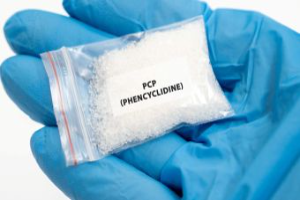
Because PCP is classified as a Schedule II controlled substance, California law imposes severe penalties for distribution-related offenses to deter trafficking, particularly transactions involving or targeting minors.
Quick Reference Summary: HS 11354 Penalties & Elements
|
Statute |
Penalties (Base) |
Key Requirements for Conviction |
| HS 11354 | 3, 4, or 5 years in county jail |
• Defendant sold, furnished, or transported PCP • Defendant knew of the drug's presence • Defendant knew it was a controlled substance • Substance was confirmed to be PCP |
What the Prosecutor Must Prove (Legal Elements)
To secure a conviction under HS 11354, the prosecution must prove four elements beyond a reasonable doubt:
-
Unlawful Act: The defendant sold, furnished, administered, gave away, transported for sale, imported, or offered to perform these acts with PCP.
-
Knowledge of Presence: The defendant knew of the drug's presence.
-
Knowledge of Nature: The defendant was aware that the substance was a controlled substance or specifically PCP.
-
Identity of Substance: The substance was, in fact, phencyclidine (PCP) in any of its common forms (powder, liquid, tablets, or laced marijuana/leaves).
Note on Transportation: For a transportation charge under HS 11354, the prosecutor must prove that the drug was moved specifically for sale, rather than for personal use.
Real-World Example of an HS 11354 Offense
An individual is stopped by law enforcement for a traffic violation. During a lawful search of the vehicle, officers discover a jar containing liquid PCP, small glass vials, a digital scale, and a large sum of cash.
Because the quantity and packaging materials indicate distribution rather than personal consumption, the individual is arrested and charged with transporting PCP for sale in violation of Health and Safety Code § 11354.
If the evidence showed they had only a small amount for personal use, without the scale or packaging, they would instead face simple possession charges under HS 11377.
Penalties and Sentencing for HS 11354
Because phencyclidine (PCP) is classified as an extraordinarily volatile and dangerous hallucinogen, California courts do not apply standard misdemeanor sentencing to its distribution.
A conviction under Health and Safety Code § 11354 is a straight felony.
Base Jail Sentences
Under California's criminal realignment laws, sentences are typically served in local county jail rather than in state prison, provided the defendant does not have certain prior violent or serious felony convictions. The basic sentencing matrix dictates:
-
Low-Term Felony: 3 years in county jail
-
Mid-Term Felony: 4 years in county jail
-
High-Term Felony: 5 years in county jail
Financial Penalties
In addition to incarceration, a judge can impose severe financial penalties, including:
-
Statutory fines reaching up to $10,000 per offense.
-
Additional mandatory court fees, assessments, and victim restitution fines.
Aggravated Statutory Enhancements
The base 3-, 4-, or 5-year sentence can scale significantly upward if specific aggravating factors apply to the case.
Under California Health & Safety Code § 11370.4, weight-based enhancements add mandatory consecutive time to your base sentence:
-
More than 1 Kilogram (or 30 Liters): Adds 3 years to the sentence.
-
More than 4 Kilograms (or 100 Liters): Adds 5 years to the sentence.
-
More than 10 Kilograms (or 200 Liters): Adds 10 years to the sentence.
Collateral Penalties
A felony conviction under HS 11354 has long-term consequences that extend beyond jail time and fines:
-
Loss of Firearm Rights: Lifetime ban on possessing or owning firearms in California.
-
Professional Licensing: Automatic disciplinary action, suspension, or revocation of professional licenses (e.g., nursing, real estate, medical, or legal).
-
Strikes and Priorability: While not an immediate "strike" offense under California's Three Strikes Law, it constitutes a prior drug trafficking conviction that will automatically double the penalties for any future drug-related charges.
Immigration Consequences
Under federal immigration law, a conviction under HS 11354 is strictly classified as an aggravated felony involving drug trafficking.
For non-citizens—such as legal permanent residents and green card holders—a conviction automatically leads to deportation, makes them inadmissible to the U.S., and prevents them from obtaining any future immigration benefits.
Legal Defenses to Challenge HS 11354
An aggressive defense strategy focuses on dismantling the prosecution's case. Common defenses include:
-
Lack of Intent to Sell: Proving the PCP was strictly for personal use can reduce the charge to a simple misdemeanor possession.
-
Fourth Amendment Violations: Suppressing evidence if law enforcement conducted an illegal stop-and-frisk (Terry stop) or searched a vehicle or home without a valid warrant or an exception.
-
Lack of Knowledge: Demonstrating that the defendant did not know the drug was hidden in their vehicle or property.
-
Entrapment: Demonstrating that undercover law enforcement improperly pressured or coerced the defendant into committing a crime they would not have otherwise committed.
To minimize or avoid jail time when facing charges under California Health and Safety Code § 11354, a defense attorney relies on targeted negotiation strategies, constitutional challenges, and the use of mitigating factors.
Because HS 11354 is a "straight felony" (a charge that a judge cannot directly reduce to a misdemeanor), defense counsel must persuade the prosecutor to modify the charges or agree to an alternative disposition.
4 Common Defense Strategies to Reduce or Avoid Jail Time
1. Negotiating down to "Simple Possession" (HS 11377)
In many PCP sales cases, the primary goal is a charge reduction. If the evidence of actual sales, transportation, or intent to distribute is weak, a defense attorney will aggressively push the prosecutor to drop the HS 11354 felony charge in exchange for a plea to simple possession under Health and Safety Code § 11377.
-
Why it matters: HS 11377 is typically classified as a misdemeanor. Changing it from a felony to a misdemeanor removes the risk of jail time and helps preserve your permanent record from a trafficking conviction.
2. Securing a "Diverted" Sentence or Collaborative Courts
Although people convicted of drug trafficking are usually not eligible for standard Proposition 36 or PC 1000 diversion programs, a skilled attorney can negotiate a personalized plea deal.
-
The Strategy: The defense may negotiate a deal in which the defendant pleads guilty to a lesser possession charge, allowing the defendant to enter drug court or a formal rehabilitation program instead of going to jail. Upon successful completion of treatment, the charges may be dismissed entirely.
3. Exploiting Fourth Amendment Violations (Motion to Suppress)
If the PCP, digital scales, or cash were discovered during an illegal traffic stop, an invalid stop-and-frisk, or a warrantless search, your attorney will file a Motion to Suppress Evidence (Penal Code § 1538.5).
-
The Outcome: If the judge rules that the police violated your constitutional rights, the evidence is suppressed. Without the physical drugs, the prosecution's case typically collapses, forcing the prosecution to dismiss the charges.
4. Presenting a Mitigation Package
Before formal sentencing or a plea agreement, an attorney will compile a comprehensive mitigation package for the DA or the judge. This package shifts the narrative from the alleged crime to the person behind it. It typically includes:
-
Proof of immediate, voluntary enrollment in a residential or outpatient drug treatment program.
-
Clean drug test results demonstrate a commitment to sobriety.
-
Character letters from employers, family members, or community leaders.
-
Proof of a minimal or nonexistent prior criminal record.
The Power of Early Intervention: The best time for an attorney to negotiate is before formal charges are filed. If counsel can present weaknesses in the police report or evidence of a substance abuse problem to the filing deputy DA immediately after an arrest, they may persuade the prosecution to file lesser charges from day one.
Related California Laws & Statutes
-
Health and Safety Code § 11377 – Possession of PCP: Covers simple possession for personal use. It is typically a misdemeanor unless the defendant has specific disqualifying prior convictions.
-
Health and Safety Code § 11378 – Possession for Sale of PCP: Penalizes possessing PCP with the specific intent to sell it, even if an actual sale or transfer has not yet occurred.
-
Health and Safety Code § 11352 – Sale or Transportation of Narcotics: Applies the same trafficking framework to non-synthetic narcotics such as heroin, cocaine, and raw opiates.
-
Health and Safety Code § 11370.6 – Possession of Drug Money: Makes it a crime to possess more than $100,000 in cash derived from, or intended for, illegal drug transactions.
-
Health and Safety Code § 11353 – Selling Drugs to a Minor: Applies severe state prison sentences to adults who hire, use, or sell controlled substances to minors.
-
Penal Code § 182 – Conspiracy: Filed when two or more people agree to cooperate in a PCP sales operation, allowing prosecutors to hold all participants liable for the acts of one.
-
Penal Code § 4573 – Bringing Drugs into a Correctional Facility: A separate felony charge applied if a person attempts to smuggle PCP into a county jail or state prison.
Frequently Asked Questions (FAQs)
Is simply offering to sell PCP enough for a conviction under HS 11354?
Yes. Health and Safety Code § 11354 explicitly criminalizes the offer to sell PCP. The prosecution need not prove that money changed hands or that the drugs were delivered, only that the defendant had a genuine intent and the capability to complete the offered transaction.
Can an HS 11354 felony charge be reduced to a misdemeanor?
Because HS 11354 is a straight felony, it cannot be reduced to a misdemeanor "wobbler" directly. However, an experienced defense attorney can negotiate with the prosecutor to reduce the charge to simple possession under HS 11377, a misdemeanor.
Is probation an option for someone charged with selling PCP?
Probation is legally possible, depending on the defendant's prior criminal record and the specific facts of the case. If granted, formal probation allows the individual to serve their sentence outside of jail under strict court supervision and compliance terms.
What is the difference between HS 11354 and HS 11378?
HS 11378 penalizes possession of PCP with the intent to sell it, relying on circumstantial evidence such as scales and baggies. HS 11354 goes a step further by criminalizing the actual acts of selling, furnishing, importing, or transporting the drug.
How do federal immigration laws view a conviction under HS 11354?
Federal law classifies HS 11354 as an aggravated felony and a controlled substance offense. A conviction carries severe, mandatory immigration penalties, resulting in near-automatic deportation and permanent exclusion from entering the United States for non-citizens.
Speak With a California Drug Crime Defense Attorney
If you or a loved one faces charges under Health and Safety Code § 11354, securing early legal representation from a skilled defense advocate can fundamentally change the trajectory of your case.
Esfandi Law Group offers aggressive, strategic defense tailored to mitigate exposure to prison and protect your legal status.
To schedule your confidential, free consultation, call (310) 274-6529 or reach out directly via our online contact portal.