
Penal Code § 171.5 PC – Weapons at Airports
Under California Penal Code § 171.5 PC, knowingly bringing a weapon, firearm component, or prohibited dangerous item into a secure area of an airport or passenger vessel terminal is a serious misdemeanor.
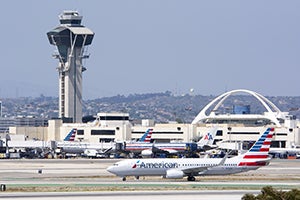
State and federal security protocols enforce a strict standard beyond security checkpoints, meaning even a forgotten pocketknife, ammunition round, or souvenir replica can lead to immediate criminal charges.
A conviction under PC 171.5 carries potential jail time, criminal fines, and thousands of dollars in separate administrative penalties from the Transportation Security Administration (TSA).
This comprehensive legal guide breaks down the statutory text of PC 171.5, key definitions, what prosecutors must prove, criminal penalties, effective defense strategies, and related California weapon statutes.
Statutory Text: Legal Definition of PC 171.5
“(b) It is unlawful for any person to knowingly possess, within any sterile area of an airport or a passenger vessel terminal, any of the items listed in subdivision (c).
(c) The following items are unlawful to possess as provided in subdivision (b):
(1) Any firearm.
(2) Any knife with a blade length in excess of four inches, the blade of which is fixed, or is capable of being fixed, in an unguarded position by the use of one or two hands.
(3) Any box cutter or straight razor.
(4) Any metal military practice hand grenade.
(5) Any metal replica hand grenade.
(6) Any plastic replica hand grenade.
(7) Any imitation firearm.
(8) Any frame, receiver, barrel, or magazine of a firearm.
(9) Any ammunition, or reloaded ammunition.
(10) Any taser or stun gun.
(11) Any instrument that expels a metallic projectile, such as a BB or pellet, or any paint gun.
(12) Any tear gas weapon.”
Key Statutory Definitions
Understanding the legal scope of Penal Code 171.5 PC requires clarifying key statutory definitions:
-
Sterile Area: The secure region of an airport or maritime terminal past security screening checkpoints (e.g., TSA checkpoints) where access is strictly controlled.
-
Knowingly Possesses: Personal awareness that the item is present in your baggage or on your person while in a sterile zone.
-
Firearm Components: Major mechanical elements of a firearm, including frames, receivers, barrels, or ammunition magazines, even if disassembled or incapable of firing.
-
Imitation/Replica Weapon: Realistic fake firearms or practice grenades that mimic actual weapons, regardless of operational capability.
Elements of the Crime: What Must Be Proven
To convict a defendant under PC 171.5, the prosecution must prove two core elements beyond a reasonable doubt:
-
The defendant knowingly possessed a prohibited item listed under PC 171.5(c).
-
The possession occurred within a sterile area of an airport or passenger vessel terminal.
Note: The prosecution must prove you knew the item was in your bag or on your person when entering the checkpoint.
Penalties for PC 171.5 PC
|
Offense Level |
Custody & Fines |
Administrative & Collateral Effects |
| Misdemeanor |
• Up to 6 months in county jail • Fine up to $1,000 |
• TSA federal civil fines (up to $15,000+ depending on item) • Revocation of TSA PreCheck / Global Entry privileges • Confiscation and destruction of the weapon/parts |
| Alternative Probation |
• Summary (informal) probation • Community service or court fines |
• Criminal conviction record • Potential employment screening issues |
Legal Defense Strategies
An experienced criminal defense attorney at the Esfandi Law Group relies on targeted legal and factual strategies to fight charges under California Penal Code § 171.5 PC:
-
Lack of Knowledge (Mistake of Fact): Because PC 171.5 requires knowing possession, you cannot be convicted if you were genuinely unaware the prohibited item was in your luggage. Common examples include a relative packing your bag, an item slipping under a lining, or forgetting a work tool or ammunition round was inside a compartment.
-
Interception Outside the "Sterile Area": PC 171.5 applies exclusively to secure zones past TSA checkpoints. If law enforcement stopped, questioned, or searched you in the public lobby, ticketing counter, or baggage claim area before you entered security, the statute does not apply.
-
Item Fails Statutory Criteria: Prosecutors must prove the seized object meets the exact statutory definition under PC 171.5(c). If a knife blade measures four inches or less, or if a tool is not explicitly restricted under the law, the charge must be dismissed.
-
Statutory Officer Exemption: Active duty law enforcement officers, authorized military personnel, retired peace officers with proper permits, and screened airport security staff are statutorily exempt from PC 171.5 prosecution while acting within their official capacity.
-
Illegal Search and Seizure (Fourth Amendment): Although TSA screening checkpoint searches are permitted under administrative search doctrines, any extended detention, non-routine search, or physical seizure conducted without reasonable suspicion or a warrant can be challenged through a Motion to Suppress Evidence under PC 1538.5.
-
Pre-Trial Diversion / Civil Compromise: For first-time offenders with no prior criminal record, defense counsel can often negotiate entry into a pre-trial diversion program or judicial misdemeanor diversion (PC 1001.95), leading to a complete dismissal of charges upon completion of community service or court conditions.
Examples of PC 171.5 Violations
-
Example 1 (Forgotten Firearm Component): A commuter leaves an empty firearm magazine in a backpack side pocket and passes through a TSA airport checkpoint, leading to PC 171.5 charges for possessing firearm parts in a sterile zone.
-
Example 2 (Box Cutter in Work Bag): A construction worker uses their work tote as carry-on luggage and forgets a box cutter is in the front compartment, triggering a misdemeanor citation at airport security.
-
Example 3 (Replica Grenade Gift): A traveler purchases a souvenir metal novelty practice grenade and places it in carry-on luggage; because replica grenades are explicitly listed under PC 171.5(c), they face criminal charges.
Related California Laws
Understanding related offenses is essential because airport weapon incidents often lead to multiple state or federal charges:
-
Penal Code 171.7 PC – Weapons at Public Transit Facilities: Banning dangerous weapons within sterile or restricted passenger areas of train, subway, and bus transit hubs prevents public transportation security threats.
-
Penal Code 171b PC – Weapons in Public Buildings: Classifying possession of weapons in government buildings or public meetings as a "wobbler" offense addresses security breaches in public civic spaces.
-
Penal Code 25400 PC – Carrying a Concealed Firearm: Charging unpermitted concealed handguns inside carry-on luggage imposes severe criminal liability alongside airport security violations.
-
Penal Code 25850 PC – Carrying a Loaded Firearm in Public: Elevating prosecution severity applies when a firearm brought into a public airport terminal contains live ammunition.
-
49 U.S. Code § 46505 – Carrying a Weapon or Explosive on an Aircraft: Enforcing federal criminal penalties targets individuals who board or attempt to board commercial aircraft carrying concealed dangerous weapons or explosives.
Frequently Asked Questions (FAQs)
What exactly qualifies as a "sterile area" at a California airport under PC 171.5?
A "sterile area" refers specifically to the secure zones of an airport terminal located beyond Transportation Security Administration (TSA) security screening checkpoints. Unscreened ticket counters, baggage claim hubs, and drop-off curb areas outside checkpoint boundaries do not fall under this designation.
Can I be convicted under PC 171.5 if I genuinely forgot a weapon was in my carry-on baggage?
No, but accidental possession often leads to an arrest before intent is clarified. Because PC 171.5 explicitly requires knowing possession, establishing a genuine lack of awareness—such as forgetting a work tool or misplaced ammunition in a bag—serves as a complete legal defense against conviction.
Are properly checked bags subject to prosecution under Penal Code 171.5 PC?
No. PC 171.5 applies only to sterile passenger zones. Transporting firearms, parts, or ammo in checked luggage is entirely legal under state law, provided items are unloaded, locked in hard-sided containers, declared at the airline counter, and compliant with TSA travel guidelines.
Is it illegal to carry a toy, replica gun, or souvenir grenade through airport security?
Yes. PC 171.5(c) specifically criminalizes carrying imitation firearms, plastic replica hand grenades, and metal military practice grenades into sterile areas, regardless of whether the item is completely non-functional or obviously a toy.
Will I face separate federal TSA fines in addition to California criminal charges?
Yes. Criminal prosecution under state law operates independently from federal administrative enforcement. The TSA routinely issues civil administrative penalties—often exceeding several thousand dollars per violation—and revokes expedited screening privileges like TSA PreCheck and Global Entry.
An attorney from Esfandi Law Group in Los Angeles specializing in criminal defense can assist you. Book your free consultation by either calling us or filling out the contact form available here.