
California Penal Code § 246 PC: Shooting at an Inhabited Dwelling or Occupied Vehicle
Under Penal Code § 246 PC, shooting at an inhabited dwelling or occupied vehicle is a severe violent felony that carries harsh statutory penalties, mandatory state prison terms, and life-altering legal consequences.
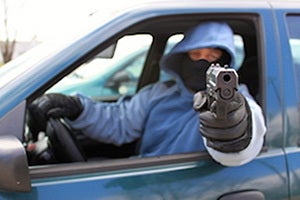
California law strictly prohibits willfully and maliciously discharging a firearm at any residence currently used for living purposes, as well as any occupied building, vehicle, camper, or aircraft.
Because PC 246 PC is classified as a violent felony under California's Three Strikes Law, a conviction automatically triggers an official "strike," mandates serving at least 85% of a prison sentence, and exposes defendants to devastating sentencing enhancements—including potential terms of 25 years to life if injuries occur.
Understanding the precise legal elements of PC 246 PC, how prosecutors prove "inhabited" vs. "occupied" status, and the strategic legal defenses available is critical for anyone facing firearm charges in California.
Legal Definition of PC 246
California Penal Code Section 246 PC states:
"Any person who shall maliciously and willfully discharge a firearm at an inhabited dwelling house, occupied building, occupied motor vehicle, occupied aircraft, inhabited house car, as defined in Section 362 of the Vehicle Code, or inhabited camper, as defined in Section 243 of the Vehicle Code, is guilty of a felony, and upon conviction shall be punished by imprisonment in the state prison for three, five, or seven years, or by imprisonment in the county jail for not less than six months nor more than one year."
Key Statutory Definitions
To secure a conviction under Penal Code § 246 PC, courts and jury instructions (CALCRIM 965) rely on precise legal definitions that dictate how the law applies to structures, vehicles, and mental state:
-
Inhabited Dwelling House or Camper: A structure, house, apartment, house car, or camper that is currently being used for dwelling or residential purposes. Under California law, a dwelling remains "inhabited" even if no one is physically present inside at the exact moment the firearm is discharged, provided the occupants intend to return (e.g., they are at work, running errands, or away on vacation).
-
Occupied Building or Vehicle: A commercial structure, office building, motor vehicle, or aircraft in which one or more individuals are physically present inside at the moment the shooting occurs. Unlike an inhabited dwelling, an empty commercial building or vacant vehicle does not satisfy the legal definition under PC 246 PC.
-
Willful and Malicious Discharge: Firing a weapon intentionally (willfully) and with a wrongful intent to injure, vex, annoy, or perform an illegal act (maliciously). The prosecution is not required to prove an intent to hit a specific person, only that the discharge itself was deliberate, non-accidental, and carried out with malice.
-
Discharged "At": Under established California case law, discharging a firearm "at" a target means shooting directly into the structure or vehicle, or firing in such close proximity to it that there is a high probability the projectile will strike it or create a direct risk to any occupants inside.
-
Firearm: Any device designed as a weapon from which a projectile is expelled through a barrel by the force of an explosion or combustion.
What Must Be Proven to Convict
To obtain a conviction under PC 246 PC, the prosecution must establish four legal elements beyond a reasonable doubt:
-
Discharge of a Firearm: The defendant unlawfully discharged a firearm (a device designed as a weapon that expels a projectile through a barrel by force of an explosion).
-
Targeted Structure or Vehicle: The firearm was discharged directly at—or in close proximity to—an inhabited dwelling house, occupied building, occupied motor vehicle, occupied aircraft, or inhabited camper/house car.
-
Willful and Malicious State of Mind: The defendant acted willfully (intentionally) and maliciously (with a wish to vex, annoy, or injure another person, or with intent to do a wrongful act).
-
Occupancy Status:
-
For a dwelling or camper, the structure was inhabited (currently used for dwelling purposes, regardless of whether anyone was physically inside at the moment of shooting).
-
For a building or vehicle, the structure or vehicle was occupied (at least one person was physically inside when the weapon was fired).
-
Penalties for Penal Code § 246 PC
Shooting at an inhabited dwelling or occupied vehicle is a straight felony under California law.
-
State Prison Sentence: 3, 5, or 7 years in California State Prison (or 6 months to 1 year in county jail in rare mitigated cases).
-
Fines: Criminal fines up to $10,000.
-
California Three Strikes Law: Classified as a Violent Felony under California Penal Code § 667.5(c) PC, constituting an automatic "strike."
-
Custody Credit Limitations: Convicted individuals must serve a minimum of 85% of their state prison sentence before becoming eligible for parole release.
-
Firearm Rights: Permanent lifetime ban on owning, purchasing, or possessing firearms under California PC 29800.
Major Sentencing Enhancements:
-
10-20-Life Firearm Enhancement (PC 12022.53): Firing a gun at an occupied vehicle or dwelling during a felony can add 10 years for pulling the trigger, 20 years for firing, and 25-years-to-life if the shooting causes severe bodily injury or death.
-
Street Gang Enhancement (PC 186.22): Firing at a dwelling or vehicle for the benefit of, or at the direction of, a criminal street gang adds 15 years to life in state prison.
Common Legal Defenses to PC 246
Defending against a Penal Code 246 PC charge requires challenging the prosecution's evidence regarding intent, target state, and identity. Strategic defense approaches include:
-
Self-Defense or Defense of Others:
California law protects your right to use a firearm in self-defense if you reasonably believed you or another person were in imminent danger of suffering great bodily harm or death, and firing the weapon was a necessary response to neutralize that threat. Proving self-defense completely exonerates you of criminal liability.
-
Lack of Willfulness or Accidental Discharge:
PC 246 PC requires the state to prove that you fired the weapon intentionally and maliciously. If the firearm discharged accidentally due to a mechanical malfunction, drop hazard, or physical struggle, the required mental state (mens rea) is absent.
-
Lack of Legal Occupancy or Inhabited Status:
To convict under PC 246 PC for shooting a building or vehicle, the prosecution must prove someone was physically inside at the time of the shooting. For a dwelling, prosecutors must prove it was currently used as a residence. Firing at an abandoned house, empty commercial building, or vacant car does not violate PC 246 PC (though lower charges like vandalism or negligent discharge may apply).
-
Mistaken Identity and Unreliable Eyewitnesses:
Drive-by shootings and firearm discharges often occur rapidly, in low-light conditions, or from moving vehicles. Defense counsel can utilize ballistics expertise, phone location data, surveillance video, and cross-examination to demonstrate misidentification or false allegations.
Hypothetical Examples
-
Inhabited Dwelling Example: A suspect fires several rounds into the front window of a home while the homeowners are away on vacation. Because the residence is currently used as a home (inhabited), the act constitutes PC 246 PC despite the physical absence of occupants.
-
Occupied Vehicle Example: During an argument in a parking lot, a driver fires a handgun into the side door of a car while a passenger is sitting in the backseat. Firing at a motor vehicle with a person inside satisfies all elements of PC 246 PC.
-
Non-Occupied / Reduced Offense Example: A shooter discharges a gun into an abandoned, condemned warehouse known to be empty. Because the structure is neither an inhabited dwelling nor an occupied building, charges under PC 246 PC cannot be legally sustained.
Frequently Asked Questions (FAQs)
Does someone have to be inside a house for a shooting to be PC 246 PC?
No. Under California law, a house is considered "inhabited" if it is currently used for living purposes, even if the residents are temporarily away at work or on vacation when the shots are fired.
What is the difference between PC 246 PC and PC 246.3 PC (Negligent Discharge)?
PC 246 PC requires maliciously firing directly at or near an inhabited dwelling or occupied vehicle. PC 246.3 PC involves firing a gun in a grossly negligent manner that could result in injury or death, without targeting a specific structure or vehicle.
Is Penal Code § 246 PC considered a violent strike under the Three Strikes Law?
Yes. PC 246 PC is officially classified as a violent felony under California Penal Code § 667.5(c) PC, making a conviction an automatic strike that limits custody credits to 85%.
Can you be charged under PC 246 PC if you shot near a vehicle instead of directly at it?
Yes. California case law establishes that discharging a firearm in close proximity to a vehicle or dwelling with a high probability that bullets could strike it meets the legal standard for "shooting at" under PC 246 PC.
Can PC 246 PC charges be reduced to a lesser crime?
Yes. Depending on evidentiary weaknesses—such as lack of malice or proof of non-occupancy—defense counsel can negotiate to reduce charges to PC 246.3 negligent discharge or PC 417 brandishing a firearm.
What happens if someone is injured or killed in a PC 246 PC shooting?
If a victim suffers serious bodily injury or death, prosecutors will add PC 12022.53 10-20-Life enhancements (adding 25 years to life) or charge Penal Code § 187 PC murder under the felony murder rule.
Does shooting at an empty, parked car violate Penal Code § 246 PC?
No. For a vehicle, the statute strictly requires that the motor vehicle be "occupied" at the moment of the shooting. Firing at a vacant vehicle may be charged as vandalism or negligent discharge, but not PC 246 PC.
Is self-defense a valid defense to shooting at an occupied vehicle?
Yes. If an occupant in a vehicle was attempting to run you down or shooting at you, returning fire to eliminate an imminent threat of death or great bodily harm is a legally recognized claim of self-defense.
Related California Laws
Reviewing related statutes provides crucial legal context, showing how prosecutors build complex multi-charge cases and revealing alternative, reduced offenses that criminal defense attorneys can leverage during negotiations.
-
Penal Code 26100 PC – Drive-By Shooting / Discharging Firearm from Vehicle: Prohibits drivers or vehicle owners from allowing weapons to be brought into their vehicle or permitting individuals to discharge firearms from inside a motor vehicle. Punishable as a misdemeanor or felony carrying up to 3 years in state prison.
-
Penal Code 246.3 PC – Grossly Negligent Discharge of a Firearm: Criminalizes discharging a firearm in a grossly negligent manner that could result in injury or death to a person, without requiring the weapon to be fired at a specific structure or vehicle. A "wobbler" punishable as a misdemeanor or felony carrying up to 3 years in state prison.
-
Penal Code 245(a)(2) PC – Assault with a Firearm: Prohibits unlawfully attempting to commit a violent injury on another person using a firearm while possessing the present ability to do so. A "wobbler" punishable as a misdemeanor or felony carrying 2, 3, or 4 years in state prison.
-
Penal Code 29800 PC – Felon in Possession of a Firearm: Prohibits any person previously convicted of a felony (or specific violent misdemeanors) from purchasing, owning, receiving, or possessing any firearm. A felony punishable by 16 months, 2 years, or 3 years in state prison.
-
Penal Code 30600 PC – Possession or Manufacture of Assault Weapons: Prohibits manufacturing, distributing, transporting, importing, or selling illegal assault weapons or .50 BMG rifles in California. A felony punishable by 4, 6, or 8 years in state prison.
-
Penal Code 664/187 PC – Attempted Murder: Criminalizes taking a direct but ineffectual step toward killing another human being with malice aforethought and specific intent using a firearm or other lethal force. A felony carrying life in state prison with the possibility of parole.
Why Related Laws Matter
Understanding related statutes is a cornerstone of criminal defense strategy in violent felony cases. Because Penal Code 246 PC carries mandatory state prison terms, violent strike enhancements under California's Three Strikes Law, and potential 25-to-life enhancements under PC 12022.53, prosecuting agencies maintain considerable leverage.
However, if defense counsel can highlight evidentiary flaws—such as showing the building was uninhabited, the vehicle was empty, or the discharge was accidental—prosecutors can often be persuaded to reduce charges to non-strike offenses like PC 246.3 negligent discharge or PC 417 brandishing, preserving freedom and avoiding decades in prison.
The Esfandi Law Group can help you. Schedule your free consultation at (310) 274-6529 or use the contact form.