
18 U.S.C. § 1001: Federal False Statements Act
Under 18 U.S.C. § 1001, making a false or misleading statement to an agent, agency, or department of the United States federal government is a serious federal felony.
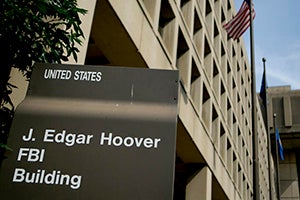
Commonly known as the Federal False Statements Act, this statute criminalizes lies, misrepresentations, and active concealment during federal investigations, administrative proceedings, background checks, or routine filings—even when the individual was not under oath.
Legal Definition of Section 1001
Under 18 U.S.C. § 1001, it is a federal crime for anyone, in any matter within the jurisdiction of the executive, legislative, or judicial branch of the Government of the United States, to knowingly and willfully falsify, conceal, or cover up a material fact, make any materially false, fictitious, or fraudulent statement or representation, or make or use any false writing or document knowing it to contain any materially false, fictitious, or fraudulent entry.
Federal prosecutors frequently use 18 U.S.C. § 1001 in white-collar prosecutions, public corruption inquiries, regulatory audits, and national security investigations.
Notably, an individual can be convicted of making a false statement even if they were never under oath and even if the underlying substantive crime being investigated is never proven.
What Must Be Proven to Convict?
To secure a conviction under 18 U.S.C. § 1001, federal prosecutors from the U.S. Department of Justice must prove each of the following legal elements beyond a reasonable doubt:
-
Statement or Concealment: The defendant made a statement, representation, or writing, or actively concealed or covered up a fact.
-
Falsity: The statement, representation, writing, or entry was factually false, fictitious, or fraudulent when made.
-
Materiality: The false statement or concealed fact was material. A statement is legally material if it has a natural tendency to influence, or is capable of influencing, the decision-making process or function of the federal agency or department.
-
Federal Jurisdiction: The statement or matter was within the jurisdiction of the executive, legislative, or judicial branch of the U.S. government (e.g., FBI, IRS, SEC, DEA, OSHA, or federal grant authorities).
-
Knowledge and Willfulness: The defendant acted knowingly and willfully—meaning they knew the statement was false when made and acted with the intent to deceive or disobey the law.
Real-World Hypothetical Examples
-
FBI Interview Misdirection: During an unsworn, voluntary interview with FBI special agents regarding a corporate fraud investigation, an executive denies knowing a co-worker who managed offshore accounts—despite having exchanged hundreds of emails with him about those accounts.
-
Customs Declaration Omission: A traveler completing a U.S. Customs and Border Protection (CBP) declaration form checks "No" on whether they are carrying over $10,000 in currency, despite carrying $35,000 in cash hidden in their luggage.
-
Falsified Federal Regulatory Log: An environmental compliance manager at a chemical plant submits safety monitoring reports to the Environmental Protection Agency (EPA) containing fabricated emissions data to pass an audit.
Criminal Penalties and Sentencing Guidelines
A conviction under 18 U.S.C. § 1001 carries severe statutory maximums, with actual sentences calculated under the U.S. Sentencing Guidelines based on criminal history and the nature of the fraud:
Standard Federal Penalties
-
Incarceration: Up to 5 years in federal prison per false statement count.
-
Fines: Criminal fines up to $250,000 for individuals (and up to $500,000 for corporate entities).
-
Supervised Release: Up to 3 years of federal supervised release following imprisonment.
-
Special Assessment: A mandatory statutory assessment fee per felony count.
Enhanced Statutory Penalties (Up to 8 Years)
If the false statement or concealment occurs in a matter involving international or domestic terrorism (under 18 U.S.C. § 2331) or offenses under federal sex offender registration laws, the maximum prison sentence increases from 5 years to up to 8 years per count.
Collateral Consequences
-
Loss of Security Clearance: Permanent revocation of federal government or defense contractor security clearances.
-
Professional Debarment: Disqualification from receiving federal government contracts, grants, or federal employment.
-
Immigration Removal: For non-citizens, a felony conviction under 18 U.S.C. § 1001 involves fraud and dishonesty, making it an aggravated felony or crime involving moral turpitude (CIMT) that can trigger mandatory deportation.
Legal Defenses Against 18 U.S.C. § 1001 Charges
Defending against federal false statement charges requires attacking the prosecution's evidence regarding intent, language precision, and federal jurisdiction:
Lack of Intent / Honest Mistake or Confusion
Section 1001 requires the government to prove you acted "knowingly and willfully." If your statement was the result of a faulty memory, honest confusion, a misinterpretation of a complex question, or a simple clerical error, you lack the requisite criminal intent to deceive.
Literal Truth / Ambiguous Questions
Under the "literal truth defense," if your answer was literally true based on a reasonable interpretation of the agent's question—even if it was evasive or misleading—it cannot serve as the basis for a false statement conviction. Likewise, if the government's question was fundamentally ambiguous, a false statement charge cannot stand.
Lack of Materiality
If the statement was so minor, trivial, or irrelevant that it lacked any natural tendency to influence or affect the federal agency's decision-making or function, it fails the statutory requirement of materiality.
Lack of Federal Jurisdiction
Section 1001 requires that the matter be within the jurisdiction of a federal department or agency. If the statement was made in a purely private or state-level matter where no federal statutory authority, funding, or regulatory supervision existed, federal jurisdiction is lacking.
Judicial / Legislative Exceptions
Section 1001 includes specific statutory exceptions for judicial proceedings (statements made by parties or counsel in court filings/proceedings) and legislative matters (such as committee inquiries, unless specifically governed by administrative filings or congressional investigations).
Frequently Asked Questions
Can I be convicted under 18 U.S.C. 1001 if I was not under oath?
Yes. Unlike federal perjury laws, 18 U.S.C. § 1001 does not require an oath. Making an unsworn oral statement to a federal agent during a casual interview, answering questions at a border checkpoint, or submitting an unverified form can lead to felony charges.
Is it illegal to remain silent or refuse to answer federal agents?
No. Under the Fifth Amendment, you have the constitutional right to remain silent and refuse to answer questions from law enforcement officers. However, if you choose to speak, any false statement you provide can be prosecuted under Section 1001.
What is the "Exculpatory No" defense?
The "Exculpatory No" defense was a historic legal doctrine where simply answering "no" to a law enforcement officer's incriminating question was exempt from prosecution.
However, the U.S. Supreme Court explicitly abolished this defense in Brogan v. United States (1998). Simply saying "no" to a federal agent when you know the answer is "yes" can trigger a Section 1001 prosecution.
Does Section 1001 apply to local police or state investigators?
Generally, no, unless the state or local officer is acting as a sworn member of a joint federal task force (such as a Joint Terrorism Task Force or FBI/DEA task force) or the statement relates directly to a matter involving federal funds or federal regulatory authority.
What makes a statement "material" under 18 U.S.C. 1001?
A statement is material if it has a natural tendency to influence, or is capable of influencing, the decision or function of the federal agency. The government does not need to prove the agency was actually deceived or relied on the statement—only that the statement was capable of influencing them.
Can I be charged with 18 U.S.C. 1001 if the underlying crime being investigated was dropped?
Yes. Section 1001 is an independent criminal offense. Even if federal investigators conclude that you did not commit the primary crime being investigated (such as tax fraud or insider trading), you can still be convicted of a felony for lying to agents during the investigation itself.
What is the statute of limitations for 18 U.S.C. 1001 federal charges?
Under 18 U.S.C. § 3282, the default federal statute of limitations for Section 1001 offenses is 5 years from the date the false statement or concealment occurred.
How do federal prosecutors prove I "knowingly" made a false statement?
Prosecutors establish knowledge through circumstantial evidence, including contradictory text messages, emails, financial records, recorded calls, witness testimony, or prior contradictory statements made by the defendant.
Related Federal Laws
Federal prosecutors routinely charge 18 U.S.C. § 1001 alongside other federal white-collar and obstruction statutes to construct multi-count indictments:
-
18 U.S.C. § 1621 (Federal Perjury): Penalizes knowingly making a false material statement under oath in a federal court proceeding, deposition, or affidavit.
-
18 U.S.C. § 1505 (Obstruction of Proceedings): Prohibits corruptly obstructing, influencing, or impeding administrative agency proceedings or congressional investigations.
-
18 U.S.C. § 1512 (Tampering with Witnesses or Victims): Penalizes altering evidence, intimidating witnesses, or corruptly persuading another person to withhold testimony in federal matters.
-
18 U.S.C. § 1341 / 1343 (Federal Mail Fraud and Wire Fraud): Criminalizes executing a scheme to defraud involving false representations transmitted via interstate wires or the U.S. Postal Service.
-
18 U.S.C. § 287 (False, Fictitious, or Fraudulent Claims): Penalizes submitting false monetary claims or billing invoices directly to federal government departments or military branches.
Why Related Charges Matter: Prosecutors frequently stack companion charges—such as combining Section 1001 false statement charges with 18 U.S.C. § 1512 (Witness Tampering) or 18 U.S.C. § 1343 (Wire Fraud)—to maximize potential federal prison exposure under the U.S. Sentencing Guidelines.
Multiple related felony counts increase prosecutorial leverage during plea negotiations, elevate bail risks, and complicate the defense strategy.
The Value of Early Defense Intervention
A target, subject, or witness in a federal investigation faces immense legal exposure under 18 U.S.C. § 1001. Because voluntary statements made without legal representation are recorded in 302 reports by federal agents and can easily be construed as intentional deceit, early legal intervention is critical.
If you have been contacted by federal agents (such as the FBI, IRS-CI, HSI, or SEC) for an interview or subpoenaed to produce documents, retaining experienced federal criminal defense counsel immediately can protect your constitutional rights.
Defense attorneys can manage all communications with federal prosecutors, evaluate whether you should exercise your Fifth Amendment privilege, negotiate immunity agreements, or present evidence showing a lack of criminal intent before an indictment is returned.
Your best hope for a positive outcome is with an experienced federal criminal defense attorney at Esfandi Law Group. Contact us to schedule a free consultation.