
Can You Refuse a PAS Breath Test in California? Rights & Laws
When a law enforcement officer pulls you over on suspicion of driving under the influence (DUI) in California, they will almost always request that you blow into a handheld, portable breathalyzer device at the scene. This roadside procedure is known as a Preliminary Alcohol Screening (PAS) test.
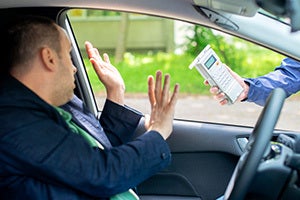
Because police officers are trained to issue commands with absolute authority, most motorists mistakenly believe compliance is mandatory.
However, under California law, the rules governing pre-arrest roadside testing differ fundamentally from those governing post-arrest chemical testing. Knowing when you have the legal right to say "no" can dramatically alter the trajectory of a DUI case.
Critical Notice: If you have already been arrested for a DUI or are facing an administrative license suspension by the DMV, you have exactly 10 days from the date of your arrest to request a DMV Hearing. Contact Esfandi Law Group immediately at (310) 274-6529 to protect your license and your freedom.
Quick Reference Summary: Pre-Arrest vs. Post-Arrest Testing
Understanding the structural and legal differences between a roadside screening test and an official post-arrest chemical test is critical for every motorist:
|
Test Designation |
Phase of the Stop |
Is Compliance Mandatory? |
| PAS Breath Test (Preliminary Alcohol Screening) | Pre-Arrest (Roadside Investigation) | No (Completely Voluntary for most adults) |
| Chemical Test (Evidential Test) | Post-Arrest (Handcuffed & Transported) | Yes (Mandatory under Implied Consent) |
*Note: Roadside PAS testing is mandatory only if you are under 21 or actively serving criminal DUI probation.
California DUI Statutes & Vital Legal Exceptions
While a roadside PAS test is entirely voluntary for the vast majority of adult motorists, California law sets three strict exceptions under which refusal carries immediate, severe penalties:
1. Drivers Under the Age of 21 (Zero Tolerance Law)
-
Applicable Statutes: Vehicle Code Section 23136 VC & Vehicle Code Section 23140 VC
-
The Rule: California enforces a strict zero-tolerance policy for underage drinking and driving. If an officer has reasonable suspicion that a driver under 21 has consumed any alcohol, the driver must submit to a roadside PAS test. Refusing the test results in an automatic 1-year administrative driver's license suspension by the DMV.
2. Motorists on Active DUI Probation
-
Applicable Statute: Vehicle Code Section 23154 VC
-
The Rule: As an explicit, standard condition of serving criminal DUI probation in California, you waive your right to refuse a preliminary roadside breath test. If an officer requests a PAS test from a driver on active probation, compliance is mandatory. Refusal automatically constitutes a probation violation, triggering a 1-year license suspension and potential jail time.
3. The Post-Arrest Shift (The Implied Consent Doctrine)
-
Applicable Statute: Vehicle Code Section 23612 VC
-
The Rule: The moment an officer places you under formal arrest for DUI based on probable cause, your statutory rights change. Under California's Implied Consent Law, operating a vehicle on public roads means you have already agreed to a post-arrest chemical test (blood or breath). A post-arrest refusal results in an automatic 1-year hard driver's license suspension with no option for a restricted hardship permit.
Real-World Case Example: Sarah's Roadside DUI Choice
To observe exactly how these statutes function during real-world interactions, consider this scenario:
The Stop
Sarah is pulled over at 11:30 PM in Los Angeles for slightly weaving across lane lines. The officer notes a faint odor of alcohol and bloodshot eyes. He orders her to step out of her vehicle to perform standard physical Field Sobriety Tests (FSTs).
After the physical tests, the officer retrieves a handheld device and says, "Blow into this screening device so I can check your breath alcohol level."
The Alternative Realities
-
Scenario A (Standard Adult Driver): Sarah is 28 years old with no prior criminal record. Because she is over 21 and not on DUI probation, she possesses the absolute right to politely decline the handheld PAS test. She states: "I choose not to take the preliminary breath test." The officer cannot penalize her for the refusal itself, though he may still arrest her based solely on her physical driving behavior and performance on the physical FSTs.
-
Scenario B (The Underage Driver): Sarah, aged 19, is under the legal drinking age and therefore subject to VC 23136. She is legally required to take the PAS test and cannot refuse it. If she declines to use the handheld device, her license will be automatically suspended for one year by the DMV, regardless of her blood alcohol level.
-
Scenario C (The Active Probationer): Sarah, 34, is serving a three-year summary probation due to a previous DUI conviction. According to VC 23154, she cannot legally refuse the device; refusal leads to an immediate probation violation and an automatic one-year license suspension.
The Traps to Watch Out For: EPAS Devices
In specific Southern California jurisdictions—such as Orange County and Ventura County—police deploy an Evidential Portable Alcohol System (EPAS). These are highly advanced, internet-enabled handheld units.
Officers sometimes use these devices for both the pre-arrest voluntary screening and the post-arrest mandatory test on the spot. When an officer uses an EPAS device, it is crucial to explicitly ask: "Am I under arrest, and is this test voluntary or mandatory?"
Pros and Cons of Declining a Roadside PAS Test
If you're a typical adult driver over 21 with no previous DUI probation, you have a strategic decision to make during a traffic stop:
Strategic Benefits of Refusal
-
Excluding Unreliable Mobile Data: Handheld roadside breathalyzers are vulnerable to calibration errors, temperature fluctuations, and environmental factors. They typically have a margin of error around 15%. Refusing to test helps prevent inaccurate data from being included in police reports.
-
Avoiding Medical False Positives: Roadside devices cannot distinguish between deep lung alcohol and residual mouth alcohol. Medical conditions such as Gastroesophageal Reflux Disease (GERD), acid reflux, or low-carb diets like ketosis can cause falsely high readings.
-
Limiting the Prosecutor's Evidence: A PAS test primarily functions to help the officer establish the 'probable cause' required for your arrest. Refusing the test removes a critical digital evidence point for the state, leaving them dependent solely on potentially subjective, physical observations during trial.
Strategic Risks of Refusal
-
Heightened Officer Suspicion: While legally allowed, refusing a voluntary test may suggest to the officer that you are hiding impairment, increasing the chances of being formally arrested based on other observations.
-
Arrest is Still Possible: An officer does not need a breathalyzer reading to arrest you. Slurred speech, bloodshot eyes, unsteady balance, or erratic driving patterns provide sufficient probable cause for an arrest without a breath sample.
-
Consciousness of Guilt Arguments: In court, a prosecutor may try to present your pre-arrest refusal to the jury as a "consciousness of guilt" (arguing that you refused because you knew you were drunk). However, an experienced criminal defense lawyer can effectively counter this argument by highlighting the documented scientific unreliability of handheld breathalyzers.
Frequently Asked Questions (FAQs)
Can police officers arrest me if I legally refuse the roadside PAS breath test?
Yes. An officer does not need a breath test result to make a DUI arrest. They can establish probable cause based on your driving patterns, physical appearance (slurred speech, odor of alcohol), and your performance on physical Field Sobriety Tests (FSTs).
Is a roadside PAS test identical to the breathalyzer at the police station?
No. The PAS test is a preliminary, portable screening instrument used at the scene of the stop before an arrest occurs. The Evidential Breath Test (EBT) is a large, highly regulated desktop machine located inside a police station or jail facility and used after a formal arrest has been made.
What happens if I refuse the breath test after a formal arrest?
Refusing a post-arrest chemical test violates California's Implied Consent Law (VC 23612). This triggers an automatic, mandatory 1-year hard suspension of your driver's license by the DMV, with no restricted license options, and consecutive mandatory jail enhancements in criminal court.
Does a lawful PAS refusal show up on my permanent driving record?
No. For licensed drivers over 21 who are not on active DUI probation, a pre-arrest refusal of a voluntary PAS test does not result in negligent operator points or appear on your public DMV driving transcript.
Can I ask to speak to an attorney before deciding whether to take a roadside PAS test?
You can request an attorney, but law enforcement is not required to delay their roadside investigation or provide you with a lawyer at that stage. You must decide on the scene whether to accept or decline the voluntary test.
6. What should I say to an officer to politely decline a voluntary roadside breath test?
You can protect your rights by stating clearly and calmly: "I am exercising my right under California law to decline this preliminary screening test, but I am happy to comply with all mandatory post-arrest requirements if required."
What happens if I blow into a PAS device and the reading is under 0.08%?
The officer can still arrest you. In California, you can be charged with a DUI under Vehicle Code 23152(a) VC if the state proves your driving was actively impaired by alcohol or drugs, regardless of whether your breath or blood alcohol concentration was below the legal limit.
Does a history of acid reflux or GERD impact the accuracy of a breath test?
Yes. GERD, acid reflux, and heartburn force gases and raw stomach alcohol back up into your esophagus and oral cavity. Portable breathalyzers mistake this "mouth alcohol" for deep lung air, leading to false, highly inflated BAC readings.
Can the prosecutor use my roadside PAS refusal against me at trial?
While prosecutors often try to frame a refusal as evidence that you were concealing intoxication, a skilled DUI defense lawyer can object to its introduction or present medical, technical, and constitutional arguments to show that the refusal was based on the device's unreliability.
How can a Los Angeles criminal defense attorney challenge a PAS test result?
An attorney can obtain the maintenance logs, diagnostic histories, and calibration records for the specific device used during your stop. If the police agency failed to calibrate the machine every 10 days or after 150 uses, as required by Title 17 of the California Code of Regulations, the test results may be suppressed in full.
Consult an Expert Los Angeles DUI Defense Firm
Navigating the intersection of California's implied consent laws, DMV administrative per se hearings, and criminal court timelines requires skilled, precise legal representation.
A single technical oversight or missed filing deadline can result in an automatic license suspension, steep financial penalties, and a permanent criminal record.
The defense team at Esfandi Law Group draws on more than 20 years of dedicated DUI experience in Los Angeles, Orange, and Ventura County courts. We specialize in identifying law enforcement errors, auditing breathalyzer calibration logs, and protecting your driving privileges.
Do not leave your license and freedom to chance. Contact Esfandi Law Group today at (310) 274-6529 for a comprehensive, free case strategy evaluation.