
Are Rape Kits Dependable Evidence? California PC 261 Forensic Analysis
In California sex crime investigations, prosecutions under California Penal Code 261 PC (Rape) often hinge on forensic evidence collected through a Sexual Assault Evidence Kit (SAEK), commonly known as a rape kit.
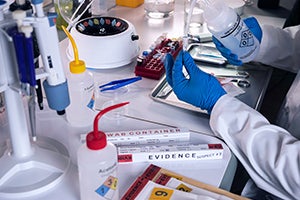
While prosecutors often frame DNA evidence as infallible, the reality is far more nuanced.
A rape kit is a powerful forensic tool, but it is not an automatic indicator of guilt. Its reliability depends entirely on strict adherence to scientific protocol, precise medical collection, untainted laboratory processing, and proper legal interpretation.
For anyone facing felony sexual assault allegations, understanding the vulnerabilities of forensic evidence is essential to building an effective criminal defense.
Quick Reference Summary Chart: Rape Kit
|
Forensic Phase |
Critical Checklist Items |
Potential Structural Vulnerabilities |
| Medical Collection | Performed by a certified SANE/SAFE nurse within California's 120-hour window. | Cross-contamination, mislabeled swabs, or biological degradation from delayed reporting. |
| Chain of Custody | Meticulous tracking logs of every detective, courier, and laboratory technician who handled the kit. | Unsigned logs, unsealed evidence bags, or unrecorded storage intervals. |
| Laboratory Analysis | DNA extraction, PCR (Polymerase Chain Reaction) amplification, and profile matching. | Misinterpreted DNA mixtures, low-copy number errors, or baseline laboratory equipment contamination. |
| Contextual Application | Corroborating scientific data with objective facts, timelines, and communications. | DNA cannot distinguish between a consensual encounter and a non-consensual act. |
Key Factors That Affect Rape Kit Accuracy
The accuracy of a sexual assault kit is highly sensitive to external variables. If any of the following factors are compromised, the scientific integrity of the entire profile is dramatically compromised:
-
The Timing of the Forensic Exam: While California law allows evidence collection for up to 120 hours (5 days) post-incident, the biological window degrades rapidly. Samples recovered within 24 to 72 hours yield the highest quality DNA. Delayed collection often results in highly degraded, unreadable, or missing samples.
-
Medical Examiner Expertise: Exams should ideally be performed by a certified Sexual Assault Nurse Examiner (SANE). Errors made by untrained emergency room staff—such as using non-sterile swabs, failing to air-dry biological samples, or packing damp items in sealed plastic (which breeds DNA-destroying mold)—can ruin the evidence.
-
The Chain of Custody Integrity: The prosecution must account for every single person who touched the rape kit from the minute the box was unsealed in the exam room to the moment it was loaded into the crime lab analyzer. A single missing signature or an undocumented transfer creates a legal gap that compromises the security of the evidence.
-
DNA Mixture Complexity: When a sample contains genetic material from more than one person (such as a complainant with multiple recent sexual partners), isolating a clean DNA profile becomes incredibly complex. Crime labs rely on statistical software to calculate "match probabilities," which can be prone to human misinterpretation or software bias.
What a Rape Kit Can vs. Cannot Prove
A common misconception perpetuated by popular media is that a DNA match equals a conviction. It is legally imperative to distinguish between what forensic science can confirm and what remains outside its boundaries.
|
What the Forensic Kit CAN Prove |
What the Forensic Kit CANNOT Prove |
| The presence of specific biological fluids (semen, saliva, blood, skin cells). | Affirmative Consent: Whether the physical interaction was consensual or non-consensual. |
| The distinct genetic identity of the individual(s) who left the biological material. | Exact Timing: The precise hour or day the biological material was deposited on the body. |
| That physical, intimate contact did take place between the parties involved. | Criminal Intent: The mental state, motivations, or perceptions of the parties involved. |
| The presence of foreign fibers, debris, or external physical material. | Credibility: Whether the accuser or the accused is delivering an honest account of the event. |
Real-World Example Scenario
The Prior Consensual Encounter: A complainant and a defendant meet at a lounge, return to an apartment, and engage in a consensual sexual encounter on Friday night. On Sunday afternoon, after a severe interpersonal dispute, the complainant files a police report alleging a non-consensual assault on Saturday night. A forensic examination is conducted, and a rape kit safely recovers the defendant's DNA.
The prosecution introduces the DNA match as definitive proof of the Saturday night assault. However, an experienced defense attorney dismantles the state's timeline by establishing that the recovered DNA is entirely residual from the Friday night consensual encounter. This scenario demonstrates that while the rape kit confirmed physical identity, it was completely incapable of proving the timeline or a lack of consent.
What a Rape Kit Cannot Prove
While a Sexual Assault Evidence Kit provides valuable biological data, it has significant limitations. It is a scientific tool, not a legal conclusion. A rape kit can verify that a specific physical interaction occurred, but it is incapable of interpreting the context, intent, or legality of that interaction.
1. Affirmative or On-Going Consent
The presence of DNA or biological fluid cannot tell investigators whether a sexual act was consensual or non-consensual. Consent is a legal determination based on the state of mind, communication, and actions of both parties. Because DNA looks identical whether an act was fully consensual or entirely non-consensual, a forensic match cannot prove that a crime occurred.
2. Exact Timing of the Encounter
DNA can persist on a person's body or clothing for hours, days, or even weeks, depending on environmental conditions and hygiene. A rape kit only indicates the presence of biological material; it cannot provide a timestamp. This can lead prosecutors to mistake old, consensual genetic material for fresh evidence of an alleged assault.
3. Subjective Intent and Mindset
To convict someone under Penal Code 261 PC, the prosecution must prove a specific mental state—such as the intent to use force or knowledge that the person was too intoxicated to consent. Swabs and forensic samples cannot detect human emotions, miscommunications, or a defendant's honest, good-faith belief that their partner was participating voluntarily.
4. The Exact Sequence of Events
Forensic evidence cannot reconstruct a chronological timeline for an evening. A rape kit cannot determine whether an injury occurred before, during, or after a sexual encounter, nor can it prove who initiated contact. It provides a static snapshot of genetic material, leaving the story behind that material open to interpretation.
5. Truthfulness and Overall Credibility
A DNA profile cannot evaluate whether a witness, defendant, or accuser is telling the truth. Credibility is a determination left entirely to the judge or jury, based on cross-examination, inconsistencies in statements, and digital evidence such as text messages. A positive rape kit match is frequently used by the state to imply truthfulness, even when the underlying accusation is completely fabricated.
How a Defense Attorney Challenges Forensic Rape Evidence
A strategic Los Angeles sex crimes attorney will never accept a state lab report at face value. Defending against allegations backed by forensic reports requires a methodical, scientific counter-investigation:
Retaining Independent Forensic Experts
Defense teams frequently collaborate with independent molecular biologists and DNA experts to re-analyze the raw electronic data files (called electropherograms) generated by the state's crime lab.
Independent reviews frequently catch calculation mistakes, overlooked baseline noise, and overstated match statistics.
Exposing Chain of Custody Violations
By demanding full discovery logs, a defense lawyer can trace the physical path of the SAEK. If the kit was left unsecured in a police precinct locker room, transported in an unsealed container, or left unrefrigerated for days, a motion to suppress the evidence can be filed due to potential contamination or tampering.
Establishing the Reality of DNA Transfer
In the modern era of highly sensitive forensic testing, "touch DNA" can be transferred from person to person without direct contact.
For example, if you shake hands with someone and they subsequently touch an object or another person, your DNA can be indirectly transferred to a location you never visited. Exposing the possibility of secondary DNA transfer can defeat a prosecutor's timeline.
Frequently Asked Questions (FAQs)
Are forensic rape kits completely infallible and error-free?
No. Rape kits are subject to human error at every stage of their lifecycle. Improper collection techniques by medical staff, poor storage conditions, transportation delays, and cross-contamination in busy police crime laboratories can lead to skewed, unreliable, or completely false results.
Can a defendant be convicted of rape if the kit contains no DNA evidence?
Yes. The complete absence of DNA or physical injury does not automatically lead to dismissal. Under California law, a jury can convict an individual based solely on an accuser's verbal testimony if it finds that testimony credible. The lack of DNA is powerful evidence for the defense, but it must be framed correctly to show reasonable doubt.
What happens if a police department leaves a rape kit untested for months?
Delays in testing—often referred to as backlogs—are common, but they do not automatically invalidate the sample. As long as the kit was dried properly and kept in cold, secure storage, DNA can remain stable for years. However, extensive delays raise serious legal questions regarding storage conditions and chain-of-custody tracking during that prolonged interval.
Can a DNA match prove that a sexual act was non-consensual?
Absolutely not. DNA testing is purely a biological identifier. It cannot read human intent, emotional states, or verbal agreements. A DNA match only proves physical contact occurred, leaving consent to be determined by text messages, witness statements, and cross-examination.
What is the "Mayberry Defense" and how does it relate to forensic evidence?
The Mayberry defense is a California legal doctrine centered on a defendant's honest and reasonable mistake of fact regarding consent. If a defendant genuinely and reasonably believed the other party consented based on their words or conduct, criminal intent is absent. In these cases, the rape kit's DNA results are completely neutral because the defense admits contact happened but challenges the criminal nature of the act.
How do defense lawyers handle "partial" or "mixed" DNA profiles?
Mixed profiles occur when DNA from three or more individuals is found on a single sample swab. Defense lawyers challenge these by showing that the state's software models rely on assumptions rather than absolute certainty. If the profile is partial or degraded, the statistical probability of a match drops significantly, making it dangerous for a jury to rely upon.
Related California Laws
Sex offense prosecutions and forensic investigations in Los Angeles courts typically involve several interconnected sections of the California Penal Code:
-
Penal Code 261 PC – Rape: Non-consensual sexual intercourse committed through physical force, violence, duress, menace, fear, fraud, or acute intoxication.
-
Penal Code 243.4 PC – Sexual Battery: The non-consensual touching of an intimate body part of another person while that person is unlawfully restrained, institutionalized, or medically incapacitated, done specifically for sexual gratification.
-
Penal Code 287 PC – Forcible Oral Copulation: Act of engaging in oral sex with another individual against their will, using force, fear, or by taking advantage of an unconscious or intoxicated state.
-
Penal Code 289 PC – Forcible Penetration with a Foreign Object: Using a foreign object or body part (other than sexual organs) to penetrate another person's genital or anal openings without consent, through force or fear.
Active Representation in Felony Sex Crime Defense
If you or a loved one are currently under investigation or facing active charges under Penal Code 261 PC, the actions you take right now will dictate the rest of your life.
Law enforcement officers and specialized vice detectives are not neutral investigators; they are actively building a case to secure a conviction.
We provide sophisticated, scientifically grounded criminal defense representation across Southern California.
Our legal team understands how to aggressively challenge state forensic experts, expose structural cracks in DNA processing, and protect your constitutional rights from day one.
Do not speak to investigators without legal counsel present. Protect your freedom and secure your future by calling the Esfandi Law Group at (310) 274-6529 for a completely confidential, strategic case evaluation.