
California Vehicle Code 20001 – Felony Hit and Run Causing Injury
Under California Vehicle Code 20001 (VC 20001), leaving the scene of a motor vehicle accident that results in the injury or death of another person is a serious criminal offense. This charge is often prosecuted as a felony and targets the failure to fulfill your legal duties after a crash.
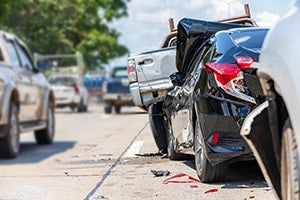
A critical point that shocks many drivers is that fault is entirely irrelevant. Even if another driver ran a red light, cut you off, or a pedestrian abruptly stepped into your path, your legal obligation to stop, identify yourself, and render medical aid is absolute. Failing to do so can transform a tragic traffic accident into a serious criminal prosecution.
If you or a loved one are facing allegations under VC 20001, are being questioned by hit-and-run investigators, or have received a letter regarding your license plate, early tactical intervention is vital.
Quick Reference Summary Chart: VC 20001
|
Legal Metric |
Standard Under California Vehicle Code 20001 |
| Offense Classification | Wobbler (Can be charged as a misdemeanor or a felony based on injury severity and prior record). |
| Primary Trigger | Any motor vehicle collision causing injury or death to another person where the driver flees. |
| Fault Requirement | None. Duties apply identically to at-fault, shared-fault, and completely innocent drivers. |
| Misdemeanor Penalties | Up to 1 year in county jail; fines between $1,000 and $10,000; informal probation. |
| Felony Penalties | 16 months, 2 years, or up to 4 years in California State Prison; fines up to $10,000; formal probation. |
| Fatal Accident Enhancement | Up to 4 years in state prison if the crash results in death or permanent, serious injury. |
| DMV Record Impact | 2 points added to your driving record; automatic 1-year minimum driver's license revocation. |
Mandatory Legal Duties After an Injury Accident
If you are involved in a collision anywhere in California and someone—including a pedestrian, cyclist, driver, or a passenger in your own car—is injured, VC 20001 requires you to take specific actions without delay.
Bring your vehicle to a complete stop at the nearest safe location that does not obstruct traffic. Fleeing, even briefly, out of fear or panic constitutes the physical act of a hit-and-run.
You must provide "reasonable assistance" to any injured person. This includes calling 911 immediately, arranging for an ambulance, or transporting them to a hospital if it is apparent that medical treatment is necessary or has been requested.
Provide your full name, current residential address, and vehicle registration details to the other parties involved and to any law enforcement at the scene. You must also present your driver's license upon request.
If law enforcement officers are not present at the scene and the accident resulted in death or injury, you must immediately report the collision to the nearest California Highway Patrol (CHP) office or local police department.
What the Prosecution Must Prove to Convict
To secure a conviction for felony hit-and-run under VC 20001, a prosecutor must establish four distinct legal elements beyond a reasonable doubt:
-
You were involved in a vehicle accident while driving.
-
The accident caused injury or death to another person.
-
You knew, or reasonably should have known, that the accident occurred and that another person was injured or killed.
-
You willfully failed to fulfill your mandatory duties (to stop, provide information, or render aid).
The term "willfully" in legal context means deliberately choosing to leave. The prosecution doesn't have to prove you intended to break the law, hide a DUI, or cause harm—only that you consciously decided to drive away rather than stay.
Real-World Case Example: The Blind Corner Cyclist Collision
-
The Scenario: A motorist is driving along a winding canyon road at dusk. As they round a blind curve, they clip a cyclist riding near the shoulder. The driver hears a loud thud and glances in the rearview mirror, seeing the cyclist fall into a ditch. Panicking because they had a glass of wine at dinner, the driver floors it and speeds away.
-
The Investigation: A trailing vehicle captures the motorist's license plate on a dashboard camera and calls emergency services. Hit-and-run detectives trace the registration to the driver's home, impound the car as evidence, and request an interrogation.
-
The Legal Defense Strategy: Because the driver fled after knowing an impact occurred with a human being, a "lack of knowledge" defense is weak. Instead, a criminal defense lawyer can focus on mitigating factors. If the driver has no prior record and the cyclist's injuries are minor, counsel can present character letters, secure comprehensive civil restitution to pay the cyclist's medical bills promptly, and negotiate with the District Attorney to reduce the charge from a felony to a misdemeanor, thereby avoiding state prison time.
Aggressive Defense Strategies Against VC 20001 Charges
An expert defense tailored to the specific facts of your case can persuade prosecutors to reduce felony counts to misdemeanors or drop charges entirely:
-
Lack of Knowledge of the Injury: If the collision was a low-impact side-swipe, occurred in heavy rain, or involved a large commercial vehicle, you may genuinely not have known an accident occurred, or had no reasonable way to know anyone was hurt.
-
Identity / You Were Not Driving: While the police can identify the vehicle involved, they must prove who was behind the wheel. If the vehicle is shared among family members, or if there is no clear eyewitness or camera footage of the driver, establishing identity becomes a major obstacle for the state.
-
You Only Left Due to Immediate Threat of Harm: If the other party became highly aggressive, brandished a weapon, or an angry crowd gathered, leaving the scene to find a safe location and immediately call 911 can negate the "willful fleeing" element of the defense of necessity.
-
You Attempted to Comply: If you stopped, asked whether they were okay, were told "I'm fine," and left without realizing they had internal injuries, your defense can show a good-faith effort to comply with the law.
Penalties and Long-Term Consequences of a Conviction
Because VC 20001 is a wobbler, the penalties vary significantly depending on how the prosecutor files the case and the severity of the victim's injuries.
Felony VC 20001 Penalties
-
State Prison: 16 months, 2 years, or up to 4 years. If the accident results in death or a permanent, catastrophic injury (such as paralysis), a mandatory minimum custody period of 90 days to 1 year applies.
-
Criminal Fines: Statutory court fines ranging from $1,000 to $10,000, which expand heavily when mandatory court penalty assessments are factored in.
-
Formal Probation: Up to 3 years of formal probation, requiring a designated probation officer, travel restrictions, and search waivers.
Misdemeanor VC 20001 Penalties
-
County Jail: Up to 1 year in a California county jail.
-
Fines: Between $1,000 and $10,000 plus court assessments.
-
Informal Probation: Summary probation with court-ordered conditions but no active reporting officer.
Collateral and DMV Consequences
-
Automatic Driver's License Revocation: The California DMV will initiate an administrative revocation of your driving privileges for at least 1 year upon conviction.
-
2 Negligent Operator Points: Added directly to your driving record, it can send insurance rates surging or trigger an administrative point suspension.
-
Permanent Felony Record: A felony conviction strips away your voting rights and firearm ownership privileges and creates a permanent hurdle during employment background checks, corporate hiring, and housing applications.
Related California Driving and Criminal Laws
Prosecutors frequently couple or substitute a VC 20001 charge with these related offenses, based on the evidence gathered during the investigation:
-
California Vehicle Code 20002 (Misdemeanor Hit-and-Run): Charged when an accident results solely in property damage with no human injuries.
-
California Vehicle Code 23153 (DUI Causing Injury): A severe felony count added if the state believes you were driving under the influence of drugs or alcohol and caused bodily injury to another person.
-
California Penal Code 192(c) (Vehicular Manslaughter): Filed when a driver operates a vehicle in an unlawful or negligent manner and causes a fatal crash. Leaving the scene after the impact is an aggravating factor that increases prison exposure.
-
California Penal Code 191.5 (Vehicular Manslaughter While Intoxicated): The highest-exposure charge for a fatal accident combined with driving under the influence carries a penalty of up to 10 years or life in prison.
-
California Vehicle Code 14601 (Driving on a Suspended License): A separate misdemeanor is added if you fled an injury accident because your driving privileges were already revoked or suspended.
Frequently Asked Questions
Can I be charged with a felony hit-and-run if the accident wasn't my fault?
Yes. Your statutory duty to stop, identify yourself, and render aid is separate from civil liability or fault for the crash. Even if you are entirely innocent of causing the collision, leaving the scene when a person is injured is a crime.
What if I panicked and left, but went straight to a police station to report it?
Panic is a common human reaction, but it is not a statutory legal defense. However, turning yourself in or having your attorney contact investigators shortly after the incident serves as strong mitigating evidence that can prevent felony charges from being filed.
Will I go to state prison for a first-time VC 20001 offense?
Not necessarily. If the injuries are minor, you have no prior criminal record, and you retain skilled counsel early, prosecutors are often open to reducing the charge to a misdemeanor or agreeing to formal probation with alternative sentencing options rather than state prison.
What counts as "reasonable assistance" under California law?
Reasonable assistance means taking practical steps to ensure an injured person receives medical help. The law does not expect you to perform medical procedures, but it does require you to look for obvious injuries, call 911, and wait for emergency responders to arrive.
How do hit-and-run investigators find drivers who flee?
Police use automated license plate readers (ALPR), traffic cameras, business surveillance footage, rideshare dashcams, and debris left at the scene (such as broken side mirrors with visible serial numbers) to identify the vehicle's registered owner within days.
Can a VC 20001 charge be resolved with a Civil Compromise?
No. Under California Penal Code 1377, a Civil Compromise—where a case is dismissed after the victim is paid for their damages—is strictly forbidden in any hit-and-run case involving an injury or death.
Protect Your Future with Early Legal Intervention
When a felony hit-and-run investigation begins, timing is your most powerful asset.
Law enforcement investigators routinely contact vehicle owners under the guise of "just completing a routine insurance report," but their real goal is to secure an admission that you were the driver at the time of the crash.
We step between you and the police. By taking over all communications, presenting mitigating evidence early, and arranging prompt financial restitution for medical costs, we work to resolve investigations before formal criminal charges are filed in court.
Do not leave your freedom to chance. Contact Esfandi Law Group at (310) 274-6529 today or submit your details through our secure online contact form to activate your free, confidential case evaluation.