
Operating a Chop Shop: California Vehicle Code 10801 VC
California law targets organized vehicle theft rings through strict statutes that aim to dismantle illicit vehicle processing centers. Commonly referred to as "chop shops," these hubs form the backbone of black-market auto part sales.
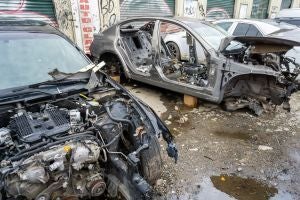
Under California Vehicle Code 10801 VC, owning, operating, or participating in a chop shop is a severe offense prosecuted with aggressive strategies. A conviction carries life-altering penalties, including substantial fines and county jail or state prison sentences.
Legal Definition of a Chop Shop
Understanding how California law defines a chop shop is crucial to mounting a strong defense. The offense relies on two primary sections of the California Vehicle Code.
Statutory Language
Under California Vehicle Code Section 10801 VC:
"Any person who knowingly and intentionally owns or operates a chop shop is guilty of a public offense and, upon conviction, shall be punished by imprisonment pursuant to subdivision (h) of Section 1170 of the Penal Code for two, three, or four years, or by a fine of not more than fifty thousand dollars ($50,000), or by both that fine and imprisonment."
To fully understand this law, it must be read alongside California Vehicle Code Section 250, which provides the statutory definition of the facility itself:
"A 'chop shop' is any building, lot, or other premises where any person has been engaged in altering, destroying, disassembling, dismantling, reassembling, or storing any motor vehicle or motor vehicle part known to be illegally obtained by theft, fraud, or conspiracy to defraud, in order to either:
(a) Alter, counterfeit, deface, destroy, disguise, falsify, forge, obliterate, or remove the identity, including the physical vehicle identification number, of the motor vehicle or motor vehicle part, in order to misrepresent the identity of the motor vehicle or motor vehicle part, or to prevent the identification of the motor vehicle or motor vehicle part.
(b) Sell or dispose of the motor vehicle or motor vehicle part."
Elements of the Crime: What Prosecutors Must Prove
To secure a conviction under Vehicle Code 10801 VC, prosecutors must prove several distinct elements beyond a reasonable doubt (as outlined under California Criminal Jury Instructions, CALCRIM 1752):
-
Ownership or Participation: The defendant knowingly and intentionally owned, operated, or actively participated in a chop shop.
-
Knowledge of Illegal Origin: The defendant knew that the vehicle or vehicle parts involved were obtained through theft, fraud, or conspiracy.
-
Knowledge of Intent to Conceal: The defendant knew that the vehicles or parts were being altered, dismantled, stored, or disguised specifically to conceal their identity, prevent identification, or facilitate illegal sale.
Because direct evidence of a defendant's internal thoughts is rare, prosecutors frequently rely on circumstantial evidence. This can include the presence of specialized tools (such as VIN-stamping kits), numerous mismatched parts, or partially dismantled stolen vehicles on the property.
Penalties for Operating a Chop Shop
Operating a chop shop is a wobbler offense in California. This gives prosecutors the discretion to charge the crime as either a misdemeanor or a felony based on the following factors:
-
The total monetary value of the stolen vehicles or parts.
-
The scale and sophistication of the operation.
-
The defendant's prior criminal history, especially past theft convictions.
Misdemeanor Penalties
If charged as a misdemeanor, conviction under VC 10801 carries:
-
Up to one year in county jail.
-
A fine of up to $1,000.
-
Summary (informal) probation.
Felony Penalties
If charged as a felony, a conviction carries significantly harsher consequences:
-
Two, three, or four years in county jail under California's realignment program (Penal Code 1170(h)).
-
A fine of up to $50,000.
-
Formal (felony) probation.
-
Restitution payments to victims to cover financial losses.
-
Asset forfeiture of property and equipment utilized to run the illegal shop.
Real-World Example of Vehicle Code 10801 VC
The Scenario:
Arthur runs a licensed auto repair shop. A local street gang begins bringing late-model sedans to his shop late at night. Arthur knows the cars are stolen, but he agrees to dismantle them. His mechanics strip the doors, engines, and catalytic converters, scraping off the vehicle identification numbers (VINs) before selling the parts to local buyers.
Why this is Operating a Chop Shop:
Arthur is knowingly using his facility to alter and dismantle vehicles that he knows were obtained through theft. His goal is to strip them to hide their identity and sell the parts. Even though he runs a legitimate repair business during the day, his night activities satisfy every legal element of Vehicle Code 10801 VC.
Legal Defenses to Chop Shop Charges
An experienced California criminal defense attorney can deploy several strong legal defenses to fight a VC 10801 charge:
-
Lack of Knowledge: If you did not know the vehicles or parts brought to your shop were stolen, you cannot be convicted. For example, a mechanic hired to work on vehicles may have had no idea the shop owner was sourcing stolen inventory.
-
Lack of Intent: The prosecution must prove you intended to alter, disguise, or illegally sell the stolen parts. If you stored parts without realizing their illicit nature or without intent to hide their identity, this element is missing.
-
No Ownership or Control: Merely being present at a facility does not equal control. If you did not own the property, manage operations, or knowingly participate in the illegal activity, you should not be held criminally responsible.
-
Unconstitutional Search and Seizure: Chop shop investigations often rely on police raids. If law enforcement searched your garage or warehouse without a valid search warrant or without meeting a legal warrant exception, your attorney can file a motion to suppress the evidence.
Related California Laws
Because chop shop operations typically involve organized theft rings, prosecutors rarely charge Vehicle Code 10801 VC in isolation. Instead, they frequently file a combination of these related offenses:
-
Grand Theft Auto (Penal Code 487(d)(1) PC): Unlawfully taking a motor vehicle valued at more than $950 with the intent to permanently deprive the owner of it. This is charged if prosecutors can prove you stole the vehicles before dismantling them.
-
Unlawful Taking or Driving a Vehicle (Vehicle Code 10851 VC): Often called "joyriding," this applies to driving or taking a vehicle without consent, even if you did not intend to steal it permanently.
-
Receiving Stolen Property (Penal Code 496 PC): Knowingly buying, receiving, concealing, or selling stolen property. In these cases, it specifically targets the possession of stolen engines, transmissions, or body parts.
-
VIN Tampering (Vehicle Code 10802 VC): Altering, defacing, or falsifying a vehicle identification number (VIN) to disguise a vehicle's identity for illegal resale.
-
Possession of a Vehicle with Altered VIN (Vehicle Code 10803 VC): Knowingly possessing or buying more than one vehicle (or parts from multiple vehicles) with tampered VINs for the purpose of sale or transfer.
-
Auto Burglary (Penal Code 459 PC): Breaking into a locked vehicle with the intent to commit a theft, such as stripping components to supply a chop shop.
-
Conspiracy (Penal Code 182 PC): An agreement between two or more people to commit a crime (like running a joint chop shop operation) accompanied by an action to carry out that agreement.
Frequently Asked Questions (FAQs)
What exactly qualifies a location as a chop shop under California law?
A chop shop is any building, lot, or facility where people actively alter, disassemble, store, or dismantle stolen vehicles or parts. The defining legal characteristic is that these actions are done deliberately to disguise the parts, prevent law enforcement from tracing them, or prepare them for illegal sale on the black market.
Can I be charged under Vehicle Code 10801 VC if I am only a mechanic working there?
Yes, you can. The statute does not only apply to the business owner or property holder. Any employee, mechanic, or helper who actively participates in the operation while knowing the vehicles or parts are stolen can face prosecution for operating a chop shop.
Do police need a warrant to search my auto repair business for stolen parts?
Generally, yes. While auto repair shops are subject to certain administrative inspections, police officers cannot conduct a comprehensive search of your private garage, tools, or locked containers for evidence of a crime without a valid search warrant or an established warrant exception (such as emergency circumstances or your explicit consent).
Is operating a chop shop always prosecuted as a felony?
No, it is a "wobbler" offense. Prosecutors evaluate the specific facts of your case to decide whether to charge it as a misdemeanor or a felony. They will place heavy weight on the total dollar value of the vehicles involved, the scale of the dismantling operation, and whether you have a prior criminal record.
What happens if I bought a car part from a shop and had no idea it was stolen?
To be convicted under Vehicle Code 10801 VC, the prosecution must prove you acted "knowingly". If you are an innocent customer or buyer who purchased a part in good faith with no reason to suspect it was stolen, you have not committed a crime.
How do prosecutors prove that I knew the vehicle parts in my possession were stolen?
Because they cannot read your mind, prosecutors use circumstantial evidence to establish knowledge. They may point to parts with ground-off or altered VINs, transaction records showing you bought vehicles far below market value, or tools specifically used to counterfeit registration documents and identification plates.
Retain an Experienced Criminal Defense Attorney
Operating a chop shop is a complex crime that carries devastating consequences, but the state has a high burden of proof to meet. To secure a conviction, they must prove both your physical actions and your mental intent beyond a reasonable doubt.
We understand how to identify the weaknesses in the prosecution's case, challenge illegal search tactics, and fight to get your charges reduced or dismissed.
If you are under investigation or facing charges under California Vehicle Code 10801 VC, contact Esfandi Law Group today for a free, confidential consultation.