
California Penal Code § 496d PC: Receiving a Stolen Vehicle Defined
While standard laws target individuals who physically steal property, California enacts distinct, high-severity statutes for those who trade, possess, or conceal stolen property.
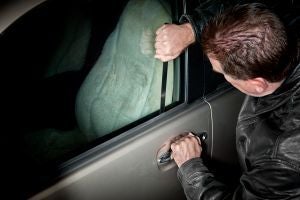
Under California Penal Code § 496d PC, it is a criminal offense to buy, receive, conceal, sell, or withhold a motor vehicle, trailer, special construction equipment, or motorized vessel knowing that the property is stolen.
Vehicles are considered high-value assets and are often associated with organized theft operations, which is why PC 496d is categorized as a serious offense.
A critical distinction of this statute is that the $950 threshold established by Proposition 47 does not apply; prosecutors can pursue felony charges regardless of the vehicle's actual cash value.
If you're facing criminal charges, the Esfandi Law Group is here to assist you. Call (310) 274-6529 for a free consultation or fill out the contact form.
Legal Definition and Elements of the Offense
To secure a conviction under Penal Code 496d PC, the prosecution must establish three core elements beyond a reasonable doubt:
-
The Prohibited Act: The defendant engaged in buying, receiving, hiding, selling, or withholding a motor vehicle, trailer, motorized vessel, or special construction equipment, or assisted in concealing or withholding any of these.
-
Stolen Status: The vehicle or equipment was previously stolen or acquired through illegal means such as theft or extortion.
-
Actual Knowledge: The defendant was aware that the vehicle was stolen at the exact moment they bought, received, hid, or sold it.
How Prosecutors Prove "Knowledge" Through Circumstantial Evidence
Since people seldom admit to knowing a vehicle was stolen, the state depends on contextual clues to determine subjective knowledge.
-
Purchasing a vehicle at a price considerably below its fair market value.
-
Missing ignition keys, altered VIN numbers, or physical ignition damage.
-
Missing proper title documentation, registration, or pink slip paperwork.
-
Buying a car from a seller who acts very evasively or looks suspicious.
Penalties and "Wobbler" Guidelines
Penal Code 496d PC is classified as a wobbler, meaning the District Attorney has the discretion to file the case as either a misdemeanor or a felony.
This decision hinges on the defendant's prior criminal history and the specific facts of the case.
Misdemeanor Penalties
-
Up to one year in a county jail.
-
A maximum fine of $1,000.
-
Summary (informal): probation and mandatory restitution to the victim.
Felony Penalties
-
16 months, 2 years, or 3 years in California state prison or county jail.
-
A maximum fine of up to $10,000.
-
Formal probation and restitution orders covering vehicle damage or loss.
Sentence Enhancements (PC 666.5)
If a defendant has previously been convicted of vehicle theft or receiving a stolen vehicle, their felony sentencing increases under Penal Code § 666.5 PC.
A felony offense with a qualifying prior conviction can lead to a longer state prison sentence of 2, 3, or 4 years.
Case Example: The Unregistered Online Deal
The Scenario:
David finds an online listing for a used motorcycle priced at $1,500, while its real blue-book value is around $6,000. He meets the seller in a deserted parking lot at night.
The seller doesn't have the keys—claiming they were lost—and cannot produce a title, registration, or bill of sale, saying he will mail the documents later. David pays with cash, hotwires the motorcycle, and parks it in his locked garage.
Two weeks later, police follow the motorcycle's GPS to David's garage and find it reported as stolen. David is then arrested and charged with felony possession of a stolen vehicle under PC 496d.
The Legal Analysis:
-
The Prohibited Act: David stored the vehicle secretly in his private garage.
-
The Defense Issue: David might argue he didn't "know" the bike was stolen. However, the prosecution will effectively demonstrate that the combination of circumstantial evidence—the missing keys, the bike being sold at 75% below market value, the absence of a pink slip, and the late-night parking lot exchange—indicates David was highly aware that the transaction was illegal.
Related California Laws
-
Vehicle Code § 10851 VC – Driving or Taking a Vehicle Without Consent: This law, often called grand theft auto or joyriding, penalizes someone who intentionally takes or drives a vehicle without authorization.
-
Penal Code § 496(a) PC – Receiving Stolen Property: The general law concerning stolen property states that, unlike PC 496d, charges for receiving stolen items must be filed as misdemeanors if the total value of the property is $950 or less.
-
Penal Code § 487(d)(1) PC – Grand Theft Auto: Specifically addresses the illegal taking of a motor vehicle with the permanent goal of depriving the owner of it.
Important Legal Limitation: A defendant cannot be found guilty of both stealing a specific vehicle (VC 10851 or PC 487) and receiving that same vehicle (PC 496d) if both actions stem from the same theft incident.
Quick Reference Summary Chart
|
Statute |
Property Value Limit |
Maximum Custody |
| PC 496d (Misdemeanor) | Any value (No $950 limit) | 1 Year in County Jail |
| PC 496d (Felony) | Any value (No $950 limit) | 16 Months, 2, or 3 Years |
| PC 666.5 (With Priors) | Requires 1+ prior vehicle theft convictions | 2, 3, or 4 Years in State Prison |
| VC 10851 (Joyriding) | Any value | Up to 3 Years in Custody |
| PC 496(a) (General Stolen Property) | Subject to Prop 47 ($950 threshold) | Up to 3 Years (If value > $950) |
Common Legal Defenses
A skilled defense attorney can develop multiple strategies to contest a PC 496d charge.
-
Innocent / Lack of Knowledge: If the defendant truly and reasonably believed that they acquired the vehicle through a legitimate purchase or loan, they do not possess the necessary criminal intent.
-
Rightful Permission: The defense may argue that the registered owner explicitly or implicitly allowed the defendant to use or store the vehicle.
-
Unlawful Search and Seizure: If police find the vehicle by entering a private garage or stopping it during traffic without probable cause or a proper warrant, a defense lawyer can file a motion to exclude the physical evidence, which may lead to a dismissal.
Frequently Asked Questions (FAQs)
Does the vehicle's value have to exceed $950 for it to be a felony?
No. Proposition 47 made receiving stolen property (PC 496) a misdemeanor if the value is $950 or less, but it did not change Penal Code 496d PC. Prosecutors can still charge possession of a stolen vehicle as a felony, even if the car is broken, junked, or has little value.
Can I be charged under PC 496d if I am only a passenger in a stolen car?
Simply being a passenger does not inherently mean possession or control of a vehicle. To convict a passenger under PC 496d, the state must prove they exerted "constructive possession" (such as hiding it, helping sell it, or exercising control over the driver) and had explicit knowledge of its stolen status.
What happens to a non-citizen convicted under PC 496d?
A conviction under PC 496d can carry severe immigration penalties. Because it involves fraudulent or dishonest intent, it may be classified as a crime of moral turpitude, which can trigger deportation or inadmissible status for non-US citizens.
Speak to a California Criminal Defense Lawyer
A charge under California Penal Code § 496d PC can threaten your clean record, driving privileges, and personal freedom. Since the law often depends on circumstantial evidence to establish what you "knew," timely legal intervention is essential.
A licensed criminal defense law firm will evaluate the state's evidence, identify constitutional violations during your arrest, and aggressively negotiate to minimize your exposure—whether that means fighting for a complete dismissal, securing entry into an alternative diversion program, or reducing a felony filing down to a minor misdemeanor.
Contact an experienced California criminal defense attorney at the Esfandi Law Group to safeguard your rights and navigate your legal choices.