
California Health and Safety Code Section 11350 HS: Possession of Adderall Without a Prescription
Under California Health and Safety Code Section 11350 HS, it is illegal to possess prescription stimulants like Adderall without a valid medical prescription.
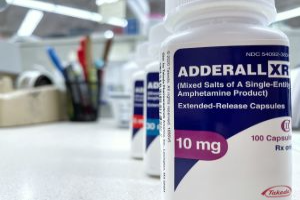
While frequently perceived by students and professionals as a harmless "study aid," Adderall contains amphetamine and dextroamphetamine, classifying it as a strict Schedule II controlled substance under federal and state guidelines.
Following the passage of Proposition 47, simple personal possession of Adderall is typically prosecuted as a misdemeanor rather than a felony.
However, an arrest can still result in jail time, steep court fines, and a permanent criminal record that disrupts your career, housing, and professional licensing opportunities.
Quick Reference Summary Chart: California HS 11350
|
Legal Element |
Details & Statutory Guidelines |
| Statute | California Health and Safety Code Section 11350 HS |
| Standard Classification | Misdemeanor (For standard, non-disqualified personal use possession) |
| Felony Classification | Applicable if the defendant has a prior "Super Strike" felony or a registered sex offense |
| Prohibited Act | Unlawfully possessing a usable amount of Adderall without a lawful prescription |
| Standard Penalties | Up to 1 year in county jail, summary probation, and fines up to $1,000 |
| Diversion Pathways | Eligible for record-clearing via PC 1000, Proposition 36, or PC 1001.95 |
| Collateral Impact | Triggers mandatory reviews for nurses, teachers, and non-citizen visas |
What the Prosecution Must Prove (Elements of the Crime)
To secure a conviction for unlicensed possession of Adderall under HS 11350, the district attorney must establish five distinct legal elements beyond a reasonable doubt:
-
Exercise of Control: The defendant possessed the medication through actual, constructive, or joint control.
-
Knowledge of Presence: The defendant was consciously aware that the Adderall was located on their person or within their property.
-
Knowledge of Nature: The defendant knew the pills were a restricted or controlled substance, even if they did not know the exact chemical formulation.
-
Usable Amount: The amount recovered must be a "usable quantity"—meaning there is enough of the drug to be swallowed or consumed, rather than mere powder residue or crushed fragments.
-
Lack of a Valid Prescription: The defendant lacked a current, lawful prescription written by a licensed medical provider.
Recognizing Legal Forms of Possession
The state can satisfy the possession element using three different frameworks:
-
Actual Possession: The pills are physically on you, such as in your clothing pockets, hands, wallet, or a backpack you are currently wearing.
-
Constructive Possession: The pills are not on your person, but they are in a location you directly control, such as your glove box, bedroom nightstand, or a desk drawer.
-
Joint Possession: You and at least one other individual share operational control over the area where the Adderall is stored.
How Prosecutors "Stack" Related Drug Charges
District attorneys rarely file an isolated possession count. Instead, they leverage a technique called charge stacking to maximize their prosecutorial leverage.
By reviewing the exact context of your arrest, they may add or replace these related offenses in your criminal complaint:
Why Related Offenses Are Listed
Understanding related statutes helps identify potential exposure and areas for plea negotiations. If you are caught with loose Adderall pills outside of their original prescription bottle, a prosecutor might add HS 11351 (Possession for Sale) if they discover empty baggies or text messages discussing prices.
Alternatively, if you are pulled over while driving under the influence of the pills, they will stack a misdemeanor count of HS 11550 (Under the Influence).
If you used someone else's name, forged a physician's signature, or went to multiple doctors to obtain overlapping supplies, they will completely bypass simple possession and charge you with HS 11173 (Prescription Fraud), which can be prosecuted as a straight felony.
By understanding how these charges intersect, an experienced attorney can identify gaps in the prosecution's evidence and fight to reduce the stacked charges to a single personal possession charge eligible for diversion.
Real-World Example of an HS 11350 Offense
The Library Bag Search
Tyler is studying for finals in a university library. Campus police are called for an unrelated building issue and notice Tyler acting unusually nervous. During a consensual search of his backpack, an officer discovers an unmarked orange pill bottle containing twelve 20 mg Adderall tablets. Tyler admits he does not have an ADHD diagnosis and bought them from a classmate to help him stay awake.
Because Tyler had actual possession of the pills, knew they were present, knew they were a stimulant, and lacked a medical prescription, he is arrested and charged under HS 11350. Because he has no prior criminal history, his defense attorney successfully secures an entry into a Penal Code 1000 diversion program, allowing Tyler to complete a short educational course to have the misdemeanor charge entirely dismissed.
Legal Defenses to Fight Adderall Possession Charges
A defense team can attack an HS 11350 charge by using several constitutional and factual strategies:
-
Possession of a Valid Prescription: A current, lawful prescription from a doctor, psychiatrist, or licensed medical professional is an absolute defense. If you simply forgot to carry your prescription bottle or were transporting your own legal medication, the case must be dismissed.
-
Fourth Amendment Search Violations: If law enforcement discovered the Adderall through an illegal traffic stop, a search of your vehicle without probable cause, or by opening your personal bags without a warrant or explicit consent, your attorney can file a Motion to Suppress Evidence (PC 1538.5). Winning this motion means the pills cannot be used in court, which can force a dismissal.
-
Lack of Knowledge or Control: If you borrowed a classmate's car or shared a dorm room and loose pills were found in a common area without your knowledge, you lack the required intent. Proximity to a drug does not automatically constitute criminal possession.
-
Temporary Possession for Disposal: If you briefly took control of the Adderall solely to throw it away, destroy it, or deliver it to a safe medical disposal site, you may be insulated from a conviction under California's temporary possession doctrine.
Potential Consequences of a Drug Conviction
|
Consequence |
Description & Scope |
Possible Long-Term Impact |
| Incarceration | Up to 1 year served in a county jail | Severe disruption to employment, housing, and family life. |
| Probation Mandates | Court-ordered terms, random testing, and travel rules | Risk of jail time if technical terms are violated. |
| Professional Licensing | Mandatory disclosures to state oversight boards | Disciplinary action or denial of licenses for nurses, teachers, and EMTs. |
| Permanent Record | Misdemeanor drug conviction on background checks | Automatic disqualifications for corporate jobs or rental housing. |
| Immigration Status | Non-citizen visa reviews and re-entry limitations | High-risk complications, visa revocations, or potential inadmissibility. |
Frequently Asked Questions
Is it illegal to carry Adderall outside of its original prescription bottle?
It is not inherently a crime if you possess a valid prescription, but carrying loose pills in an unmarked container poses significant risk. If police stop you, they may arrest you under HS 11350 until you can verify your medical authorization in court.
Can I go to jail for a first-time Adderall possession arrest?
While the maximum penalty is 1 year in jail, first-time, non-violent offenders are highly eligible for Penal Code 1000 or Proposition 36 drug diversion. These programs allow you to receive counseling or take classes instead of serving jail time, resulting in dismissal of charges upon completion.
What constitutes a "usable amount" of a prescription pill?
A usable amount means there is enough intact pill material to be swallowed, crushed, or ingested to produce a stimulant effect. It does not require a full bottle—even a single pill or a substantial half of a broken pill fulfills this legal requirement.
What is the difference between simple possession and possession for sale?
Simple possession (HS 11350) means you held Adderall solely for personal use. Possession for sale (HS 11351) is a straight felony charge that applies if police find scales, separate baggies, text messages coordinating sales, or an unusually high volume of pills.
What if the Adderall belonged to my friend or relative?
Unless you have a prescription for the medication, holding it for a friend, partner, or family member is still illegal. If you knowingly carry or store their controlled substance, you satisfy the elements of constructive or actual possession.
Can an Adderall conviction affect my college financial aid or scholarships?
Yes. A drug-related conviction can result in student disciplinary reviews, suspension from university housing, or the loss of certain institutional scholarships and federal funding opportunities. Entering a diversion program early protects your academic record.
Fight for Your Future: Contact Esfandi Law Group
An Adderall possession charge can quickly derail your educational, career, and financial goals. Because prosecutors rely so heavily on simple traffic stops and search encounters, there are multiple avenues to challenge their evidence, assert your constitutional rights, or secure a spot in a record-saving diversion program.
Contact Esfandi Law Group today at (310) 274-6529 to schedule a free, confidential case evaluation with an experienced California defense lawyer.