
Penal Code 12022.5 PC: Personal Use of a Firearm During the Commission of a Felony
UnderCalifornia Penal Code Section 12022.5 PC, personally using a firearm during the commission or attempted commission of a felony acts as a major sentence enhancement.
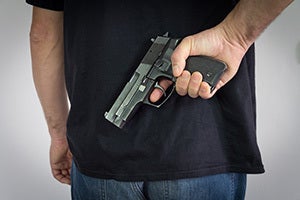
Unlike a standalone criminal charge, PC 12022.5 is an additive enhancement that attaches to an underlying felony offense (such as robbery, assault, or burglary) and adds mandatory consecutive time to a state prison sentence.
For the enhancement to apply, the prosecution must prove "personal use"—meaning you displayed, brandished, or discharged a firearm in a threatening manner, or utilized it to facilitate the underlying crime.
A key legal protection under California law is judicial discretion: under Senate Bill 620, California judges possess the legal authority to strike or dismiss a PC 12022.5 firearm enhancement in the interest of justice during sentencing.
If you or a loved one face felony charges with a PC 12022.5 firearm enhancement, answering police questions can severely compromise your defense.
Politely decline to speak with investigators until you consult a qualified criminal defense attorney at the Esfandi Law Group who can challenge the evidence, file motions to strike enhancements, and safeguard your rights.
Legal Definition of PC 12022.5
Under California Penal Code Section 12022.5(a) PC:
"Except as provided in subdivision (b), any person who personally uses a firearm in the commission of a felony or attempted felony shall be punished by an additional and consecutive term of imprisonment in the state prison for 3, 4, or 10 years, unless use of a firearm is an element of the offense of which he or she is convicted."
Under California Penal Code Section 12022.5(b) PC:
"Notwithstanding subdivision (a), any person who personally uses an assault weapon, as specified in Section 30510 or 30515, or a machinegun, as defined in Section 16880, in the commission of a felony or attempted felony shall be punished by an additional and consecutive term of imprisonment in the state prison for 5, 6, or 10 years."
Key Statutory Definitions
Understanding these key definitions is critical because establishing whether a device legally qualifies as a firearm and proving actual "personal use" rather than passive possession are the primary thresholds required to sustain this enhancement.
-
Firearm: Any device designed to be used as a weapon from which a projectile is expelled through a barrel by the force of an explosion or other form of combustion (includes handguns, rifles, shotguns, and assault weapons, whether loaded or unloaded, operable or inoperable).
-
Personal Use: Displaying a firearm in a menacing or threatening manner, brandishing it, striking someone with it, or firing it to facilitate the commission of an underlying felony.
-
Consecutive Sentence: Additional prison time that must be served after completing the primary sentence for the underlying felony, rather than concurrently (at the same time).
What Must Be Proven to Convict (CALCRIM No. 3130)
To prove the sentence enhancement under PC 12022.5, a prosecutor must establish the following elements beyond a reasonable doubt pursuant to CALCRIM No. 3130:
-
The defendant committed or attempted to commit an underlying felony offense.
-
During the commission or attempted commission of that felony, the defendant personally used a firearm.
-
The defendant intentionally displayed the firearm in a menacing manner, fired it, or hit someone with it to accomplish the crime.
Legal Penalties for PC 12022.5 Enhancement
A PC 12022.5 finding triggers a mandatory, consecutive state prison sentence added directly onto the penalty for the underlying felony conviction.
Statutory Penalties
-
Standard Firearm Enhancement (PC 12022.5(a)): Additional consecutive state prison term of 3, 4, or 10 years.
-
Assault Weapon or Machine Gun Enhancement (PC 12022.5(b)): Additional consecutive state prison term of 5, 6, or 10 years.
-
California Three Strikes Law: Under PC 1192.7(c)(8), any felony in which the defendant personally uses a firearm is classified as a "serious felony," resulting in a strike on your criminal record.
-
Loss of Gun Rights: Lifetime prohibition on owning, purchasing, or possessing firearms in California under PC 29800 (Felon in Possession of a Firearm).
Factors Influencing Sentencing and Discretion
Under California Penal Code Section 1385 (updated via SB 620), judges have the authority to strike or dismiss a PC 12022.5 firearm enhancement at sentencing based on:
-
Mitigating factors, such as lack of prior criminal record or secondary role in the offense.
-
Whether the firearm was unloaded or inoperable.
-
Whether striking the enhancement serves justice without compromising public safety.
Long-Term Personal and Professional Consequences
Beyond extended prison sentences, a conviction involving a PC 12022.5 enhancement carries life-altering collateral consequences:
-
Ineligibility for Probation: Severe limitations on receiving probation or alternative sentencing due to the violent felony/strike classification.
-
Immigration Consequences: Automatic designation as an "aggravated felony" and "firearm offense" under federal immigration law, triggering mandatory deportation or inadmissibility for non-citizens.
-
Employment & Housing Restrictions: A permanent violent criminal record blocking access to professional licenses, housing, and government benefits.
Legal Defense Strategies
Defending against a PC 12022.5 enhancement focuses on disproving personal use, challenging the firearm's qualification, or petitioning the court to strike the enhancement:
-
Passive Possession vs. Personal Use: Mere possession or presence of a firearm during a crime (e.g., carrying a concealed handgun in a backpack without displaying or mentioning it) does not meet the legal threshold for "personal use" under PC 12022.5.
-
False Accusations / Misidentification: Witness misidentification, unreliable eyewitness testimony, or mistaken observations during high-stress incidents can lead to false claims that a firearm was displayed.
-
Not a Real Firearm (BB / Replica Gun): Replicas, airsoft guns, BB guns, or toy weapons do not meet the statutory definition of a "firearm" under California law, so PC 12022.5 does not apply.
-
Self-Defense or Defense of Others: If the underlying felony charge is defeated because you acted in lawful self-defense or defense of another person, the attached PC 12022.5 enhancement must be dismissed automatically.
-
Motion to Strike Under PC 1385 (SB 620): Experienced counsel can present mitigating evidence to convince the judge to exercise judicial discretion and strike the firearm enhancement to reduce total prison time significantly.
Hypothetical Examples
-
An individual commits a commercial burglary while carrying an unloaded handgun inside a closed backpack, making them liable for the burglary but not the PC 12022.5 "personal use" enhancement.
-
A suspect brandishes an inoperable antique pistol during a store robbery to frighten the cashier, triggering the PC 12022.5 personal use enhancement because an inoperable real firearm still qualifies.
-
A defendant pulls out a plastic toy prop gun during an argument that escalates into an assault charge, rendering PC 12022.5 inapplicable because the item is not a real firearm under California law.
Frequently Asked Questions (FAQs)
Understanding these common scenarios helps address critical legal nuances and protects your constitutional rights before you make inadvertently self-incriminating statements to investigators.
Does PC 12022.5 apply if the firearm was unloaded or broken?
Yes. Under California law, a real firearm does not need to be loaded or operational to trigger a PC 12022.5 enhancement, provided it was personally used in a menacing manner during the felony.
What is the difference between PC 12022.5 and PC 12022.53 ("10-20-Life")?
PC 12022.5 applies broadly to most felonies involving personal firearm use (adding 3, 4, or 10 years). PC 12022.53 is a stricter enhancement applying specifically to designated violent felonies (adding 10 years for use, 20 years for firing, and 25-to-life for causing great bodily injury or death).
Can a judge remove or strike a PC 12022.5 firearm enhancement?
Yes. Under SB 620 / PC 1385, California trial judges have the discretion to strike or dismiss a PC 12022.5 firearm enhancement at sentencing if doing so furthers the interest of justice.
Is carrying a concealed gun during a felony enough to trigger PC 12022.5?
No. Simply having a concealed firearm in your possession without drawing, displaying, threatening with, or using it does not constitute "personal use" under PC 12022.5 (though separate possession enhancements under PC 12022 may apply).
Does a PC 12022.5 enhancement count as a strike under California's Three Strikes Law?
Yes. Any felony conviction accompanied by a personal use of a firearm finding under PC 12022.5 is classified as a "serious felony" under PC 1192.7(c)(8), adding a strike to your record.
Can I get probation if a PC 12022.5 enhancement is proven?
It is extremely difficult. Penal Code 1203.06 strictly limits or prohibits granting probation to defendants who personally use a firearm during the commission of specified felonies, making prison time likely unless the enhancement is struck.
Related California Laws
Understanding related offenses clarifies how charges, penalties, and defense strategies intersect across different types of firearm enhancements and weapon offenses.
-
California Penal Code 12022.53 PC – 10-20-Life Firearm Enhancement: Applies severe, mandatory consecutive prison terms (10 years for use, 20 years for discharge, 25-to-life for death/injury) for personal firearm use during specified violent felonies like murder, kidnapping, or robbery.
-
California Penal Code 12022 PC – Being Armed with a Firearm During a Felony: Applies a lesser sentence enhancement (typically 1 additional year) when a defendant is simply "armed" with a firearm during a felony, even if they never actively displayed or used it.
-
California Penal Code 417 PC – Brandishing a Weapon: Criminalizes drawing, exhibiting, or using a firearm or deadly weapon in a rude, angry, or threatening manner, charged as a misdemeanor or felony depending on the circumstances.
-
California Penal Code 29800 PC – Felon in Possession of a Firearm: Makes it an automatic felony for any person previously convicted of a felony (or specified misdemeanors) to own, purchase, or possess any firearm.
The best way to secure a favorable outcome is to consult an experienced criminal defense attorney at Esfandi Law Group in Los Angeles. Call us to schedule your free consultation or use the contact form.