
California Penal Code 25850 PC: Carrying a Loaded Firearm in Public or in a Vehicle
California Penal Code 25850 PC makes it illegal to carry a loaded firearm on your person or inside a vehicle in any public space or prohibited area.
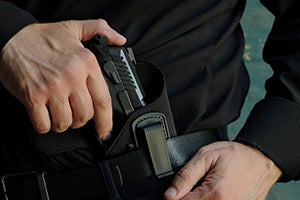
While typically prosecuted as a misdemeanor, aggravating factors—such as prior criminal convictions, gang involvement, or carrying an unregistered firearm—can quickly elevate this charge to a felony.
Understanding what constitutes a "loaded" weapon under California law, the potential penalties you face, and the valid legal defenses available is critical if you or a loved one are facing charges.
Below is a comprehensive breakdown of statutory definitions, legal elements, penalties, and defense strategies for PC 25850.
Statutory Text (Legal Definition)
California Penal Code Section 25850(a) states:
“A person is guilty of carrying a loaded firearm when the person carries a loaded firearm on the person or in a vehicle while in any public place or on any public street in an incorporated city or in any public place or on any public street in a prohibited area of unincorporated territory.”
Key Statutory Definitions
Understanding these legal definitions is crucial because small distinctions—such as how ammunition is stored or where the weapon is located—often dictate whether a prosecutor can legally prove a charge or if a valid defense exists.
-
Firearm: Any device designed to be used as a weapon from which a projectile is expelled through a barrel by the force of an explosion or combustion (e.g., handguns, revolvers, rifles, shotguns). BB guns and pellet guns do not meet this legal definition.
-
Loaded: A firearm is legally "loaded" when there is an unexpended cartridge or shell in the chamber, magazine, or clip attached to or inserted into the firearm.
-
Public Place: Any location open and accessible to the general public for common use (e.g., public streets, parks, sidewalks, commercial parking lots, or retail stores open to customers).
-
Prohibited Area: An area of an unincorporated territory where discharging a firearm is strictly unlawful.
-
Operability: The weapon need not be operable or in working condition at the time of arrest to trigger a violation.
What Must Be Proven to Convict (Elements of the Crime)
To secure a conviction under Penal Code 25850 PC, a prosecutor must present sufficient evidence to prove each of the following legal elements beyond a reasonable doubt (as detailed in Judicial Council of California Criminal Jury Instructions:
-
Possession / Carrying: You carried a firearm on your person or inside a vehicle under your control.
-
Knowledge of the Firearm: You knew that you were carrying or transporting the firearm.
-
The Firearm Was Loaded: The firearm had live ammunition (an unexpended cartridge or shell) placed in the chamber, cylinder, or an attached magazine or clip.
-
Knowledge of the Ammunition: You knew—or reasonably should have known—that the firearm was loaded at the time of the alleged offense.
-
Prohibited Location: You were in a public place, on a public street in an incorporated city, or in a prohibited area of an unincorporated territory.
Note on Prosecutor's Burden: If the state fails to prove even one of these five distinct elements—for instance, if you were in a public place with a gun but had no idea it was loaded—you cannot be legally convicted of PC 25850.
Penalties & Aggravating Factors
Misdemeanor Penalties (Standard Offense)
-
Up to 1 year in county jail
-
Fines up to $1,000
-
Summary (informal) probation
Wobbler / Felony Penalties (Aggravated Offense)
PC 25850 becomes a felony or "wobbler" (chargeable as either a misdemeanor or felony) if any of the following apply:
-
You have a prior felony or firearm conviction.
-
The firearm was stolen, and you knew or had reason to believe it was stolen.
-
You are not the registered owner of the firearm with the Department of Justice.
-
The offense was committed in connection with active participation in a criminal street gang.
-
You are a prohibited person legally barred from owning or possessing firearms.
Felony Conviction Consequences:
-
16 months, 2 years, or 3 years in county jail
-
Fines up to $1,000
-
Permanent loss of firearm rights under state and federal law
-
Potential immigration consequences (including deportation) for non-citizens
Key Statutory Exemptions
You are exempt from prosecution under PC 25850 if you fall under one of the following categories:
-
Active or honorably retired peace officers and federal agents.
-
Active-duty military personnel performing official duties.
-
Valid Concealed Carry Weapon (CCW) permit holders acting within permit scope.
-
Authorized, licensed security guards on duty.
-
Hunters or target shooters transporting firearms directly to or from a firing range/hunting ground in a locked, secure container.
Effective Defense Strategies
To secure a conviction under PC 25850, the prosecution must prove every element of the offense beyond a reasonable doubt. An experienced criminal defense attorney can build a strategic defense aimed at getting charges reduced or dismissed using the following legal arguments:
-
Lack of Knowledge (No Intent): You cannot be convicted if you were unaware that the weapon was in your vehicle, bag, or presence, or if you did not know the firearm was loaded. This frequently applies to borrowed vehicles or shared backpacks.
-
The Firearm Was Unloaded: Under California law, a firearm is only "loaded" if ammunition is placed in the firing chamber or in an attached magazine or clip. If the weapon and ammunition were entirely separated—such as carrying an unloaded gun with a detached magazine stored in a separate bag—PC 25850 does not apply.
-
Unlawful Search and Seizure (4th Amendment Violation): If law enforcement stopped your vehicle, detained you, or conducted a search without reasonable suspicion or a valid search warrant, any seized firearm may be ruled inadmissible under PC 1538.5 motion rules. Without the gun as evidence, the prosecution is often forced to dismiss the case.
-
Not a "Public Place" or Prohibited Area: PC 25850 strictly applies to public streets, public places, or prohibited unincorporated areas. If you carried the weapon on private property, inside a private residence, or at a lawful business location, you have not violated this statute.
-
Valid Statutory Exemption or CCW License: Showing proof of a valid Concealed Carry Weapon (CCW) permit, active law enforcement status, military duties, or authorized security employment provides complete legal immunity from PC 25850 prosecution.
-
Immediate Self-Defense / Defense of Others: If you temporarily armed yourself because you reasonably believed you or someone else faced an imminent threat of severe physical harm or death, the affirmative defense of self-defense can justify the possession.
Related California Laws
Understanding related California weapons statutes is important because prosecutors routinely file alternative or additional charges depending on how the firearm was carried, whether it was concealed, and how it was displayed. The related laws include:
California Penal Code Section 25400 – Carrying a Concealed Firearm: Related laws establish distinct legal boundaries between carrying a weapon openly versus concealing it, allowing prosecutors to file separate or alternative charges based on how the firearm was carried.
California Penal Code Section 26350 – Openly Carrying an Unloaded Firearm: Understanding related firearm statutes clarifies why carrying an unloaded weapon openly in public remains a distinct misdemeanor offense under California law.
California Penal Code Section 417 – Brandishing a Weapon: Related offenses show how displaying or drawing a firearm in a threatening or angry manner elevates a simple possession charge to a violent misdemeanor or felony.
California Penal Code Section 245(a)(1) – Assault with a Deadly Weapon: Examining related violent crime statutes highlights how carrying a loaded firearm can lead to severe enhancement charges if the weapon is used to threaten or harm another person.
California Penal Code Section 16590 – Possession of Generally Prohibited Weapons: Comparing related weapons laws distinguishes standard firearms from strictly prohibited devices like sawed-off shotguns or undetectable firearms.
Hypothetical Examples
-
Example 1 (Misdemeanor Charge): A driver is pulled over for a broken taillight, and officers discover a loaded, unregistered handgun sitting under the driver's seat in plain view.
-
Example 2 (Successful Defense - Lack of Knowledge): A passenger borrows a friend's backpack without knowing a loaded pistol was stored inside a zipped side compartment, leading to a dismissal based on lack of knowledge.
-
Example 3 (Felony Elevation): An individual carrying a loaded, unserialized firearm in a public park is stopped by police and found to have a prior felony conviction, resulting in felony charges.
Frequently Asked Questions (FAQs)
What makes a firearm legally "loaded" under California law?
A firearm is legally loaded under PC 25850 if an unexpended cartridge or shell is present in the chamber, cylinder, or attached magazine/clip.
Is carrying a loaded gun in a car trunk considered a public place under PC 25850?
Yes, carrying a loaded firearm inside a motor vehicle parked or driving on any public road, street, or public parking area violates PC 25850 regardless of whether it is in the trunk or glove compartment.
Does an inoperable or broken gun clear you of a PC 25850 charge?
No, a firearm does not need to be operable or capable of firing to trigger a conviction under PC 25850, provided it was designed to shoot and appears functional.
Can police legally check if my gun is loaded if I am carrying it in public?
Yes, under California Penal Code 25850.7, peace officers have statutory authority to inspect any firearm carried in public to determine if it is loaded, and refusing inspection provides probable cause for arrest.
Is PC 25850 a misdemeanor or a felony in California?
It is typically charged as a misdemeanor, but it becomes a "wobbler" or direct felony if aggravating factors exist—such as prior convictions, stolen property, or gang involvement.
Are BB guns or airsoft pistols covered under PC 25850?
No, BB guns, pellet guns, and airsoft pistols are powered by air or gas rather than an explosive charge, so they do not fall under the statutory definition of a firearm for PC 25850.
The Esfandi Law Group can help you. Schedule your free consultation today.