
California Penal Code § 245(a)(2) PC: Assault with a Firearm Explained
Under Penal Code § 245(a)(2) PC, assault with a firearm is a serious criminal offense that penalizes any unlawful attempt to commit a violent injury on another person using a gun, provided the individual has the immediate, real-time capability to carry it out.
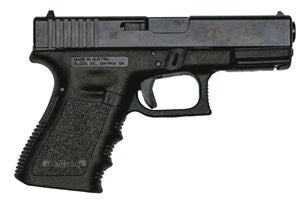
Whether involving a handgun, shotgun, rifle, or assault weapon, PC 245(a)(2) PC specifically elevates general assault charges due to the inherent lethality of firearms.
Crucially, California law does not require an actual shooting, physical contact, or bodily injury for this charge to apply—simply pointing a loaded firearm at someone in a hostile or threatening manner is sufficient for a conviction.
Because PC 245(a)(2) PC is a "wobbler" that can be charged as a felony carrying severe state prison time, mandatory minimum jail terms, an automatic "strike" record under California's Three Strikes Law, and a permanent loss of constitutional firearm rights, navigating these charges demands a clear understanding of what prosecutors must prove and the strategic defense pathways available to protect your freedom.
Legal Definition: PC 245(a)(2)
California Penal Code Section 245(a)(2) PC defines assault with a firearm as follows:
"Any person who commits an assault upon the person of another with a firearm shall be punished by imprisonment in the state prison for two, three, or four years, or in a county jail for not less than six months and not more than one year, or by both a fine not exceeding ten thousand dollars ($10,000) and imprisonment."
Key Statutory Definitions
To enforce Penal Code § 245(a)(2) PC, California criminal courts and jury instructions (CALCRIM 875) rely on specific legal definitions:
-
Firearm: Any device designed to be used as a weapon, from which a projectile is expelled through a barrel by the force of an explosion or other form of combustion. This includes handguns, revolvers, pistols, rifles, shotguns, semiautomatic firearms, assault weapons, and frame/receiver components.
-
Present Ability: Having the immediate physical capacity to apply force using the firearm at the exact moment of the act. If a gun is loaded and functional, present ability exists. If a gun is completely unloaded or mechanically broken, present ability does not exist unless the weapon is used as a physical bludgeon or club.
-
Willful Conduct: Acting intentionally or on purpose. It does not require an intent to break the law, injure someone, or gain an advantage, but rather the deliberate choice to commit an act that would naturally lead to force being applied.
-
Application of Force: Any harmful, offensive, or unwanted physical touching. In the context of assault with a firearm, the "force" can be the discharge of a bullet, striking someone with the weapon, or taking action with a loaded gun that creates a direct threat of immediate impact.
What Must Be Proven to Convict (Elements of the Offense)
To secure a conviction under PC 245(a)(2) PC, the prosecution must prove each of the following legal elements beyond a reasonable doubt:
-
Assaultive Act with a Firearm: The defendant did an act with a firearm that, by its nature, would directly and probably result in the application of force to a person.
-
Willful Conduct: The defendant acted willfully (intentionally or on purpose).
-
Awareness of Potential Harm: When the defendant acted, a reasonable person would have known that the act would directly and probably result in the application of force to another.
-
Present Ability: When the defendant acted, they had the present ability to apply force with a firearm to the other person (e.g., the firearm was loaded or used as a bludgeon).
Note: Actual physical injury or contact is not required for a conviction. Pointing a loaded gun at someone in a threatening manner is sufficient to support PC 245(a)(2) PC charges.
Penalties for Penal Code § 245(a)(2) PC
Assault with a firearm is a "wobbler" in California, meaning prosecutors have discretion to charge it as either a misdemeanor or a felony based on the facts of the case and the defendant's criminal history.
-
Misdemeanor Penalties:
-
Mandatory minimum of 6 months up to 1 year in county jail.
-
Fines up to $1,000.
-
Lifetime or 10-year ban on owning or possessing firearms.
-
-
Felony Penalties:
-
2, 3, or 4 years in California State Prison.
-
Fines up to $10,000.
-
Formal felony probation.
-
Permanent lifetime ban on owning or possessing firearms.
-
-
California Three Strikes Law: Felony convictions under PC 245(a)(2) PC are classified as serious and/or violent felonies, counting as a "strike" on your criminal record.
Enhanced Penalty Considerations:
-
Semiautomatic, Machine Guns, or Assault Weapons: Under PC 245(b) PC or PC 245(a)(3) PC, using a semiautomatic firearm, machine gun, or .50 BMG rifle elevates the offense to an automatic felony carrying 3 to 12 years in state prison.
-
Peace Officers or Firefighters: Assaulting an active law enforcement officer or firefighter with a firearm carries felony terms of 4, 6, or 8 years in state prison (or 6, 9, or 12 years if a semiautomatic weapon or machine gun is used).
-
Firearm Sentencing Enhancement (PC 12022.5): Personally using a firearm during the commission of the assault adds an additional 3, 4, or 10 consecutive years in state prison.
Common Legal Defenses to PC 245(a)(2) Assault with a Firearm
Defending against a Penal Code 245(a)(2) PC charge requires challenging the prosecution's evidence regarding intent, present ability, and motivation. Strategic defense approaches include:
-
Self-Defense or Defense of Others:
California law allows you to draw, present, or use a firearm if you reasonably believed you or another person were in imminent danger of suffering severe bodily harm or death, and you used no more force than was necessary to defend against that threat. Proving lawful self-defense is a complete defense that negates all criminal liability.
-
Lack of Present Ability (Unloaded or Inoperable Firearm):
An essential element of PC 245(a)(2) PC is having the present ability to apply force. If the firearm was completely unloaded, lacked ammunition, or was mechanically inoperable—and was not used as a club or bludgeon—you lacked the physical capability to commit a firearm assault, defeating the charge.
-
Lack of Willfulness / Accidental Display:
A conviction requires proving that you acted willfully and intentionally in a manner that would directly and probably result in applying force. If the weapon was displayed accidentally, shown off out of carelessness, or handled without aggressive intent toward another person, the required mental state is missing.
-
False Accusations and Fabricated Claims:
Because PC 245(a)(2) PC does not require a victim to suffer physical contact or bodily injury, false allegations frequently arise from road rage, heated domestic arguments, or personal disputes. Defense counsel can scrutinize witness credibility, examine electronic records, audit ballistic evidence, and leverage surveillance footage to expose false claims.
-
Misidentification in Chaotic Environments:
Incidents involving firearms often occur rapidly in low-light or crowded conditions (such as parking lots or public venues). Eyewitness identification is notoriously unreliable; defense attorneys can challenge flawed lineups and point out inconsistencies in witness accounts to establish reasonable doubt.
Hypothetical Examples
-
Misdemeanor PC 245(a)(2) Example: During a heated dispute in a parking lot, a driver pulls out a loaded revolver from a glovebox and points it at another motorist while shouting threats. Even though no shots are fired and no physical contact occurs, pointing the loaded gun establishes assault with a firearm.
-
Felony PC 245(a)(2) Example: A suspect fires a shotgun near someone's feet during an argument to scare them. Because firing a gun directly near a person is an intentional act that directly and probably results in the application of force, it constitutes felony assault with a firearm.
-
Non-Violent / Legal Defense Example: An individual cleaning an unloaded rifle in their home accidentally holds it up toward a window as a neighbor walks by outside. Because the rifle was unloaded (no present ability) and the display was accidental (lack of willfulness), this does not constitute PC 245(a)(2) assault.
Frequently Asked Questions (FAQs)
Is Penal Code § 245(a)(2) PC considered a strike under California law?
Yes. Felony assault with a firearm is classified as a serious felony under California Penal Code § 1192.7(c) PC, making it an automatic "strike" under California's Three Strikes Law.
Can you be charged with PC 245(a)(2) if the gun was unloaded?
Generally, no. If the gun was completely unloaded and not used to physically strike someone, you lacked the "present ability" to commit a violent injury. In such cases, charges are often reduced to Penal Code 417 PC (brandishing a firearm).
Does anyone have to be shot or injured for PC 245(a)(2) charges to apply?
No. Assault requires only an unlawful attempt with present ability to commit a violent injury. Pointing a loaded gun in a threatening manner is sufficient for a conviction even if no physical contact occurs.
What is the difference between PC 245(a)(1) and PC 245(a)(2)?
PC 245(a)(1) PC covers assault with a deadly weapon other than a firearm (such as a knife, bat, or vehicle), whereas PC 245(a)(2) PC specifically covers assault committed with a firearm.
Can a felony PC 245(a)(2) charge be reduced to a misdemeanor?
Yes. Because PC 245(a)(2) PC is a wobbler, an experienced defense attorney can negotiate with prosecutors or petition the court under PC 17(b) to reduce a felony charge to a misdemeanor.
Will I lose my gun rights if convicted under PC 245(a)(2)?
Yes. A felony conviction results in a lifetime prohibition against owning or possessing firearms in California. A misdemeanor conviction triggers a 10-year or lifetime firearm ban.
Can self-defense dismiss an assault with a firearm charge?
Yes. If you had a reasonable belief that you or someone else faced imminent danger of bodily injury or death and used a firearm reasonably to protect against that threat, self-defense is a complete defense.
How does assault with a firearm differ from brandishing a firearm under PC 417?
Brandishing a firearm (PC 417 PC) involves displaying or drawing a weapon in a rude, angry, or threatening manner without necessarily aiming it or attempting an injury. It is typically a misdemeanor carrying up to 6 months in jail.
Related California Laws
Reviewing related California criminal statutes helps clarify how prosecutors select charges and where defense counsel can negotiate lesser offenses.
-
Penal Code 245(a)(1) PC – Assault with a Deadly Weapon: Prohibits committing an assault upon another person using a deadly weapon or instrument other than a firearm (such as knives, bats, or vehicles) or by means of force likely to produce great bodily injury. A wobbler offense carrying 2, 3, or 4 years in state prison.
-
Penal Code 417 PC – Brandishing a Firearm or Weapon: Criminalizes drawing, exhibiting, or displaying a firearm or deadly weapon in a rude, angry, or threatening manner, or during a fight or altercation, without necessarily aiming it or attempting an injury. Typically a misdemeanor carrying up to 6 months or 1 year in county jail.
-
Penal Code 240 PC – Simple Assault: Prohibits an unlawful attempt, coupled with a present ability, to commit a violent injury on another person without using a weapon or inflicting physical injury. A misdemeanor punishable by up to 6 months in county jail and fines up to $1,000.
-
Penal Code 664/187 PC – Attempted Murder: Criminalizes taking a direct but ineffectual step toward killing another human being with the specific intent to kill and malice aforethought using a firearm or other deadly force. A felony punishable by life in state prison with the possibility of parole.
-
Penal Code 29800 PC – Felon in Possession of a Firearm: Prohibits any person previously convicted of a felony (or specific violent misdemeanors) from owning, purchasing, receiving, or possessing any firearm. A felony punishable by 16 months, 2 years, or 3 years in state prison.
-
Penal Code 12022.5 PC – Personal Use of a Firearm Enhancement: A sentencing enhancement that adds 3, 4, or 10 consecutive years in state prison for personally using a firearm during the commission or attempted commission of a felony offense.
Why Related Laws Matter
Understanding related California firearm and assault statutes is essential during prosecutorial negotiations and defense planning.
Because PC 245(a)(2) PC can be charged as a felony strike offense carrying mandatory minimum jail terms and state prison exposure, identifying weaknesses in the prosecution's evidence—such as demonstrating the weapon was unloaded, that no intent existed, or that the weapon was merely displayed—allows defense attorneys to negotiate charges down to non-strike offenses like PC 417 brandishing or simple assault, protecting a client's criminal record and freedom.