
California Heroin Laws: Charges, Penalties, and Legal Defenses
Navigating heroin-related charges in California involves understanding complex statutory frameworks, severe criminal penalties, and potential legal defenses.
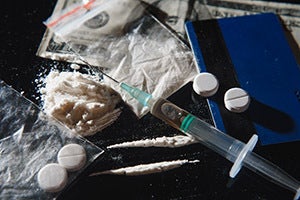
California prosecutors aggressively pursue offenses ranging from simple possession to large-scale trafficking under the California Health and Safety Code (HS).
Quick Reference: California Heroin Offenses Summary Chart
|
Charge |
Potential Penalties |
Diversion Eligible? |
|
HS 11550 |
Up to 1 year in county jail, fines up to $1,000 | Yes (PC 1000 / Prop 36) |
|
HS 11350 |
Up to 1 year in county jail, fines up to $20,000 | Yes (PC 1000 / Prop 36) |
|
HS 11351 |
2, 3, or 4 years in state prison, fines up to $20,000 | No |
|
HS 11352 |
3, 4, or 5 years in state prison (up to 9 years if across counties) | No |
|
VC 23152(f) |
License suspension, probation, DUI school, jail time | No |
|
HS 11365 |
Up to 6 months in county jail, probation | Yes (in some cases) |
Key California Heroin Statutes Explained
Under federal and state law, heroin is classified as a Schedule I controlled substance, meaning authorities view it as highly addictive with no currently accepted medical use.
1. Simple Possession (Health & Safety Code 11350 HS)
Possessing any usable amount of heroin for personal use is generally charged as a misdemeanor due to historical reform measures like Proposition 47.
To secure a conviction, the prosecution must establish that the defendant knowingly possessed the drug and knew it was a controlled substance. However, if an individual has prior convictions for specific serious violent crimes or sex offenses, simple possession can be elevated to a felony.
2. Possession of Heroin for Sale (Health & Safety Code 11351 HS)
This felony charge applies when law enforcement believes the substance was intended for distribution rather than personal use. Prosecutors need not witness an actual transaction; instead, they rely on circumstantial evidence of intent to sell, including:
-
Large quantities of the drug
-
Digital scales and packaging materials (e.g., individual baggies or bindles)
-
Large amounts of cash or multiple cell phones
-
Text messages discussing transactions
3. Selling or Transporting Heroin (Health & Safety Code 11352 HS)
It is a severe felony to sell, import, give away, administer, or transport heroin for sale in California. Penalties escalate significantly depending on the logistics of the transport. For instance, transporting the drug across noncontiguous county lines can increase prison exposure by up to 9 years.
Weight Enhancements: Under California law, if the quantity of heroin involved in sales or trafficking exceeds one kilogram, defendants face mandatory block sentence enhancements ranging from 3 to 25 additional years in state prison and fines reaching up to $8 million.
Elements of the Crime: What Must Be Proven to Convict
To secure a conviction for any heroin offense in California, the prosecution cannot rely solely on accusations.
Under California Criminal Jury Instructions (CALCRIM), the District Attorney must prove specific legal requirements—known as "elements of the crime"—beyond a reasonable doubt.
The exact elements depend on the specific Health and Safety Code violation:
To Convict for Simple Possession (HS 11350 / CALCRIM 2304)
The prosecution must establish four distinct facts to find a defendant guilty of personal possession:
-
Unlawful Possession: The defendant unlawfully possessed heroin (either through actual physical control or constructive control of the location where it was found).
-
Knowledge of Presence: The defendant knew the drug was present.
-
Knowledge of Substance Nature: The defendant knew the substance's nature or character as a controlled substance (they do not need to prove the defendant knew it was exactly heroin, only that they knew it was an illegal drug).
-
Usable Amount: The heroin was present in a usable quantity. Any traces, debris, or chemical residues that are not consumable do not qualify under this standard.
To Convict for Possession for Sale (HS 11351 / CALCRIM 2302)
To elevate a charge from simple possession to a felony possession for sale, prosecutors must prove all four elements of simple possession listed above, plus a fifth critical element:
-
Specific Intent to Sell: At the time the defendant possessed the heroin, they had the specific intent to sell it or to have someone else sell it. "Selling" means exchanging the substance for money, services, or anything of value.
To Convict for Sale or Transportation (HS 11352 / CALCRIM 2300)
For charges of trafficking, distributing, or transporting, the prosecution must prove:
-
The Act: The defendant sold, furnished, administered, gave away, transported for sale, or imported heroin into California.
-
Knowledge of Presence: The defendant knew the drug was present.
-
Knowledge of Substance Nature: The defendant knew it was a controlled substance.
-
Usable Amount (for Transportation): If the charge is specifically for transportation, the prosecution must also prove that the heroin was in a usable amount and that it was transported with the explicit intent to sell it.
Detailed Penalties and Sentencing Enhancements
The consequences of a heroin conviction in California go beyond standard jail time. Judges consider several aggravating factors that can significantly increase jail time, financial penalties, and long-term restrictions.
Aggravating Factors and Sentence Enhancements
Under California law, certain circumstances surrounding a drug offense trigger mandatory sentence enhancements, which add time to the base sentence:
-
Quantity Enhancements (HS 11370.4): If the weight of the heroin exceeds specific thresholds, defendants face additional consecutive years in state prison, regardless of whether they have a prior record.
-
More than 1 kilogram: 3 additional years
-
More than 4 kilograms: 5 additional years
-
More than 10 kilograms: 10 additional years
-
-
Involving a Minor (HS 11353): Using a minor to transport or sell heroin, or selling or giving heroin to a minor, is a severe felony that carries an additional state prison sentence of three, six, or nine years.
-
Proximity to Schools or Treatment Facilities: Selling or possessing heroin for sale within 1,000 feet of a school, playground, or drug treatment facility during operational hours is an aggravating factor that typically results in maximum sentencing.
Collateral Consequences of a Conviction
Beyond court-ordered fines and incarceration, a heroin conviction carries life-altering collateral consequences:
-
Professional Licensing: A felony conviction can lead to the suspension or revocation of professional licenses (e.g., nursing, medical, legal, or real estate).
-
Immigration Status: Because heroin is a controlled substance, convictions under HS 11351 or HS 11352 are considered "aggravated felonies" or crimes involving moral turpitude under federal immigration law, which can lead to mandatory deportation, denial of citizenship, or inadmissibility.
-
Asset Forfeiture: Under California asset forfeiture laws, law enforcement can permanently seize money, vehicles, or property if they can prove the assets were used to facilitate or were acquired through illicit drug transactions.
Common Legal Defenses
An arrest for a heroin-related offense does not guarantee a conviction. Legal strategies often focus on constitutional violations or the evidentiary requirements of the specific statute:
-
Unlawful Search and Seizure: If law enforcement discovered the substance during an illegal search of a vehicle, a home, or a person without probable cause, the evidence may be suppressed under the Fourth Amendment.
-
Lack of Knowledge: To be convicted, the prosecution must prove that the defendant knew of the drug's presence and that it was a controlled substance.
-
Lack of Control (Possession): Merely being near a controlled substance does not constitute possession. The defense may argue that the drugs belonged to another person or were placed there without the defendant's control.
-
Lack of Intent to Sell: For HS 11351 charges, a defense attorney may argue that the quantity found was solely for personal consumption, making the individual eligible for a misdemeanor reduction and diversion rather than prison.
Frequently Asked Questions
What constitutes "constructive possession" under California law?
Constructive possession means that although the substance was not on your person (such as in your pocket), you had control over it or the right to control it, either directly or through another person.
Examples include drugs found in your glove compartment, your bedroom drawer, or a locker for which you hold the key.
Can a felony heroin charge be reduced to a misdemeanor?
Simple possession (HS 11350) is already a misdemeanor for most individuals.
However, possession for sale (HS 11351) and sale/transportation (HS 11352) are straight felonies and cannot be reduced to misdemeanors under a PC 17(b) motion.
Defense strategies must focus on plea bargaining to reduce the charge to simple possession or on demonstrating a lack of intent to sell.
What is the California 911 Good Samaritan law?
Under California Health and Safety Code 11376.5, an individual cannot be charged with simple possession of a controlled substance if they experienced or witnessed a drug-related overdose and sought emergency medical assistance in good faith.
This immunity applies only if the evidence was obtained directly as a result of seeking medical aid.
How does a prior criminal record impact a heroin charge?
Prior convictions for serious felonies, violent crimes, or specific drug offenses can disqualify an individual from drug diversion programs and serve as an aggravating factor that increases prison sentences under California sentencing guidelines.
Speak to an Experienced Drug Crime Lawyer
If you or a loved one is facing charges under California's heroin laws, navigating the legal system alone can be overwhelming. A conviction can carry life-altering penalties, including jail time, substantial fines, and a permanent criminal record.
An experienced criminal defense attorney at Esfandi Law Group, specializing in California drug crimes, can review the details of your case, determine if your constitutional rights were violated during a search, and strive for the best outcome—whether that involves seeking a dismissal, negotiating lesser charges, or exploring alternative sentencing options like a drug diversion program.
Contact our law firm today at (310) 274-6529 to discuss your legal options and protect your rights.