
California Health and Safety Code Section 11375(b)(2) HS: Possession of Benzodiazepines Without a Prescription
Under California Health and Safety Code Section 11375(b)(2) HS, it is a crime to possess benzodiazepines (commonly known as "benzos") without a valid, lawful prescription.
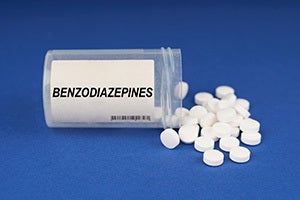
Benzodiazepines are powerful psychoactive depressants frequently prescribed to treat severe anxiety, panic disorders, insomnia, and seizures.
This class of medication includes highly regulated brand-name drugs such as Xanax (Alprazolam), Valium (Diazepam), Ativan (Lorazepam), and Klonopin (Clonazepam).
Because benzodiazepines carry a high risk of physiological dependence, severe withdrawal, and misuse, California law takes unauthorized possession seriously.
A citation or arrest can result in a permanent criminal record, jail time, and secondary consequences for employment and professional licensing.
Quick Reference Summary Chart: HS 11375(b)(2)
|
Legal Element |
Details & Statutory Guidelines |
| Statute | California Health and Safety Code Section 11375(b)(2) HS |
| Classification | "Wobblette" (Can be prosecuted as a non-criminal infraction or a misdemeanor) |
| Infraction Penalties | Fines up to $250, no jail time, and no formal criminal record |
| Misdemeanor Penalties | Up to 6 months in county jail, informal probation, and fines up to $1,000 |
| Diversion Eligibility | Highly eligible via PC 1000, Proposition 36, or PC 1001.95 diversion |
| Substance Scope | Appears on a broad statutory list including Xanax, Valium, and Phentermine |
| Collateral Impact | Triggers mandatory background check disclosures to state licensing boards |
What the Prosecution Must Prove (Elements of the Crime)
To secure a conviction for illegal possession of a sedative or tranquilizer under HS 11375(b)(2), the district attorney must prove five elements beyond a reasonable doubt:
-
Exercise of Control: The defendant possessed the chemical compound through actual, constructive, or joint control.
-
Knowledge of Presence: The defendant was consciously aware that the medication was on their person or within their immediate property.
-
Knowledge of Character: The defendant knew or had reason to know that the substance was a regulated or controlled prescription drug.
-
Lack of a Valid Prescription: The defendant lacked a current, legally issued prescription from an authorized healthcare professional or veterinarian.
-
Usable Amount: The recovered medication was in a "usable amount"—meaning a quantity sufficient to be consumed as a drug, rather than microscopic powder residue or trace chemical debris.
Legal Definitions of Possession
The state can fulfill the requirement of possession under three distinct legal theories:
-
Actual Possession: The medication is physically on you, such as in your clothing pockets, hands, wallet, or a bag you are actively holding.
-
Constructive Possession: The drugs are not on your person, but you maintain direct control or ownership over the location where they are stored (e.g., your vehicle's glove box, bedroom nightstand, or a home safe).
-
Joint Possession: You and at least one other individual directly share operational control and access to the exact same medication stash.
How Prosecutors "Stack" Related Drug Charges
California prosecutors rarely charge an individual with a single, isolated count under HS 11375(b)(2).
Instead, they look at the surrounding circumstances—such as where the pills were found, whether you were driving, and how the medication was obtained—to stack multiple related offenses onto your criminal complaint.
The Strategy Behind Added Charges
Adding multiple counts gives the prosecution greater leverage during plea bargain negotiations.
If police discover a bottle of loose Xanax bars alongside small plastic baggies, a digital scale, or a high volume of cash, the district attorney will aggressively escalate the case by charging HS 11375(b)(1) (Possession for Sale).
Unlike simple drug possession, possession for sale is a felony "wobbler" that carries up to 3 years in state prison.
Similarly, if you are pulled over and an officer believes you show physical signs of impairment from a tranquilizer, they will stack a misdemeanor count of:
- HS 11550 (Being Under the Influence of a Controlled Substance) alongside a violation of
- Vehicle Code 23152(f) VC (Driving Under the Influence of Drugs).
Even if you hold a valid prescription for the benzodiazepine, you can still face the DUI charge if the drug impaired your ability to operate the vehicle safely.
Finally, if the prosecution discovers you obtained the pills by altering a prescription, using multiple doctors ("doctor shopping"), or using a fraudulent name, they will bypass standard possession entirely and stack a felony count of HS 11173 (Prescription Fraud).
Real-World Case Examples
Example 1: Legitimate Prescription Verification (No Crime)
During a routine traffic stop, a California Highway Patrol officer observes a prescription bottle of Valium pills in the vehicle's center console.
The pharmacy label lists the driver's legal name, matches the driver's identification card, and includes valid doctor verification. Because the driver possesses a lawful prescription from an authorized medical provider, they cannot be prosecuted under HS 11375(b)(2).
Example 2: Unlawful Constructive Possession (Arrest & Charge)
An officer lawfully searches a vehicle's glove compartment during a suspected DUI investigation and finds an unlabeled plastic sandwich baggie containing loose white Xanax bars.
The driver cannot produce a prescription bottle, medical documentation, or digital pharmacy records. Because the driver has constructive possession of a controlled substance without a valid prescription, they are arrested and charged under HS 11375(b)(2).
Common Legal Defense Strategies
An experienced criminal defense lawyer can dismantle a prosecution's case by utilizing several constitutional, technical, and factual defense strategies:
-
Proof of a Valid Medical Prescription: Presenting a valid, legally issued prescription from a licensed physician, psychiatrist, or medical professional at the time of the police encounter constitutes an absolute defense to the charge.
-
Fourth Amendment Search Violations: If law enforcement discovered the benzodiazepines through an unlawful traffic stop, an overextended vehicle search without probable cause, or a search of your personal bags without a warrant or explicit consent, your attorney can file a Motion to Suppress Evidence (PC 1538.5). If granted, the court throws out the pills, typically forcing a total dismissal of the case.
-
Lack of Knowledge or Control: If a friend, passenger, or roommate left the medication in your car or shared living space without your explicit awareness, you lack the criminal intent required for possession. Simply being near a drug does not establish that you knew it was present or had control over it.
-
Temporary Possession for Lawful Disposal: If you briefly took possession of the benzodiazepines solely to destroy them, dispose of them, or deliver them to a secure medical disposal site, you are protected from conviction under California's temporary possession doctrine.
Potential Long-Term Consequences of a Drug Conviction
|
Consequence |
Description & Judicial Scope |
Long-Term Impact |
| Incarceration | Up to 6 months served in a county jail for misdemeanor filings | Causes immediate disruptions to your employment, income, and family obligations. |
| Criminal Record | A permanent misdemeanor drug conviction on your background profile | Visible to employers, landlords, and financial institutions during background checks. |
| Professional Licensing | Mandatory disclosures to state boards (BRN, California Commission on Teacher Credentialing) | Can result in administrative discipline, suspension, or denial of professional licenses. |
| Immigration Risk | Strict federal review for non-citizens, visa holders, and permanent residents | Can cause visa renewals to be denied or complicate future re-entry into the United States. |
| Probation Compliance | Court-ordered monitoring, drug testing, and search conditions | Failure to follow technical probation rules can trigger immediate jail sentencing. |
Frequently Asked Questions
Is it a crime to carry my own prescribed Xanax in a pill organizer or plastic bag?
Technically, if you have a valid prescription, it is not a crime. However, carrying loose, unregulated pills in an unmarked container poses significant legal risk.
Police officers cannot instantly verify your medical history at the scene and will often arrest or cite you under HS 11375(b)(2) until you can officially prove your prescription status in a court of law.
What is the difference between an infraction and a misdemeanor under HS 11375(b)(2)?
An infraction is a non-criminal offense, similar to a speeding ticket, with a maximum fine of $250, no jail time, and no criminal record.
A misdemeanor is a formal criminal offense that can result in up to 6 months in jail, probation, and a permanent criminal record. Prosecutors decide which charge to file based on the number of pills found and your prior criminal history.
Can I be charged if the benzodiazepines belonged to my roommate or partner?
Yes, if the drugs were found in a common area you share (like a living room, kitchen drawer, or shared vehicle), prosecutors can charge you under a theory of constructive or joint possession.
To defeat this charge, your defense attorney must show that you either did not know the pills were there or had no control or ownership over your roommate's personal belongings.
Can I avoid jail time through a California drug diversion program?
Yes. If you are charged with a misdemeanor violation and do not have a history of violent offenses, you are highly eligible for drug diversion under Penal Code 1000, Proposition 36, or local California Drug Courts.
These programs allow you to complete substance education classes or treatment. Upon successful completion, the judge will dismiss your criminal charges entirely, leaving your record clean.
Will an out-of-state prescription protect me from an arrest in California?
A valid, legal prescription written by a licensed physician out of state generally protects you from a possession conviction.
However, if the prescription cannot be verified by a local pharmacy or appears suspicious to an investigating officer, you may still face an initial arrest or citation until your attorney can present authenticated medical records to the prosecutor.
What other specific medications are restricted under California HS 11375?
Beyond classic benzodiazepines like Xanax, Valium, Ativan, and Klonopin, this statute also strictly regulates other depressants and sedatives such as Librium, Temazepam, Halazepam, and Oxazepam.
It also applies to certain prescription weight-loss stimulants like Phentermine and Diethylpropion if possessed without a valid medical directive.
Safeguard Your Record: Contact Esfandi Law Group
An arrest for unauthorized possession of benzodiazepines can derail your academic pursuits, professional career, and personal reputation.
Because prosecutors rely heavily on traffic stops and vehicle searches to discover these medications, there are numerous legal avenues to challenge their evidence, assert your Fourth Amendment rights, or negotiate for a record-clearing diversion program.
Contact the Esfandi Law Group today at (310) 274-6529 to schedule a free, confidential consultation with an experienced California drug defense lawyer.