
Federal Crime of Trafficking in Counterfeit Goods: 18 U.S.C. § 2320 Explained
The federal government strictly enforces intellectual property laws to protect commercial markets, military supply chains, public health, and consumer safety.
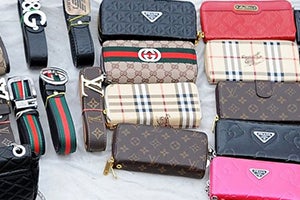
Under 18 U.S.C. § 2320, it is a serious federal felony to knowingly traffic in counterfeit goods, services, labels, military equipment, or pharmaceutical drugs that bear unauthorized, spurious marks.
Investigated by federal agencies such as Homeland Security Investigations (HSI), the Federal Bureau of Investigation (FBI), and U.S. Customs and Border Protection (CBP), and prosecuted by United States Attorneys, charges under 18 U.S.C. § 2320 expose individuals and corporate entities to massive monetary fines, mandatory asset forfeiture, and lengthy terms in the Federal Bureau of Prisons.
What Is the Statutory Language of 18 U.S.C. § 2320?
The statutory language governing federal counterfeit goods trafficking under 18 U.S.C. § 2320 states in relevant part:
Whoever intentionally traffics or attempts to traffic in goods or services and knowingly uses a counterfeit mark on or in connection with such goods or services, or knowingly traffics or attempts to traffic in labels, patches, stickers, wrappers, badges, emblems, medallions, charms, boxes, cans, containers, cases, or packaging of any type or nature, knowing that a counterfeit mark has been applied thereto... shall be punished as provided in this section.
The statute further establishes enhanced criminal penalties for offenses involving counterfeit military goods or services that risk impairing combat operations or causing serious bodily injury, as well as counterfeit prescription pharmaceuticals or dietary supplements.
What Are Key Statutory Definitions Under 18 U.S.C. § 2320?
Federal courts evaluate counterfeit trafficking charges based on explicit statutory definitions codified within Title 18 and related federal codes:
-
Trafficking: To transport, transfer, or otherwise dispose of an item or service for commercial advantage or private financial gain, or to obtain control of an item with the intent to transport, transfer, or dispose of it.
-
Counterfeit Mark: A spurious (fake) mark that is identical with, or substantially indistinguishable from, a mark registered on the principal register in the United States Patent and Trademark Office (USPTO) and in use, used on or in connection with goods or services for which the mark is registered, and the use of which is likely to cause confusion, mistake, or deception.
-
Counterfeit Military Good or Service: Any good or service that is falsely represented as meeting military specifications, intended for use by the U.S. Armed Forces, or critical to military readiness, combat operations, or security classification.
-
Counterfeit Drug: A drug or dietary supplement (as defined under section 201 of the Federal Food, Drug, and Cosmetic Act, 21 U.S.C. § 321) that falsely bears the trademark, trade name, or identifying mark of a pharmaceutical manufacturer or distributor without authorization.
What Must Federal Prosecutors Prove to Convict You under 18 U.S.C. § 2320?
To secure a criminal conviction for trafficking in counterfeit goods, Assistant U.S. Attorneys must prove four core elements beyond a reasonable doubt:
-
Trafficking or Attempted Trafficking: The defendant trafficked, attempted to traffic, or conspired to traffic in goods, services, labels, packaging, or documentation.
-
Use of a Counterfeit Mark: The goods, services, or packaging bore or utilized a spurious mark that was identical to or substantially indistinguishable from a genuine, active USPTO-registered trademark.
-
Likelihood of Confusion: The unauthorized use of the spurious mark was likely to cause consumer confusion, mistake, or intent to deceive regarding authenticity or origin.
-
Knowledge and Intent: The defendant acted intentionally and knowingly—meaning they knew or should have known that the mark was fake and intended to traffic the item for commercial gain.
What Are Common Examples of 18 U.S.C. § 2320 Violations?
Trafficking in counterfeit goods spans multiple industries, ranging from luxury retail to critical infrastructure:
-
Luxury Consumer Goods & Electronics: Importing, distributing, or selling counterfeit luxury handbags, designer apparel, footwear, or smartphones bearing unauthorized trademark logos.
-
Counterfeit Packaging & Labels: Manufacturing, importing, or selling standalone branded labels, holographic patches, boxes, or serial stickers designed to make knockoff goods appear genuine.
-
Counterfeit Pharmaceuticals & Medical Supplies: Distributing fake prescription medications, dietary supplements, or medical devices carrying unauthorized pharmaceutical company logos or trademarks.
-
Substandard Military Components: Supplying unauthorized, non-spec electronic parts, body armor, or hardware falsely stamped with military contractor logos to the U.S. Department of Defense.
How Do Statutory Penalties Compare Across 18 U.S.C. § 2320 Offense Tiers?
|
Offense Category & Severity Tier |
Individual Penalties |
Corporate / Legal Entity Fines |
| First-Offense General Trafficking | Up to 10 years in federal prison and fines up to $2,000,000. | Fines up to $5,000,000. |
| Second / Subsequent Offense | Up to 20 years in federal prison and fines up to $5,000,000. | Fines up to $15,000,000. |
| Offense Involving Serious Bodily Injury / Death | Up to 20 years in prison (if bodily injury) or Life Imprisonment (if death results). | Fines up to $15,000,000 (or higher subject to general federal fine provisions). |
| Military Goods or Counterfeit Drugs (First Offense) | Up to 20 years in federal prison and fines up to $5,000,000. | Fines up to $15,000,000. |
| Military Goods or Counterfeit Drugs (Subsequent Offense) | Up to 30 years in federal prison and fines up to $15,000,000. | Fines up to $30,000,000. |
Note: Under 18 U.S.C. § 2323, a conviction also carries mandatory asset forfeiture, destruction of all seized counterfeit goods and manufacturing equipment, and full financial restitution to trademark holders.
What Defense Strategies Protect Against Counterfeit Goods Charges?
Defending an 18 U.S.C. § 2320 indictment requires attacking the prosecution's evidence concerning trademark validity, mental state, or supply chain legitimacy:
-
Lack of Knowledge / Good-Faith Belief: If the defendant genuinely believed the goods were authentic and had no reasonable basis to know the items carried spurious marks, the government cannot establish the required element of knowledge.
-
Gray Market / Parallel Imports: "Gray market" goods are genuine products manufactured overseas under legitimate license but imported outside authorized distribution channels. Importing parallel imports does not constitute trafficking in counterfeit marks under 18 U.S.C. § 2320.
-
Authorized "Overrun" Goods: If a manufacturer previously held a valid licensing agreement to produce trademarked items, goods produced in excess of contractual limits ("overruns") carry genuine marks and do not legally qualify as counterfeit.
-
Mark Differences & Lack of Confusion: Showing that the mark is not identical or substantially indistinguishable from a registered mark, or that the context made consumer confusion impossible (e.g., obvious novelty parodies).
-
Fourth Amendment Violations & Unlawful Seizures: Suppressing evidence obtained through warrantless searches, invalid customs seizures, or defective wiretaps by filing constitutional motions to suppress.
What Is a Hypothetical Example of an 18 U.S.C. § 2320 Prosecution?
Scenario: Marcus operates an e-commerce liquidation warehouse. He purchases a shipment of 5,000 high-end wireless headphones from an overseas liquidator, complete with brand-name packaging, serial numbers, and registered trademark logos.
HSI agents intercept the shipment at a port of entry, test the electronics, and find internal components that do not match the brand's specifications. Federal prosecutors indict Marcus under 18 U.S.C. § 2320.
Outcome: Marcus retains specialized federal criminal defense counsel. Defense attorneys gather invoice records, bill-of-lading documents, and email communications demonstrating that Marcus paid market rate, received certificates of authenticity from the supplier, and had no technical capacity or reason to suspect the items were fake.
Defense counsel presents this evidence to the Assistant U.S. Attorney to show Marcus lacked criminal intent and knowledge. Recognizing it cannot prove the required element of knowledge beyond a reasonable doubt, the government dismisses all felony charges against Marcus.
What Are Related Federal Offenses for 18 U.S.C. § 2320?
Understanding related federal charges is critical because prosecutors routinely stack statutory counts under Title 18 to increase potential prison exposure and pressure defendants during plea negotiations.
-
18 U.S.C. § 1341 & § 1343 – Mail Fraud and Wire Fraud: Criminalizes using the U.S. Postal Service, commercial interstate carriers, or electronic communications (websites, online payment gateways) to execute a scheme to sell fake goods.
-
18 U.S.C. § 1956 & § 1957 – Federal Money Laundering: Penalizes conducting financial transactions involving funds generated by unlawful activities, such as depositing or transferring proceeds from counterfeit sales.
-
18 U.S.C. § 371 – Conspiracy to Commit an Offense: Prohibits two or more individuals from conspiring to violate federal counterfeit laws, even if the primary trafficking offense is not fully completed.
-
18 U.S.C. § 1961 et seq. – RICO (Racketeer Influenced and Corrupt Organizations): Prosecutes individuals involved in organized criminal enterprises that utilize counterfeit trafficking networks as predicate racketeering acts.
-
18 U.S.C. § 1029 – Fraud in Connection with Access Devices: Criminalizes the unauthorized production, use, or trafficking of fake credit card credentials or payment processing devices often tied to counterfeit sales.
Frequently Asked Questions About Federal Counterfeit Goods Charges
What is the difference between trademark infringement and criminal counterfeit trafficking?
Civil trademark infringement involves unauthorized use of a mark that creates consumer confusion, handled through civil lawsuits between private parties. Criminal counterfeit trafficking under 18 U.S.C. § 2320 requires intentional, knowing commercial dealing in fake goods bearing spurious marks, prosecuted by the federal government with penalties including federal prison and criminal fines.
Can I be charged under 18 U.S.C. § 2320 if I only sold standalone boxes or labels?
Yes. The statute explicitly criminalizes trafficking in standalone labels, patches, stickers, wrappers, boxes, containers, or documentation knowing that a counterfeit mark has been applied to them.
What are the consequences if the counterfeit goods involve pharmaceuticals or military items?
Trafficking in counterfeit drugs or military goods carries significantly enhanced statutory penalties under 18 U.S.C. § 2320. First-time individual offenders face up to 20 years in federal prison, repeat offenders face up to 30 years, and corporate entities face statutory fines up to $30,000,000.
Does federal law punish attempting or conspiring to traffic in counterfeit goods?
Yes. Under 18 U.S.C. § 2320, attempting or conspiring to traffic in counterfeit goods or services carries the exact same statutory criminal penalties as completing the underlying offense.
What happens to property and funds derived from selling counterfeit goods?
Under 18 U.S.C. § 2323, federal courts must order mandatory criminal forfeiture of all counterfeit items, raw materials, manufacturing equipment, vehicles, and gross profits or property derived from or used to commit the offense.
How Our Federal Defense Lawyers Can Help You
Facing federal prosecution for trafficking in counterfeit goods under 18 U.S.C. § 2320 puts your freedom, financial assets, and business operations at immediate risk.
Federal law enforcement agencies deploy extensive surveillance, undercover buys, and financial audits to build these cases.
Our federal criminal defense firm represents clients facing grand jury investigations, asset seizures, and federal indictments across the United States:
-
Early Investigation & Asset Protection: We intervene during initial HSI or FBI investigations and customs seizures to protect your constitutional rights, challenge property forfeitures, and prevent formal indictments.
-
Forensic Supply Chain Audits: We partner with certified intellectual property experts, trademark analysts, and forensic accountants to trace supply lines and establish a good-faith lack of knowledge or the legitimacy of gray-market activity.
-
Aggressive Federal Court Defense: From filing motions to suppress seized evidence to negotiating favorable plea resolutions or trying your case before a federal jury, we deliver experienced, strategic defense representation.
A federal criminal defense attorney at Esfandi Law Group in Los Angeles can assist you. To schedule a complimentary consultation, please call (310) 274-6529 or complete the contact form.