
Imagine pulling over on the side of a California highway just to watch first responders battle a brush fire. Hours later, police knock on your door, question you, and eventually arrest you because a witness claims to have seen you walking near the area minutes before the fire began.
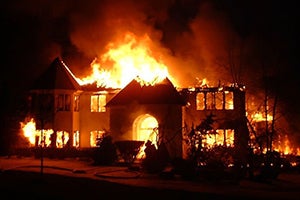
In California, arson charges do not always stem from dramatic, premeditated plots. They often arise from simple misunderstandings, domestic disputes, industrial accidents, or baseless accusations.
Because California is highly vulnerable to devastating wildfires, prosecutors and law enforcement aggressively target suspected arsonists.
If you or a loved one is facing allegations under California Penal Code Section 451 PC or Penal Code Section 452 PC, knowing your rights, the statutory penalties, and how to build a strong defense is critical to protecting your freedom.
The Legal Definition of Arson in California
California divides arson into two primary categories based on your state of mind at the time of the incident: willful and malicious arson (PC 451) and reckless burning (PC 452).
Malicious Arson: Penal Code 451 PC
The statutory language of California Penal Code Section 451 PC states:
“A person is guilty of arson when he or she willfully and maliciously sets fire to or burns or causes to be burned or who aids, counsels, or procures the burning of, any structure, forest land, or property.”
To secure a conviction under PC 451, the prosecution must prove three distinct elements:
-
Setting the Fire: You set fire to, burned, or caused to be burned a structure, forest land, or property.
-
Willful Action: You acted willfully (on purpose, not accidentally).
-
Malice: You acted maliciously (with an intent to do a wrongful act, vex, defraud, or annoy another person).
Reckless Burning: Penal Code 452 PC
If there was no malicious intent, you can still face severe criminal charges for "recklessly" causing a fire. Under California Penal Code Section 452 PC:
“A person is guilty of unlawfully causing a fire when he or she recklessly sets fire to or burns or causes to be burned, any structure, forest land, or property.”
"Reckless" behavior means you were aware that your actions presented a substantial and unjustifiable risk of causing a fire, you consciously ignored that risk, and doing so was a gross deviation from how a reasonable person would act in that situation.
Examples include ignoring an active fire ban or throwing lit fireworks into dry brush.
California Arson Penalties and Sentencing
Arson penalties in California are incredibly severe, reflecting the immense danger fires pose to public safety. The consequences scale based on the type of property damaged and whether anyone was injured.
Arson Penalty Structure
|
Charge Type & Statute |
Property/Injuries Involved |
Maximum Prison Sentence |
| Malicious Arson (PC 451) | Great Bodily Injury (GBI) | Up to 9 years |
| Malicious Arson (PC 451) | Inhabited Structure (e.g., a home) | Up to 8 years |
| Malicious Arson (PC 451) | Forest Land or Uninhabited Structure | Up to 6 years |
| Malicious Arson (PC 451) | Personal Property (not belonging to you) | Up to 3 years |
| Reckless Burning (PC 452) | Great Bodily Injury (GBI) | Up to 4 years |
| Reckless Burning (PC 452) | Inhabited Structure | Up to 4 years |
| Reckless Burning (PC 452) | Forest Land | Up to 3 years |
| Reckless Burning (PC 452) | Personal Property | Up to 6 months in jail |
Severe Sentencing Enhancements & Lifetime Consequences
Beyond standard prison terms, an arson conviction can trigger life-altering collateral penalties:
-
The California Three Strikes Law: Malicious arson of an inhabited structure or arson causing great bodily injury is considered a "serious or violent felony," counting as a strike on your record.
-
Lifetime Arson Registration: Under Penal Code Section 457.1 PC, individuals convicted of specific malicious arson offenses may be court-ordered to register as arson offenders for life with local law enforcement.
-
Restitution: Defendants are routinely ordered to pay hundreds of thousands—or millions—of dollars in restitution to cover emergency response costs and property damage.
Real-World Example: PC 451 vs. PC 452
Understanding how intent changes the nature of a charge can be seen in the following comparative scenario:
The Cases of Marcus and Sarah:
Marcus is furious after an argument with his landlord. He buys a canister of gasoline, pours it onto the wooden deck of his apartment complex, and lights it with a match, causing a massive fire. Because Marcus acted willfully and with the malicious intent to damage the landlord's property, he will be charged with felony malicious arson of an inhabited structure under PC 451, facing up to 8 years in state prison.
Sarah is hosting a backyard barbecue during a dry, windy summer afternoon in Southern California. Despite local fire warnings, she lights a large open bonfire. Embers drift into neighboring dry brush, starting a wildfire that burns several acres. While Sarah did not want to cause a fire, her decision to ignore the high-wind fire ban is considered a gross deviation from reasonable safety. She will likely be charged with reckless burning of forest land under PC 452.
Related California Laws
When investigators analyze a fire, several other state statutes are commonly charged alongside or instead of PC 451 and 452:
-
Trespass (Penal Code 602 PC): Entering another person's property without permission. This is often charged if the fire started while trespassing.
-
Vandalism (Penal Code 594 PC): Maliciously damaging or destroying another person's property by means other than fire.
-
Insurance Fraud (Penal Code 550 PC): Intentionally setting fire to your own home, business, or car specifically to collect insurance payouts. This can be charged in tandem with arson.
-
First-Degree Murder (Penal Code 187 PC): If someone dies as a direct result of an arson fire, the perpetrator can be prosecuted for murder under California's felony-murder rule, even if they had no intent to kill.
Legal Defenses to Arson Charges
Arson cases rely heavily on circumstantial evidence and complex forensic science. A skilled criminal defense attorney can utilize several powerful defense strategies:
-
The Fire Was Accidental: If the fire was caused by faulty electrical wiring, a household appliance malfunction, or an act of nature (such as lightning), you cannot be held criminally liable under PC 451 or 452.
-
Lack of Intent or Recklessness: For PC 451, if your attorney can prove you did not act with malice, the charge may be dismissed or reduced to reckless burning. For PC 452, if your actions were negligent but did not rise to the level of conscious disregard for human safety, you cannot be convicted.
-
False Accusations and Mistaken Identity: Disgruntled ex-partners or neighbors often point fingers at innocent individuals. Additionally, eyewitnesses frequently misidentify people near the scene of a chaotic fire.
-
Challenging Flawed Forensic Science: Historically, fire investigators have relied on outdated theories about burn patterns and "accelerant indicators" that modern science has disproven. Your defense team can bring in independent fire scientists to challenge the state's origin-and-cause report.
Frequently Asked Questions (FAQs)
What is the primary difference between Penal Code 451 and Penal Code 452?
The difference lies entirely in your mental state (intent). Penal Code 451 PC requires "willful and malicious" intent, meaning you intentionally set a fire to cause harm or defraud. Penal Code 452 PC requires only "recklessness," meaning you did not intend to start a fire but acted with extreme disregard for a clear safety risk that resulted in one.
Can I be charged with arson for accidentally starting a campfire that spreads?
Yes, depending on the circumstances. While a pure accident with no negligence is not a crime, you can be charged with reckless burning under PC 452 if you started a campfire during a strict red-flag warning, failed to clear the surrounding dry brush, or left the fire unattended until it was fully extinguished.
Is arson considered a strike offense under California's Three Strikes Law?
Yes, but not all arson charges qualify. Malicious arson under PC 451 is considered a "strike" if committed against an inhabited structure (such as an occupied home or apartment building) or if the fire causes great bodily injury to another person, including civilian victims or responding firefighters.
Can arson charges be dropped or reduced before trial?
Yes. Arson investigations are notoriously prone to errors, and prosecutors often rely on circumstantial evidence. If your defense attorney can present independent forensic evidence showing the fire was accidental, establish an alibi, or demonstrate that the state's scientific evidence is flawed, the charges may be dismissed or reduced.
Will an arson conviction show up on background checks?
Yes. Because most arson charges are felonies, they will appear on standard criminal background checks. Because arson involves property destruction, danger to human life, and potentially fraud, a conviction can severely limit your future employment, housing options, and professional licensing opportunities.
Am I required to register as an arson offender if I am convicted?
You are required to register only if convicted of specific malicious arson offenses under PC 451, or if the sentencing judge explicitly finds that you used an incendiary device or committed the crime with a specific compulsive intent. If registration is ordered under Penal Code 1090 PC, you must update your local police department annually for life.
Consult a Qualified California Arson Defense Lawyer
If you are facing an investigation or charges under Penal Code 451 or 452 PC, do not navigate this high-stakes situation alone. Law enforcement and fire investigators are trained to find evidence of arson, and casual statements you make can be twisted into an admission of guilt.
At the Esfandi Law Group, we bring decades of specialized defense experience to white-collar, property, and felony investigations. We collaborate with independent fire experts and forensic scientists to dismantle flawed theories of prosecution and safeguard your future.
Contact us today to schedule a confidential, obligation-free consultation.
