
Fourth Amendment Violations Explained: Illegal Searches, Seizures, and Your Rights
The Fourth Amendment to the United States Constitution serves as a fundamental pillar of personal liberty, protecting individuals from unreasonable searches and seizures by government officials.
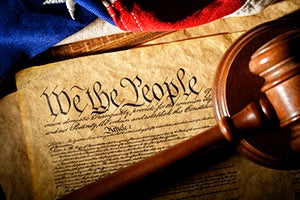
Designed to prevent arbitrary police intrusions, it ensures that law enforcement cannot search your person, home, vehicle, or electronic devices without sufficient legal justification.
When police officers conduct searches or seizures without a valid warrant, probable cause, or a recognized legal exception, they commit a Fourth Amendment violation.
In criminal proceedings, identifying constitutional violations is often the most powerful tool available to a defense team to exclude evidence, dismantle the prosecution's case, and secure a complete dismissal of charges.
Legal Definition of a Fourth Amendment Violation
Under United States constitutional jurisprudence and California criminal procedure, a "Fourth Amendment violation" occurs when a government agent or law enforcement officer executes an intentional or reckless search or seizure that invades an individual's subjective expectation of privacy—which society is prepared to recognize as objectively reasonable—without a valid judicial warrant supported by sworn probable cause, or without acting under a strictly defined and recognized exception to the warrant requirement.
Core Protections Provided by the Fourth Amendment
The Fourth Amendment balances law enforcement's duty to investigate crimes with an individual's fundamental right to privacy. To conduct a lawful search or seizure, government agents must adhere to strict constitutional standards.
1. The Standard of Reasonableness
The Fourth Amendment does not prohibit all government searches—it strictly forbids unreasonable ones. Courts determine reasonableness by balancing the severity of the intrusion on an individual's privacy against the government's compelling interest in law enforcement.
2. The Warrant Requirement & Probable Cause
As a general legal rule, searches and seizures conducted without a prior search warrant issued by a neutral, detached magistrate are presumed per se unreasonable.
To obtain a valid warrant, law enforcement must present a sworn affidavit demonstrating probable cause—meaning concrete, articulable facts that would lead a person of reasonable caution to believe that criminal activity is occurring or that evidence of a crime is located at the specific place to be searched.
3. Application to Modern Digital Privacy
Fourth Amendment protections are not limited to physical spaces. Under landmark U.S. Supreme Court precedents (such as Riley v. California and Carpenter v. United States), law enforcement officers generally must obtain a warrant based on probable cause to search cell phones, access digital communication records, examine cloud storage, or monitor location data via GPS tracking.
Common Exceptions to the Warrant Requirement in California
While warrants are the constitutional baseline, courts have carved out specific, limited exceptions where warrantless searches may be deemed lawful:
-
Consent Searches: When an individual voluntarily grants police permission to search their person, vehicle, or home without coercion or deception.
-
Searches Incident to Lawful Arrest: Allowing officers to search an arrested individual and their immediate grab-area for weapons or evidence during a lawful custodial arrest.
-
The Plain View Doctrine: Allowing officers to seize evidence without a warrant if they are lawfully present in a location and the incriminating nature of the item is immediately apparent.
-
The Automobile Exception: Allowing warrantless vehicle searches if officers possess objective probable cause to believe the vehicle contains contraband or evidence of a crime.
-
Exigent Circumstances: Emergency situations involving immediate danger to life, active hot pursuit of a fleeing felon, or imminent destruction of evidence.
Procedural Remedies: Motion to Suppress Evidence & Case Impact
When law enforcement executes an unconstitutional search or seizure, the legal framework provides robust procedural mechanisms to penalize government overreach and protect the accused:
-
Exclusionary Rule (Federal Constitutional Standard): Mandates that physical or verbal evidence seized during an illegal search cannot be introduced at trial. Case Impact: Key physical evidence—such as drugs, weapons, or cash—is stripped from the prosecution's case, often leading to reduced charges or full dismissal.
-
Fruit of the Poisonous Tree Doctrine (Wong Sun v. United States): Extends suppression to any secondary evidence, confessions, or investigative leads derived from an initial illegal search. Case Impact: Secondary evidence and derivative statements are ruled inadmissible, destroying the prosecution's case momentum.
-
Motion to Suppress Evidence (Penal Code 1538.5 PC): Formally requests a court hearing where a judge evaluates the legality of police conduct and search warrants. Case Impact: A judge signs an official court order excluding unlawfully seized items from the court record and trial proceedings.
-
Pretextual Stop Exclusion (Fourth Amendment Judicial Review): Challenges traffic stops or detentions initiated purely as an improper pretext to conduct exploratory searches without cause. Case Impact: Invalidation of the initial stop suppresses all physical and verbal evidence gathered during the encounter.
-
Civil Rights Violations (42 U.S. Code § 1983): Establishes civil liability against government officers and police agencies for intentional constitutional deprivations. Case Impact: Creates potential financial compensation, civil settlements, and institutional police accountability outside the criminal case.
Civil Penalties, Statutory Damages, and Civil Rights Claims
Beyond criminal court suppressions, unconstitutional police conduct exposes officers and municipalities to civil remedies and financial accountability:
-
Section 1983 Civil Rights Lawsuits: Under 42 U.S.C. § 1983, individuals subjected to malicious, reckless, or unconstitutional searches and seizures can sue law enforcement officers in federal court for compensatory damages, emotional distress, and punitive damages.
-
Bane Act Claims (California Civil Code § 52.1): State law provides statutory civil damages and attorney fees when government officials use threat, intimidation, or coercion to interfere with an individual's Fourth Amendment rights.
-
Monell Claims Against Agencies: Municipalities can be held financially liable if illegal searches stem from an official department policy, custom, or failure to properly train law enforcement officers.
How Fourth Amendment Violations Arise in Real Scenarios
-
The Impermissible Traffic Stop Search: Officers pull over a motorist for a broken taillight, extend the stop without reasonable suspicion, and search the trunk without consent. Result: Fourth Amendment violation; all evidence seized during the prolonged detention is suppressed.
-
The Warrantless Home Invasion: Police knock on an apartment door after receiving an unverified noise complaint, smell burning cannabis, and push their way inside without a warrant. Result: Unlawful entry; physical evidence discovered inside is excluded under PC 1538.5.
-
The Unwarranted Cell Phone Extraction: Detectives seize a suspect's smartphone during an arrest and plug it into a data extraction tool without first obtaining a search warrant signed by a judge. Result: Digital privacy violation; extracted text messages, call logs, and photos are ruled inadmissible.
Related California Laws, Statutory Provisions, and Charges
Understanding statutes intersecting with Fourth Amendment doctrine provides vital context for building an effective legal defense:
-
Penal Code Section 1538.5 (Motion to Suppress): The formal California statutory procedure used to challenge illegal searches, invalidate warrants, and exclude unlawfully obtained evidence.
-
Penal Code Section 148(a)(1) (Resisting Arrest): Frequently charged during search encounters. Under California law, an individual cannot be convicted of resisting an officer who is engaging in an unlawful or unconstitutional search.
-
Vehicle Code Section 2800.1 (Evading an Officer): Charges that often involve high-speed chases resulting from pretextual traffic stops or questionable police detentions.
-
Health & Safety Code Section 11350 (Drug Possession): Narcotics charges are among the most common offenses dismissed following successful PC 1538.5 suppression motions.
Why Related Charges Matter
Understanding how related offenses interact with Fourth Amendment doctrine is critical because law enforcement officers often file secondary charges—such as resisting arrest or obstruction—to validate an improper detention or force a plea deal.
If your defense attorney successfully proves the initial police stop or search violated the Fourth Amendment, all derivative charges and evidence often crumble simultaneously, dismantling the prosecution's entire case.
Frequently Asked Questions (FAQs)
What is an illegal search under the Fourth Amendment?
An illegal search occurs when law enforcement officers examine your body, home, vehicle, or personal belongings without a valid search warrant, probable cause, or a legally recognized exception to the warrant requirement.
Can police search my car without a warrant in California?
Police can search your car without a warrant only if they have voluntary consent, probable cause to believe the vehicle contains evidence of a crime (under the Automobile Exception), or during an inventory search following a lawful vehicle impoundment.
What is the Exclusionary Rule in criminal law?
The Exclusionary Rule is a constitutional doctrine that prevents prosecutors from introducing evidence in court that was obtained through illegal searches, improper detentions, or Fourth Amendment violations by law enforcement.
What is the Fruit of the Poisonous Tree doctrine?
This doctrine dictates that if initial police conduct violates the Fourth Amendment (the "poisonous tree"), any secondary evidence, confessions, or leads discovered as a result of that initial violation (the "fruit") are also inadmissible in court.
Do I have the right to refuse a police search?
Yes. You have the constitutional right to clearly and politely state, "I do not consent to any searches." Refusing consent cannot be used by officers as probable cause to justify a search.
Does the Fourth Amendment protect my cell phone and digital data?
Yes. Under U.S. Supreme Court precedent, police generally must obtain a valid search warrant supported by probable cause to search your cell phone, access text messages, examine location history, or extract digital files.
Can a criminal case be dismissed due to an illegal search?
Yes. If your attorney files a successful Motion to Suppress Evidence under Penal Code 1538.5 PC and the judge excludes key evidence (such as drugs or firearms), prosecutors are often left with insufficient evidence to proceed, forcing a case dismissal.
What is a Terry stop or stop-and-frisk encounter?
A Terry stop occurs when police briefly detain an individual based on reasonable suspicion of criminal activity. Officers may only conduct an outer-clothing pat-down (frisk) if they possess specific, articulable facts that the person is armed and dangerous.
Protect Your Constitutional Protections
If law enforcement officers searched your property, seized your belongings, or accessed your digital data without a valid warrant or legal cause, your constitutional rights may have been violated. Challenging illegal police conduct requires aggressive, experienced legal representation.
The California criminal defense attorneys at Esfandi Law Group specialize in filing Motions to Suppress Evidence under PC 1538.5, holding law enforcement accountable, and getting cases dismissed.
Call us today or fill out our online contact form to schedule your free, confidential consultation.