
Every criminal defendant in California has a constitutionally protected right to a speedy trial. By law, trials typically begin within 30 to 90 days after arraignment, depending on whether the defendant is in custody and whether the charge is a misdemeanor or a felony.
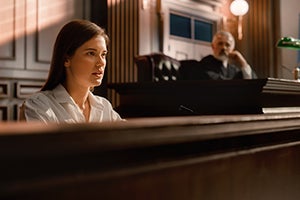
In all California criminal proceedings, the prosecution bears the burden of proof and must establish guilt beyond a reasonable doubt. The defense need not present evidence, call witnesses, or testify. To render a verdict, all 12 jurors must agree unanimously.
The 6 Stages of a California Criminal Jury Trial
1. Jury Selection (Voir Dire)
A panel of 50 to 60 prospective jurors is called to the courtroom from the jury summons pool. Through voir dire (French for "to speak the truth"), the judge, prosecutor, and defense counsel question candidate jurors to select 12 primary jurors and 2 to 4 alternates.
-
Challenges for Cause: Either party or the judge can dismiss prospective jurors who demonstrate bias, lack adequate English skills, or have health conflicts preventing service.
-
Peremptory Challenges: Each side receives between 6 and 10 challenges (depending on the severe nature of the charge) to dismiss a juror without stating a legal cause.
2. Opening Statements
Attorneys preview the evidence they intend to introduce. Opening statements act as a narrative roadmap rather than an argument; legal arguments are prohibited at this stage. Because the prosecution carries the burden of proof, it presents first, followed by the defense.
Attorneys frequently utilize visual aids such as slideshows, timelines, schematics, or audio recordings.
3. Case-in-Chief (Presentation of Evidence)
The primary stage of trial where witness testimony and exhibits are formally presented to the court.
-
Direct Examination: The prosecutor calls state witnesses and introduces physical or documentary exhibits.
-
Cross-Examination: The defense attorney questions state witnesses to test credibility, highlight inconsistencies, or elicit favorable facts.
-
Defense Election: After the state rests, the defense may present its own case-in-chief by calling witnesses and offering evidence, or rest immediately, asserting that the state failed to meet its burden of proof.
4. Closing Arguments
Both sides summarize the evidence in the light most favorable to their position. Unlike opening statements, attorneys during closing arguments directly urge jurors on how to interpret testimony, evaluate witness credibility, and apply the law. The prosecution speaks first and delivers the final rebuttal argument because of its high burden of proof.
5. Jury Deliberations
The jury selects a foreperson and receives formal jury instructions from the judge regarding governing legal standards. Jurors deliberate in private to analyze the evidence. They may request read-backs of witness testimony, review physical exhibits, or ask the judge for legal clarification.
6. Verdict
The jury votes to render a unanimous decision of either guilty or not guilty.
-
Not Guilty: The defendant is acquitted and immediately discharged.
-
Guilty: The conviction is recorded, and the case proceeds to a formal sentencing hearing.
-
Hung Jury (Mistrial): If the 12 jurors cannot agree unanimously, the judge declares a mistrial. The prosecution must then decide whether to retry the case before a new panel or dismiss the charges.
Frequently Asked Questions (FAQs)
How long does a criminal trial take in California?
Trial length varies depending on case complexity and charges. Typical misdemeanor trials last 2 to 5 days, while felony jury trials can run several weeks or months.
What is the legal difference between "not guilty" and "innocent"?
A "not guilty" verdict does not mean the court proves a defendant is innocent. It signifies that the prosecution failed to prove guilt beyond a reasonable doubt under California law.
What happens if a California jury cannot reach a unanimous verdict?
If the jury is deadlocked, the judge declares a mistrial (a "hung jury"). The prosecutor may opt to retry the case with a new jury, negotiate a plea, or dismiss the case entirely.
Can a defendant choose a trial by judge instead of a jury in California?
Yes. A defendant can waive the right to a jury trial and proceed with a bench trial, where a single judge evaluates the evidence and issues the verdict.
Are opening statements considered legal evidence?
No. Opening statements are structural previews of anticipated evidence. Only sworn witness testimony and items admitted into the record by the judge constitute valid trial evidence.
An attorney from Esfandi Law Group in Los Angeles who specializes in criminal defense can assist you. Book your free consultation by calling us or filling out the contact form available here.
