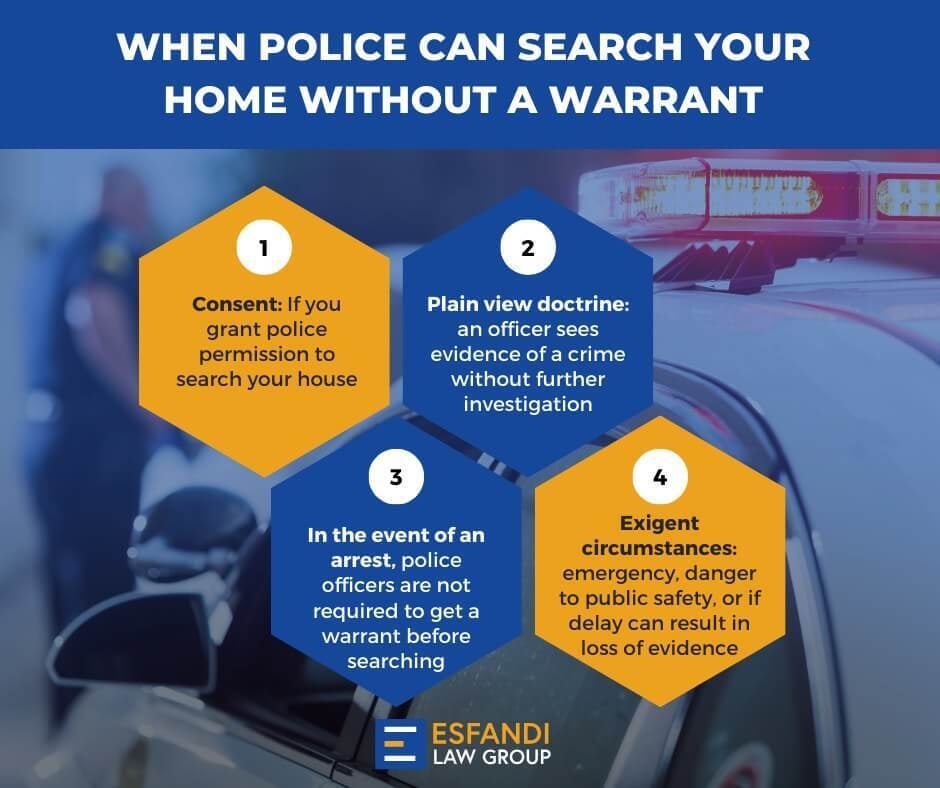
If your roommate consents to a search, police may search only common areas (like living rooms, kitchens, and shared bathrooms) and your roommate's private space.

Police cannot lawfully search your private bedroom, locked containers, or personal desk without your explicit consent or a valid Fourth Amendment search warrant.
Under California search and seizure laws (including California Penal Code § 1538.5), a co-occupant's authority to grant search consent depends on whether they share joint access and control over the specific area being searched.
Scope of Consent in Shared Housing: Common vs. Private Areas
Understanding authority limits prevents unconstitutional police searches in shared apartments and multi-tenant homes.
|
Area of the Residence |
Police Allowed to Search? |
Legal Standard for Consent |
| Shared Common Areas (Kitchen, living room, shared hallway) | Yes | Roommate has equal joint access and control over the space. |
| Roommate's Private Bedroom | Yes | Roommate has total authority over their own room. |
| Your Private Bedroom | No | Roommate lacks authority; requires your consent or a search warrant. |
| Locked Containers / Bags / Safes | No | Exclusive personal control prevents roommate consent unless you prove shared access. |
Third-Party Consent and the Limits of Police Authority
The Supreme Court and California courts govern police searches based on third-party authority and "apparent authority":
-
Actual Authority: A roommate can only consent to searches of areas they actually use or access daily.
-
Apparent Authority: If police reasonably believe a roommate has access to an area—even if they do not—the search may be upheld unless the true occupant objects or clearly restricts access (e.g., keeping a bedroom door locked).
-
The Present Objector Rule (Georgia v. Randolph): If you are physically present at the residence and object to a search, police cannot enter shared common areas based solely on your roommate's consent.
-
Romantic Partners vs. Casual Roommates: Courts assume romantic partners share equal access to all rooms in a home. In contrast, standard roommates in a multi-tenant lease are presumed to hold exclusive privacy rights over their individual bedrooms.
-
Overnight Guests vs. Primary Occupants: A primary tenant cannot grant consent to search a guest's personal luggage, and a guest cannot consent to a search of the primary tenant's private living quarters.
How to Prevent Unlawful Searches in a Shared Home
Households can avoid accidental constitutional waivers during law enforcement interactions by establishing clear guidelines:
-
Keep Private Spaces Secured: Keep private bedroom doors locked and store sensitive items in personal, locked safes or drawers to establish an unambiguous expectation of privacy.
-
Do Not Open the Door Unnecessarily: You are not legally required to answer the door for law enforcement unless they display a signed search warrant or arrest warrant.
-
Step Outside to Speak with Officers: If you choose to speak with police, step outside and pull the door shut behind you to prevent officers from observing items inside (which could trigger the "Plain View" doctrine).
-
Verbally Refuse Search Requests: Never agree to a "quick look around." Explicitly state: "I do not consent to any search of this residence."
How to Withdraw Consent During a Police Search
If you or a roommate previously allowed police to enter, you maintain the legal right to revoke that permission at any time:
-
Use Clear, Explicit Language: State clearly and loudly: "I am revoking my consent. Stop searching immediately and leave the premises."
-
Avoid Physical Interference: Never physically block an officer, push their hands away, or grab items. Physical resistance can lead to charges for resisting or obstructing an officer (California Penal Code § 148(a)(1) PC).
-
Exercise Your Right to Remain Silent: If police discover incriminating evidence, remain silent and request an attorney immediately. Do not attempt to explain or defend the items found.
Challenging an Illegal Search in California Courts
If police search your private bedroom or belongings based on your roommate's invalid consent, your criminal defense attorney can file a Motion to Suppress Evidence under California Penal Code § 1538.5 PC.
If the judge finds the roommate lacked authority to consent, any evidence seized during the illegal search—along with any downstream evidence derived from it—will be suppressed under the Exclusionary Rule, often leading to a reduction or complete dismissal of criminal charges.
Frequently Asked Questions (FAQs)
Can my roommate give police permission to search my private bedroom?
No. Your roommate does not have actual legal authority to consent to a search of your private bedroom, locked closet, or personal belongings if they do not share joint access and control over that space.
What happens if I object to a police search but my roommate consents?
Under the U.S. Supreme Court decision Georgia v. Randolph, if you are physically present and explicitly refuse consent, officers cannot enter or search shared common areas based on your roommate's permission alone.
Can a landlord give police consent to search my apartment?
No. Landlords, property managers, and hotel staff cannot legally consent to a police search of a tenant's rented premises, even if they possess a master key for maintenance purposes.
What is "apparent authority" in a police search?
Apparent authority occurs when police reasonably—even if mistakenly—believe a person granting search consent has legal access to a room or item. If the officer's belief was objectively reasonable given the circumstances, the search may be held valid in court.
How does a defense lawyer suppress evidence found during a roommate-consented search?
A criminal defense attorney files a Motion to Suppress Evidence under California Penal Code § 1538.5 PC, arguing the roommate lacked actual or apparent authority to consent, thereby rendering the search a Fourth Amendment violation.
The Esfandi Law Group in Los Angeles can help you. Schedule your free consultation today.