
Winning a probation violation hearing (PVH) in California requires disproving the alleged non-compliance, demonstrating a lack of willful intent, or presenting compelling mitigating evidence to prevent a judge from revoking your probation.
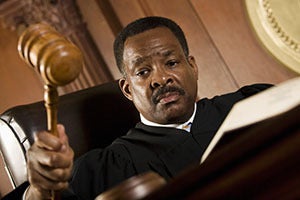
Under California Penal Code § 1203.2, judges have broad authority to revoke, modify, or reinstate probation. Understanding procedural rules, the lower burden of proof, and evidentiary standards is critical to preserving your freedom.
California Probation Violation Hearings at a Glance
|
Factor |
Criminal Trial |
Probation Violation Hearing (PC § 1203.2) |
| Burden of Proof | Beyond a reasonable doubt (~99%) | Preponderance of the evidence (more likely than not / >50%) |
| Decision Maker | 12-member jury (unanimous verdict) | Single Superior Court Judge |
| Rules of Evidence | Strict constitutional limits on hearsay | Formal hearsay is admissible under limited exceptions (People v. Arreola) |
| Possible Outcomes | Guilty or Not Guilty | Reinstate, Modify (stricter terms), or Revoke (jail/prison sentence) |
What Triggers a Probation Revocation Hearing in California?
Probation officers, prosecutors, or judges can initiate revocation proceedings following formal allegations of non-compliance. Standard grounds for an alleged probation violation include:
-
Subsequent Arrests or Law Violations: Facing new criminal charges while serving formal or informal probation.
-
Failed or Missed Drug/Alcohol Screens: Testing positive for controlled substances or failing to complete court-mandated chemical testing.
-
Failure to Pay Restitution or Fines: Defaulting on financial obligations without demonstrating an inability to pay.
-
Non-Completion of Court-Ordered Programs: Unexcused absences from domestic violence classes, DUI programs, or anger management.
-
Failure to Report: Missing scheduled monthly check-ins with your California probation officer.
Once an alleged violation is filed, the judge typically issues a bench warrant under PC § 1203.2, authorizing law enforcement to arrest and hold you pending the hearing.
Strategic Steps to Win a California Probation Violation Hearing
Defending against a PC § 1203.2 allegation involves specific procedural, factual, and character-based strategies:
1. Rebut the Allegation of Willful Non-Compliance
To establish a violation, prosecutors must prove your failure to comply was willful. Showing that a violation resulted from illness, physical disability, financial hardship, or administrative errors by program providers directly refutes the state's case.
2. Challenge Hearsay and Unreliable Evidence
Although probation hearings evaluate hearsay more flexibly, defense counsel can challenge uncorroborated police reports, hearsay statements, or faulty drug-testing procedures to show a lack of reliable proof.
3. Present Strong Community Character Witnesses
Testimony from employers, treatment directors, and community leaders establishes that you remain a candidate for community supervision rather than incarceration.
4. Provide Substantial Mitigating Evidence
If a technical violation occurred, presenting proof of voluntary enrollment in treatment, partial financial payments, or negative drug screens helps demonstrate good-faith efforts to comply with court orders.
Potential Outcomes of a PC § 1203.2 Hearing
After evaluating the evidence, the judge will render one of three statutory rulings:
-
Reinstatement on Original Terms: The judge finds no violation or deems a minor infraction resolved, allowing you to resume probation under existing conditions.
-
Modification of Probation Terms: The judge reinstates probation but adds stricter conditions, such as additional community service, extended program length, or brief county jail time ("sanction time").
-
Revocation of Probation: The judge terminates probation and imposes the suspended sentence or statutory maximum jail/prison term for the original underlying offense.
Frequently Asked Questions (FAQs)
What happens at a probation violation hearing in California?
At a California probation violation hearing, a Superior Court judge reviews evidence, hears witness testimony, and determines whether you violated your probation conditions under Penal Code § 1203.2. There is no jury, and the prosecution must only prove the violation by a preponderance of the evidence.
What should you expect at a probation violation hearing?
Expect a streamlined court proceeding in which the prosecutor presents reports or testimony from your probation officer. Your defense attorney can cross-examine witnesses, submit evidence of compliance, and present character testimony before the judge decides whether to modify, reinstate, or revoke your probation.
How can you win a probation revocation hearing?
Winning a probation revocation hearing requires showing that the alleged violation was not willful, proving the prosecution's evidence is unreliable or hearsay-based, or demonstrating that you actively remedied the issue through voluntary treatment, community work, or compliance efforts.
What are the possible outcomes of a probation violation hearing?
A judge can dismiss the violation notice and reinstate probation on its original terms, modify probation by adding stricter requirements or brief jail time, or completely revoke probation and sentence you to state prison or county jail up to the maximum penalty of your original charge.
Do you need a lawyer for a probation violation hearing?
Yes, retaining an experienced defense lawyer is vital. Because the standard of proof is lower than in a standard criminal trial, a skilled defense attorney is necessary to challenge hearsay, present mitigating evidence, and advocate for reinstatement rather than jail time.
Consult a Los Angeles Probation Defense Attorney
Navigating a probation violation hearing requires an aggressive defense strategy tailored to the presiding judge's tendencies.
At Esfandi Law Group, our criminal defense team represents clients facing formal and informal probation violations across Southern California.
Lead attorney Seppi Esfandi, a former Los Angeles Public Defender, brings over two decades of courtroom experience to challenge probation department reports, seek charge dismissals, and prevent incarceration. Contact Esfandi Law Group today for a confidential, 24/7 consultation.
