
Felony probation—also known as formal probation in California—is an alternative sentencing option that lets an individual convicted of a felony serve all or part of their sentence in the community under law enforcement supervision instead of in state prison or county jail.
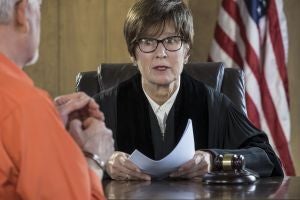
Under California Penal Code § 1203 PC, judges have the discretion to grant probation to eligible defendants. While on formal probation, individuals must strictly comply with court-mandated terms and report regularly to an assigned county probation officer.
Eligibility Factors for California Formal Probation
The sentencing judge has sole discretion to grant formal probation, guided by California Rules of Court, Rule 4.414. When determining whether a defendant qualifies for felony probation rather than a prison commitment, courts evaluate several statutory factors:
-
Severity of the Crime: The nature and seriousness of the underlying felony offense.
-
Prior Criminal Record: The extent, frequency, and recency of the defendant's past criminal history.
-
Use of Weapons: Whether the defendant was armed with or used a deadly weapon during the offense.
-
Vulnerability and Harm: Whether the crime caused physical injury or significant financial loss to victims.
-
Impact of Incarceration: The financial, familial, and personal impact that state prison confinement would have on the defendant and their dependents.
Common Conditions of Formal Probation
To remain out of custody, a probationer must agree to abide by specific rules tailored to their offense and personal history. Under California law, probation conditions must be reasonably related to the crime committed or to preventing future criminal conduct.
|
Category |
Typical Probation Requirements |
| Supervision & Testing | Reporting monthly to a probation officer; submitting to drug/alcohol screening. |
| Court Obligations | Paying court fines, administrative fees, and full victim restitution under PC § 1202.4. |
| Rehabilitative Programs | Completing court-ordered programs (e.g., 52-week batterer's intervention, anger management, or addiction treatment). |
| Community Service | Performing mandatory community service hours through approved non-profit organizations. |
| Search Conditions | Waiving Fourth Amendment rights to permit search and seizure by law enforcement without a warrant. |
Ending Felony Probation Early (California Penal Code § 1203.3 PC)
Under California Penal Code § 1203.3 PC, California courts may terminate felony probation early. A defense attorney can file a motion for early discharge of probation if the probationer meets specific legal thresholds:
-
Time Served: Generally, courts require a defendant to complete at least 12 to 18 months of their probation sentence before considering early termination.
-
Full Compliance: The petitioner must have satisfied all terms, completed mandatory classes, paid all court fines, and fully cleared victim restitution.
-
Good Cause Shown: Demonstrating good behavior and specific justification, such as securing employment, obtaining travel clearance, or qualifying for professional licensing.
Note: Successfully terminating felony probation early opens the door to filing a motion under California Penal Code § 1203.4 PC to expunge the underlying conviction or reduce eligible felony charges to a misdemeanor under PC § 17(b).
Consequences of a Probation Violation (PC § 1203.2)
If a probation officer or law enforcement officer suspects a probation violation, a judge will issue a bench warrant or order summary revocation under California Penal Code § 1203.2. The court will then hold a formal Probation Violation Hearing (PVH).
Unlike a criminal trial, a probation violation hearing is decided by a judge rather than a jury, and the prosecution must prove the violation by a preponderance of the evidence (more likely than not), not beyond a reasonable doubt.
At the conclusion of the hearing, the judge has three primary options:
-
Reinstate Probation: Revoke summary status and reinstate probation under the original terms with a warning.
-
Modify Probation: Reclaim probation status but impose stricter conditions, such as additional community service, electronic monitoring, or short jail stays.
-
Revoke Probation: Cancel probation entirely and order the defendant to serve the suspended state prison or county jail sentence originally attached to the underlying felony.
Frequently Asked Questions (FAQs)
What is the difference between formal probation and informal probation in California?
Formal probation applies to felony convictions and requires active supervision by a county probation officer, whereas informal (summary) probation applies to misdemeanor offenses and involves no probation officer supervision.
Who pays for the supervision fees associated with a probation officer in California?
Under recent California legislative reforms (AB 1869), administrative fees previously charged to probationers for probation supervision and processing were eliminated to relieve financial burdens on defendants.
Can you travel out of state while on felony probation in California?
No. Probationers on formal felony probation cannot leave the county or state without receiving explicit written permission or a travel permit from their assigned probation officer or the court.
How long does felony probation last in California?
Under Assembly Bill 1950 (AB 1950), California capped the maximum probation term for most felony convictions at 2 years, though exceptions exist for violent felonies, severe theft crimes, and specific sex offenses.
What happens if I fail to pay victim restitution while on formal probation?
Failing to pay victim restitution can be treated as a probation violation if the court finds you had the financial ability to pay but willfully refused to do so. However, probation cannot be revoked solely due to genuine indigency.
An attorney from Esfandi Law Group in Los Angeles who specializes in criminal defense can assist you. Book your free consultation by calling us or filling out the contact form available here.
