
Providing false or misleading statements to law enforcement during a traffic stop or vehicle investigation is a serious criminal offense under California law.
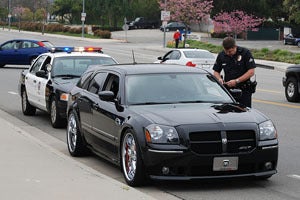
California Vehicle Code § 31 VC makes it illegal to knowingly give incorrect oral or written information to a peace officer performing duties under the Vehicle Code.
Whether done to avoid a traffic citation, obscure a driver's license status, or mislead an accident investigation, violating VC 31 can transform a routine traffic stop into a misdemeanor criminal case involving potential jail time, fines, and a permanent criminal record.
Legal Definition: VC 31
No person shall give, either orally or in writing, information to a peace officer while in the performance of his duties under the provisions of this code when such person knows that the information is false. — California Vehicle Code § 31 VC
Key Statutory Definitions
Understanding these specific terms is critical because the prosecution must prove every legal component applies to your situation to secure a conviction under Vehicle Code § 31 VC.
-
Peace Officer: An officer executing official duties under the California Vehicle Code, including California Highway Patrol (CHP) officers, local police, and sheriff deputies.
-
Performance of Duties: The officer must be actively carrying out official responsibilities (such as conducting a traffic stop, accident investigation, or vehicle inspection).
-
Knowingly False Information: Oral or written statements provided with actual knowledge that the statements or submitted documents are untrue.
What Must Be Proven to Convict
The prosecution must prove the following elements beyond a reasonable doubt:
-
The defendant provided information, either orally or in writing, to a peace officer.
-
The peace officer was performing their official duties under the California Vehicle Code.
-
The defendant knew the information was false when they provided it.
-
The defendant knew (or reasonably should have known) that the person receiving the information was a peace officer engaged in official duties.
Penalties for Vehicle Code § 31 VC
A violation of California Vehicle Code § 31 VC is prosecuted as a misdemeanor criminal offense, not a simple traffic infraction. If convicted, the judge can impose a combination of criminal penalties and long-term collateral consequences:
-
County Jail Sentence: Up to 6 months in a local county jail.
-
Monetary Fines: Maximum fine of $1,000, plus mandatory state and county penalty assessments that can significantly increase the total out-of-pocket cost.
-
Informal Probation: Between 1 to 3 years of summary (informal) probation, requiring full compliance with all laws and court conditions in lieu of serving full jail time.
-
Driver's License Impact: While VC 31 does not carry direct point additions on your DMV driving record, the underlying traffic violation that triggered the initial stop (e.g., reckless driving or speeding) remains subject to points and potential suspension.
-
Permanent Criminal Record & Moral Turpitude: Conviction results in a permanent misdemeanor record. Because giving false information is classified as a "crime of moral turpitude" (an act involving dishonesty), it can jeopardize professional licensing, security clearances, employment background checks, and immigration status for non-citizens.
Possible Defense Strategies
Defending against a Vehicle Code § 31 VC charge requires targeting specific weaknesses in the prosecution's case, particularly regarding intent, officer status, and constitutional protections. Standard legal defenses include:
-
Lack of Knowledge or Honest Mistake: To convict you under VC 31, the prosecution must prove beyond a reasonable doubt that you knew the information was untrue when you gave it. If you genuinely believed the information was accurate—such as providing an outdated address, an expired insurance document from a stack in your glove box, or misremembering a historical detail—you lacked the necessary knowledge to commit a crime.
-
Officer Not Engaged in Official Vehicle Code Duties: VC 31 applies exclusively when a peace officer is actively performing official duties under the California Vehicle Code. If the officer was off duty, acting outside their lawful authority, or conducting an illegal detention without reasonable suspicion or probable cause, the prosecution cannot establish a key element of the crime.
-
Unawareness of Officer Status: The prosecution must prove you knew (or reasonably should have known) that the recipient of the information was a peace officer. If the interaction involved an off-duty or plainclothes officer who failed to identify themselves or display official credentials, this element fails.
-
Protection of Constitutional Rights (Refusal to Answer): Exercising your constitutional Fifth Amendment right to remain silent is not equivalent to providing false information. Declining to answer an officer's questions or refusing to make a statement cannot be prosecuted as a violation of Vehicle Code § 31 VC.
-
Immediate Recantation / Lack of Deceptive Intent: If you immediately corrected an initial misstatement or unintentional error before the officer relied upon it, your legal defense can demonstrate that there was no intent to mislead or obstruct law enforcement.
Case Examples
-
Example 1 (Fake Name at Traffic Stop): A driver pulled over for speeding gives a sibling's name and birthdate to avoid a ticket on a suspended license. Because the driver knowingly lied to an acting officer, VC 31 applies.
-
Example 2 (Fraudulent Vehicle Documentation): A truck driver presents altered registration papers to a CHP inspection station officer to avoid overweight fines, violating VC 31.
-
Example 3 (Accidental Mistake – Defense Applies): A driver hands the officer an expired insurance card from a stack in the glove box, believing it is the current one. Because the driver had no intent or knowledge of falsity, VC 31 does not apply.
Related Laws for VC 31
Understanding related California offenses is vital because prosecutors often file multiple charges or substitute statutes depending on the specific location of the encounter, the intent behind the lie, and whether fraudulent documents were presented.
- California Penal Code § 148.9 PC – Giving False Identification to Police: Applies specifically to giving a false name or identity to evade lawful court process or arrest during any police contact, not limited strictly to vehicle code investigations.
- California Vehicle Code § 20 VC – False Statements to the DMV or CHP: Prohibits knowingly making false statements or concealing material facts in documents submitted directly to the DMV or CHP.
- California Penal Code § 148.5 PC – False Report of a Crime: Applies when a person makes a false police report claiming a felony or misdemeanor occurred when no crime was committed.
- California Vehicle Code § 4463 VC – Registration Fraud: Covers the forgery, alteration, or fraudulent display of vehicle registration cards, license plates, or smog certificates.
Frequently Asked Questions (FAQs)
Reviewing these common questions addresses key legal nuances and clarifies critical rights when dealing with traffic stops and law enforcement inquiries under California law.
Is giving false information under Vehicle Code 31 VC a felony or a misdemeanor?
Vehicle Code § 31 VC is strictly a misdemeanor offense under California law, punishable by up to six months in county jail and fines up to $1,000.
Can I be charged under VC 31 if I just remain silent during a traffic stop?
No. Exercising your Fifth Amendment right to remain silent is not a crime. VC 31 requires an affirmative act of providing false information, either orally or in writing.
What is the difference between VC 31 and Penal Code 148.9 PC?
VC 31 applies specifically to false statements made during traffic or Vehicle Code investigations. Penal Code 148.9 PC specifically penalizes giving a fake identity to an officer to avoid arrest or court process during any police encounter.
What if I realized I gave false information and corrected it immediately?
Recanting or correcting your statement right away shows a lack of intent to deceive, providing a strong defense that may lead prosecutors to drop or reduce the charge.
Does VC 31 apply if the officer was off-duty?
If the officer was off-duty and not actively performing official Vehicle Code enforcement duties, a core element of VC 31 is missing, making a conviction unlikely.
The Esfandi Law Group in Los Angeles can help you. Schedule your free consultation at (310) 274-6529 or use the contact form.
