
In California, using a firearm for self-defense is a legally recognized defense, but it carries strict statutory limits and significant criminal consequences.
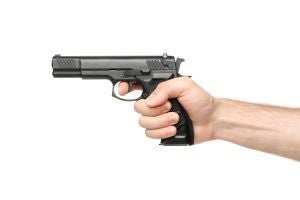
Under California Criminal Jury Instructions (CALCRIM) § 3470, discharging a firearm in self-defense or defense of another can legally justify the use of lethal force, leading to a full acquittal at trial.
However, to avoid murder or manslaughter charges, the use of a gun must meet California's strict legal standard of reasonable, proportional force under the circumstances.
What Makes Firearm Use Legally Justified in California?
Under California law, a firearm includes handguns, rifles, pistols, revolvers, and shotguns. Using lethal force with any firearm is considered legally justified only if three core legal elements exist at the moment of discharge:
-
Imminent Danger: You had an honest and objectively reasonable belief that you or someone else was in immediate danger of being killed or suffering great bodily injury (GBI).
-
Immediate Necessity: You reasonably believed that discharging a firearm was immediately necessary to stop the threat.
-
Proportional Force: You used no more force than was reasonably necessary to neutralize the danger.
If any of these three elements is missing, prosecutors can file serious criminal felony charges—ranging from assault with a firearm to first-degree murder.
California Castle Doctrine vs. Imperfect Self-Defense
California law treats self-defense claims differently depending on where the incident occurred and whether your fear of harm was objectively reasonable.
The California Castle Doctrine (Penal Code § 198.5)
Under California's Castle Doctrine, homeowners receive a legal presumption of reasonable fear of imminent death or great bodily injury if an intruder unlawfully and forcibly enters their inhabited residence.
While California is effectively a "Stand Your Ground" state (meaning you have no legal duty to retreat before using reasonable force), the Castle Doctrine specifically creates a stronger legal presumption inside your home.
Imperfect Self-Defense
Imperfect self-defense applies when a defendant genuinely—but unreasonably—believed they were in imminent danger, or used an excessive amount of force to defend themselves. While imperfect self-defense does not lead to a full acquittal, it negates the malice element required for a murder conviction, reducing the charge from murder to voluntary manslaughter.
What Happens After Shooting Someone in Self-Defense?
Discharging a firearm at another person triggers an immediate law enforcement investigation. Depending on police findings and prosecutorial discretion, several legal outcomes are possible:
|
Potential Prosecution Outcome |
Legal Scenario & Conditions |
| No Charges Filed (Case Dismissed) | Investigators and prosecutors conclude the shooting was fully justified under CALCRIM § 3470 self-defense rules. |
| Voluntary Manslaughter | Prosecutor determines "imperfect self-defense" applies—unreasonable fear or excessive force was used during a rapid confrontation. |
| Murder (1st or 2nd Degree) | Prosecution claims no self-defense occurred. First-degree murder involves premeditation; second-degree murder involves extreme recklessness or heat of passion without a justified threat. |
| Attempted Murder / Assault / Mayhem | The individual survived the shooting, and law enforcement determines the use of firearm force was legally unjustified. |
Key Evidence Used to Prove Self-Defense
Building a successful self-defense case relies heavily on physical and forensic evidence to corroborate your account of the threat. Key defense evidence includes:
-
Audio recordings of 911 calls showing immediate distress and reporting of an active intruder or attacker.
-
Crime scene photos and forensic reconstruction showing entry points, blood spatter, or weapon placement.
-
Independent witness statements confirming the aggressive actions or threats made by the alleged victim.
-
Medical records documenting injuries sustained by the defendant prior to discharging the firearm.
Frequently Asked Questions (FAQs)
Is California a "Stand Your Ground" state for firearm self-defense?
Yes. Under California case law and CALCRIM § 3470 jury instructions, an individual who is not engaged in unlawful activity has no legal duty to retreat from an attacker and has the right to stand their ground and use proportional force, including deadly force if reasonably necessary.
What is the difference between perfect and imperfect self-defense in California?
Perfect self-defense occurs when your belief of imminent danger was objectively reasonable, resulting in a full acquittal (no guilty verdict). Imperfect self-defense occurs when your belief of danger was subjectively real to you but objectively unreasonable, which reduces a murder charge to voluntary manslaughter.
Does the Castle Doctrine protect you if you shoot an intruder outside your house?
No. The legal presumption under California Penal Code § 198.5 only applies within the interior of an inhabited residence. Discharging a firearm in a yard, driveway, or detached structure is evaluated under standard self-defense rules rather than the Castle Doctrine presumption.
Can I claim self-defense if I used a gun I owned illegally?
Yes, you can still claim self-defense for the physical shooting if the deadly force was legally justified. However, you can still face separate felony charges for unlawful firearm possession or carrying a concealed weapon without a permit.
Should I speak to police immediately after shooting someone in self-defense?
You should invoke your Sixth Amendment right to legal counsel immediately. State basic facts to police (identifying yourself and stating you were attacked), but refrain from giving a detailed formal statement until consulting an experienced criminal defense attorney.
What criminal charges can I face if my self-defense claim fails?
If prosecutors reject your self-defense claim, charges can range from assault with a deadly weapon and mayhem to attempted murder, voluntary manslaughter, or first-degree murder depending on whether the victim survived and the level of intent.
For the best chance at a positive outcome, consult an experienced California criminal defense attorney at Esfandi Law Group. To arrange a free consultation, call (310) 274-6529 or fill out the contact form.
