
A driving under the influence (DUI) probation violation in California occurs when an individual fails to comply with any condition set by the court following a DUI conviction. Under California Vehicle Code (VC) 23600, courts impose mandatory probation conditions for all DUI offenses.
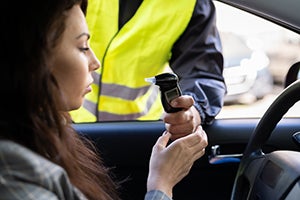
Because a probation violation is a serious legal matter, a judge can revoke probation and reinstate the maximum statutory jail or prison sentence for the original DUI charge. Understanding the hearing process, county-specific rules, and valid legal defenses is essential to avoiding jail time.
What Is California DUI Probation? (VC 23600)
When a California court sentences someone for DUI, it often grants probation instead of the maximum jail sentence. Probation allows individuals to remain in the community under specific court-mandated conditions.
Standard California DUI probation terms require ongoing court compliance across several core requirements:
-
Substance Testing: Submitting to random drug and alcohol screenings.
-
DUI Classes: Enrolling in and completing court-ordered alcohol education programs.
-
Zero Tolerance: Refraining from driving with any measurable amount of alcohol in your system.
-
Fines & Fees: Satisfying all court-ordered financial obligations and restitution.
How DUI Probation Violations Occur
A DUI probation violation occurs when a person intentionally or accidentally fails to fulfill their probation terms.
|
Common Violation Type |
How It Occurs |
Potential Legal Impact |
| New DUI / Criminal Charge | Arrested for a subsequent DUI or criminal offense while on probation. | Immediate violation filing plus new criminal charges. |
| Zero Tolerance Breach | Driving with a BAC of 0.01% or higher, or refusing a chemical test. | Automatic probation violation and a 1-year DMV license suspension. |
| Missing DUI Classes | Unexcused absences or being dropped from court-ordered DUI school. | Bench warrant issued by the court. |
| Failed Drug/Alcohol Test | Testing positive during random screening or ankle monitor checks. | Immediate court notification and potential probation revocation. |
| Unpaid Fines | Failing to satisfy financial obligations without establishing a payment plan. | Court appearance required to evaluate willful non-payment. |
How Long Is DUI Probation in California?
-
Misdemeanor DUI Probation: Typically lasts 3 to 5 years. First-time offenses usually carry 3 years of informal (unsupervised) probation, while cases involving aggravating factors—such as high BAC (0.15% or higher), traffic accidents, or child endangerment—often receive 5 years.
-
Felony DUI Probation: Lasts up to 5 years of formal supervision under a probation officer. Felony status applies to fourth-offense DUIs within 10 years, DUIs causing bodily injury (VC 23153), or DUIs following a prior felony DUI conviction.
County-Specific Supervision Differences
California counties enforce DUI probation conditions with varying degrees of severity:
-
Los Angeles County: Enforces strict monitoring protocols for repeat offenders, frequently utilizing continuous alcohol monitoring (CAM) devices or electronic ankle monitors.
-
Orange County: Utilizes specialized DUI Courts that combine intensive judicial supervision with mandatory individualized substance abuse treatment.
-
San Bernardino & Riverside Counties: Routinely mandate immediate jail time or work release programs for missed classes or failed chemical tests.
What Happens at a DUI Probation Revocation Hearing?
When a probation violation is alleged, the court issues a notice to appear or a bench warrant for your arrest. The court then holds a probation revocation hearing to determine whether you complied.
Key Differences Between a Criminal Trial and a Probation Hearing
A probation revocation hearing differs from a standard criminal trial in several fundamental ways:
-
Decision Maker: A standard criminal trial is decided by a jury of peers, whereas a probation revocation hearing is decided solely by a judge.
-
Burden of Proof: In a criminal trial, the prosecution must prove guilt beyond a reasonable doubt (greater than 99% certainty). At a probation hearing, the prosecution only needs to prove the violation by a preponderance of the evidence (greater than 50% probability).
-
Evidentiary Rules: Criminal trials strictly enforce formal rules of evidence, while probation revocation hearings operate under relaxed evidentiary standards and allow certain types of reliable hearsay evidence.
-
Lower Burden of Proof: Prosecutors do not need to prove the violation beyond a reasonable doubt. They must only prove it by a preponderance of the evidence (meaning it is more likely than not—greater than 50% chance—that the violation occurred).
-
No Jury: A judge decides the proceeding entirely.
-
Right to Counsel & Evidence: You retain the right to be represented by an attorney, present witness testimony, introduce exculpatory evidence, and cross-examine witnesses.
Penalties for a DUI Probation Violation
If the judge finds you in violation of your probation, they have wide judicial discretion under California Penal Code 1203.2. Potential outcomes include:
-
Reinstatement of Probation: Reinstating probation under the same terms with a warning.
-
Modification of Terms: Extending the probation duration, adding community service, ordering additional DUI classes, or requiring an Ignition Interlock Device (IID).
-
Alternative Sentencing: Ordering work release programs, electronic monitoring, or house arrest.
-
Probation Revocation & Jail Time: Revoking probation entirely and sentencing you to serve the full suspended jail or prison term associated with the original DUI offense (up to 6 months or 1 year for misdemeanors; up to 3 years for felonies).
Defending Against California DUI Probation Violation Charges
An attorney utilizes specific factual and legal defenses to challenge alleged probation violations at the revocation hearing.
-
Lack of Willful Violation: California law requires a violation to be willful. If an involuntary emergency caused noncompliance—such as hospitalization, a severe medical crisis, or an unannounced schedule change by a treatment provider—the violation may be dismissed.
-
Testing Errors & False Positives: Breathalyzers, urine tests, and continuous alcohol monitoring devices can yield false positives due to improper calibration, medical conditions (such as GERD or diabetes), or exposure to alcohol-based mouthwashes and sanitizers.
-
Insufficient Prosecution Evidence: Challenging unreliable hearsay, incomplete probation reports, or chain-of-custody gaps in drug and alcohol samples.
-
Negotiating Alternatives: Presenting mitigating factors—such as voluntary re-enrollment in classes, negative independent drug screens, or proof of employment—to negotiate alternative penalties in place of jail time.
Frequently Asked Questions
What is the legal standard of proof at a DUI probation revocation hearing in California?
The standard of proof is a preponderance of the evidence, which means the prosecution must prove it is more likely than not (greater than 50% probability) that you violated a condition of your probation. This is a much lower standard than the "beyond a reasonable doubt" threshold required in standard criminal trials.
Can you go to jail for a first-time DUI probation violation in California?
Yes. While judges have the discretion to issue warnings, add community service, or require additional DUI classes, they also possess the statutory authority under California Penal Code 1203.2 to revoke probation and order you to serve suspended jail time for a first violation.
What happens if you miss a court-ordered DUI class while on probation?
Missing a DUI class without an excused absence can result in being dropped from the program. The DUI school then notifies the court, which typically issues a bench warrant for your arrest for violating probation. Re-enrolling immediately and demonstrating a valid reason for the absence can help prevent jail time.
Is a blood alcohol concentration of 0.01% considered a DUI probation violation?
Yes. Under California Vehicle Code 23136, individuals on DUI probation are subject to a strict zero-tolerance law, making it illegal to operate a motor vehicle with a blood alcohol concentration (BAC) of 0.01% or higher. A violation results in a probation revocation proceeding and an automatic 1-year driver's license suspension from the DMV.
How does a lawyer prove that a DUI probation violation was not willful?
Defense attorneys prove a violation was not willful by gathering documentary evidence—such as hospital records, employer logs, official transportation delays, or medical expert testimony—to demonstrate that external, unavoidable circumstances directly prevented you from complying with court orders.
Legal Representation with Esfandi Law Group
Esfandi Law Group defends clients facing DUI probation violations throughout Los Angeles County and Southern California. Led by Seppi Esfandi, a UCLA School of Law graduate and former Deputy Public Defender with over 25 years of trial experience, the firm focuses on protecting client freedom and records.
Esfandi Law Group challenges unreliable test results, demonstrates lack of willfulness, and negotiates directly with judges and prosecutors to seek probation reinstatement without jail time.
Protect Your Record and Freedom: Contact Esfandi Law Group today to schedule a free, confidential case review for your California DUI probation violation.
